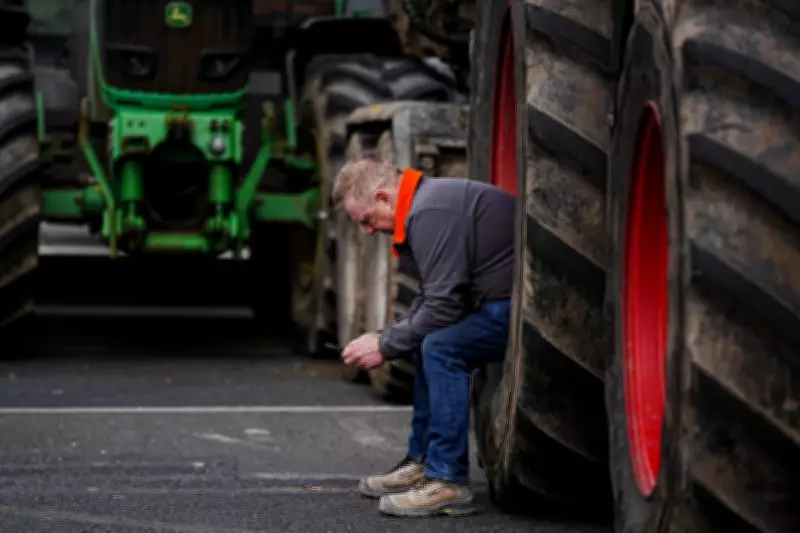
Protests against the Irish Government's handling of escalating fuel prices have now entered a third consecutive day, with coordinated actions causing significant disruption across the nation. Demonstrators have blocked major motorways, key urban roads, and critical fuel infrastructure, including the Whitegate oil refinery in County Cork.
Root Causes of the Crisis
The cost of petrol, diesel, and marked gas oil, commonly known as green diesel, has surged dramatically due to the ongoing war in the Middle East and subsequent impacts on supplies through the Strait of Hormuz. This geopolitical instability has triggered a sharp increase in fuel expenses, placing immense pressure on households, businesses, and agricultural sectors throughout Ireland.
Government Measures Fall Short
Just over two weeks ago, Ireland's ruling coalition approved a series of initiatives aimed at alleviating fuel costs. These included a temporary reduction in excise duty for motor fuels, an expansion of the diesel rebate scheme for hauliers and bus operators, and an extension of the fuel allowance. While these steps initially provided some relief, with effective reductions of 17 cent for petrol, 22 cent for diesel, and five cent for green diesel, the savings were quickly eroded as the conflict in the Middle East intensified, leaving many feeling the government's response was insufficient.

Escalating Demonstrations and Disruption
On Tuesday, several distinct but coordinated protests emerged, featuring slow-moving convoys on motorways and the blocking of major roads in Dublin and other cities. Participants, including hauliers and agricultural contractors, used large trucks and tractors to disrupt traffic flow. The demonstrations escalated on Wednesday with the blockading of fuel depots and the Whitegate refinery, an action described by Taoiseach Micheal Martin as "an act of national sabotage."
Other senior coalition figures, such as Tanaiste and Finance Minister Simon Harris and Justice Minister Jim O'Callaghan, emphasised the critical importance of maintaining access to fuel depots and warned of legal consequences for unlawful activities. Mr Martin also condemned protesters for turning Dublin's main thoroughfare, O'Connell Street, into a makeshift car park, significantly clogging traffic in the capital's centre.
Impact on Public Services and Infrastructure
The protests have led to widespread disruption, with lines of buses parked along city streets and some of the busiest roads left empty. An Garda Siochana, the Irish police service, and emergency responders like Dublin Fire Brigade have reported significant delays. Members of the public have also missed hospital appointments due to the chaos, highlighting the broader societal impact of the demonstrations.
Protesters' Demands and Government Stance
Speaking to the Press Association on Wednesday evening, city-centre protest spokesman John Dallon expressed hope for a resolution through government engagement. He stated, "These people are not going to lie down. The only way they will go off of the streets here is if we send a message back to them that we have a meeting, then there's a good chance that people will go home. But, if there's no satisfaction out of the meeting, I'd say it'll all heat up again."
In response, senior government figures indicated they would continue to engage with official national representative bodies and keep the situation "under review." However, they have not committed to direct talks with protest leaders, maintaining a focus on lawful channels.
Nationwide Scale and Supply Risks
Protesters reported similar actions at over 20 locations across Ireland, while Kevin McPartland, chief executive of Fuels for Ireland, warned that blockades at depots in Foynes, County Limerick, and County Galway posed a risk to supplies for petrol forecourts. This has raised concerns about potential fuel shortages if the protests persist, further complicating the government's efforts to manage the crisis.
As the protests enter their third day, the standoff between the Irish Government and demonstrators shows no immediate signs of abating, with both sides digging in their heels over the contentious issue of fuel affordability in a time of global turmoil.