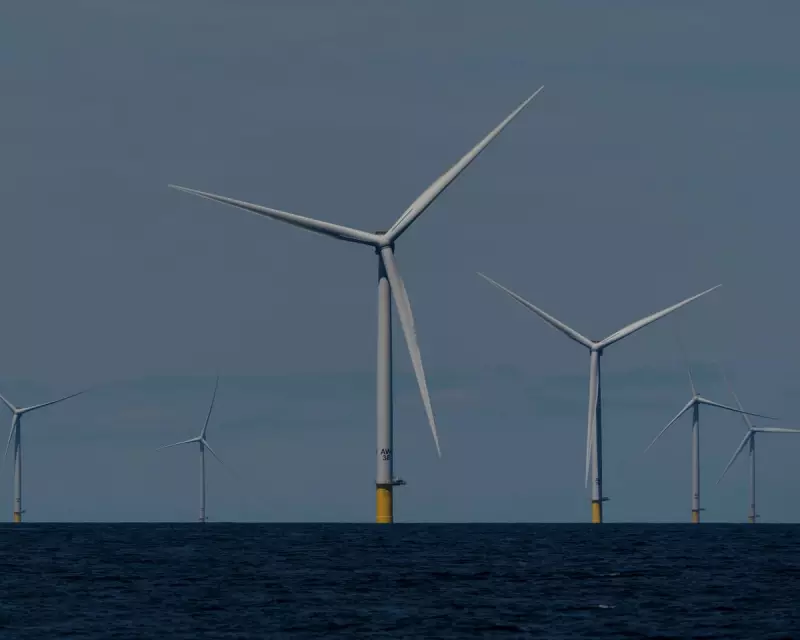
In a significant legal setback for the Trump administration, a federal judge has cleared the way for a major New York offshore wind project to resume construction. The ruling halts an executive order that had paused the development, which the developer warned could have killed the project entirely within days.
Court Victory for Renewable Energy
District Judge Carl J. Nichols, an appointee of former President Donald Trump, ruled on Thursday that work on the Empire Wind project could proceed while he considers the merits of the government's suspension order. Judge Nichols found fault with the administration for failing to address key arguments from the developer, including claims that proper procedure was violated when the order was issued.
The project's owner, Norwegian energy giant Equinor, welcomed the decision. Spokesperson David Schoetz stated the company would continue collaborating with authorities. This marks the second legal victory for offshore wind developers this week against the administration's pause.

The Administration's 'Bogus' National Security Pause
The Trump administration froze five major offshore wind projects on the US East Coast just days before Christmas, citing national security concerns. President Trump has long been a vocal critic of wind energy, recently labelling wind farms "losers" that lose money, spoil landscapes, and kill birds.
New York Governor Kathy Hochul strongly applauded the court's decision, dismissing the security rationale. "When I heard this I said one thing: I'm the governor of New York, if there is a national security threat off the coast of New York, you need to tell me what it is," she told reporters. "Well, lo and behold, they had no answer." She characterised the pause as being under a "bogus pretense."
Broader Legal Battles and Global Context
The ruling on Empire Wind follows a similar decision earlier in the week regarding the Revolution Wind project serving Rhode Island and Connecticut. In that case, Senior Judge Royce Lamberth found the government did not sufficiently justify a complete construction stop.
Other projects remain in legal limbo. Orsted is suing over the pause of its Sunrise Wind project for New York, while Dominion Energy Virginia plans to ask a judge on Friday to block the order for its Coastal Virginia Offshore Wind development. The fifth paused project, Vineyard Wind in Massachusetts, also joined the legal challenge on Thursday.
This US controversy contrasts sharply with global trends. The offshore wind market is expanding worldwide, with China leading in new installations. Notably, the British government recently secured a record 8.4 gigawatts of offshore wind capacity in Europe's largest auction, enough clean power for over 12 million homes.
Opposition persists, however. Robin Shaffer, president of Protect Our Coast New Jersey, argued the administration was right to halt construction on security grounds and urged an immediate appeal.
The Empire Wind project, currently 60% complete and designed to power more than 500,000 homes, faced severe jeopardy from the pause. Equinor cited the limited availability of specialised vessels and mounting financial losses as critical threats if work remained stopped.