In the wake of escalating tensions in the Middle East, a senior government adviser has called for urgent action to shield consumers from soaring energy costs. Richard Walker, a Labour peer and the prime minister's appointed "cost of living champion," has publicly urged ministers to explore implementing a temporary cap on the profits of energy and petrol companies.
Preventing Profiteering from Crisis
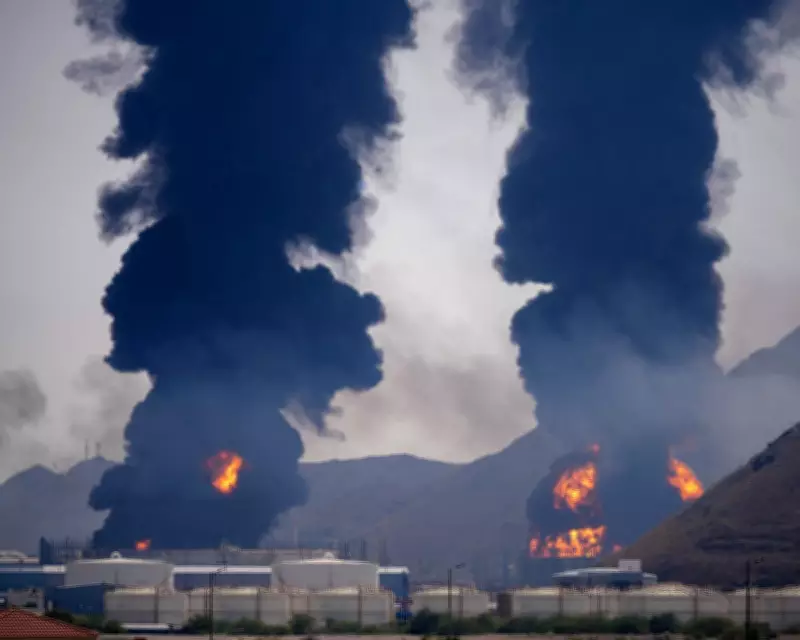
Walker, who also serves as the executive chairman of Iceland supermarkets, emphasized the need to prevent businesses from exploiting the ongoing conflict for excessive financial gain. This appeal follows a recent Iranian missile strike that ignited a fire at an oil facility in the United Arab Emirates, coupled with broader regional instability, including the blockade of the Strait of Hormuz—a critical shipping route for Europe's oil and gas supplies.
"I have asked the government to consider a temporary profit cap... to stop producers and retailers exploiting the crisis to make windfall profits at the expense of consumers," Walker wrote in a column for the Sunday Times. He clarified that while he supports legitimate business profits, which enable investment, employment, and tax contributions, he strongly opposes profiteering, especially when families are under significant financial pressure.

Impact on Energy Markets
The call for intervention comes as oil and gas prices have risen sharply in response to military actions, including airstrikes by the US and Israel on Iran in late February, which resulted in the death of Iran's supreme leader, Ali Khamenei. These geopolitical events have disrupted global energy supplies, exacerbating the cost of living crisis in the UK.
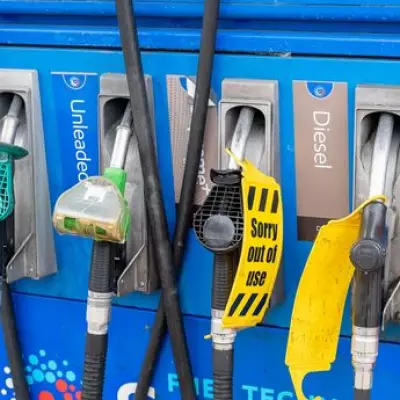
Chris O'Shea, chief executive of Centrica, the parent company of British Gas, highlighted the disproportionate effects on different energy sectors. He noted that the closure of the Strait of Hormuz has led to a loss of approximately 20% of global oil supply and 3-4% of global gas supply. Consequently, he predicted that petrol prices would be more severely impacted than household energy bills, though an increase in both may be unavoidable if the conflict persists.
Government and Industry Responses
Walker's proposal emerges amid discussions within the government regarding the existing windfall tax, known as the energy profits levy. There had been suggestions that Chancellor Rachel Reeves was considering easing this tax before the recent escalation in the Middle East. The renewed focus on profit caps reflects growing concerns over consumer affordability and corporate accountability.
O'Shea advocated for targeted government support to assist individuals with rising bills, rather than blanket measures, emphasizing that such an approach would be more effective in addressing specific needs. He confirmed that Centrica has engaged in meetings with government officials to discuss potential support mechanisms.
As the situation evolves, the debate over balancing business interests with consumer protection continues to intensify, with stakeholders calling for proactive measures to mitigate the economic fallout from the Middle East conflict.