Middle East Conflict Sparks Dramatic Shift in British Energy Attitudes
The ongoing war in the Middle East has fundamentally altered British public perception of energy policy, particularly among Labour supporters. For the first time, a clear majority now recognises the potential dangers of the government's rigid Net Zero approach as global instability threatens energy security.
Labour Voters Abandon Net Zero Orthodoxy
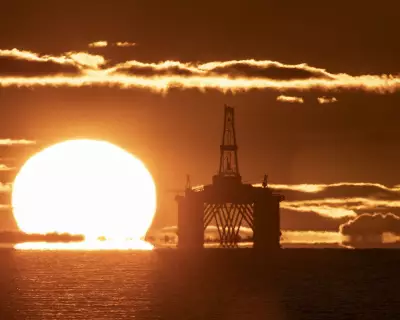
Remarkably, two-thirds of those who backed Labour in the 2024 General Election now believe the ban on new North Sea oil drilling should be lifted. This represents a seismic shift in political opinion that directly challenges Energy Secretary Ed Miliband's unwavering commitment to phasing out fossil fuels.
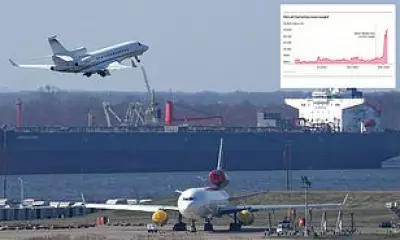
The conflict in the Gulf region has starkly demonstrated Britain's continued dependence on hydrocarbons. With the Strait of Hormuz effectively closed to shipping, the UK economy faces unprecedented pressure that exceeds even the challenges of the pandemic or the 2008 banking crisis.

Miliband's Unyielding Position Under Fire
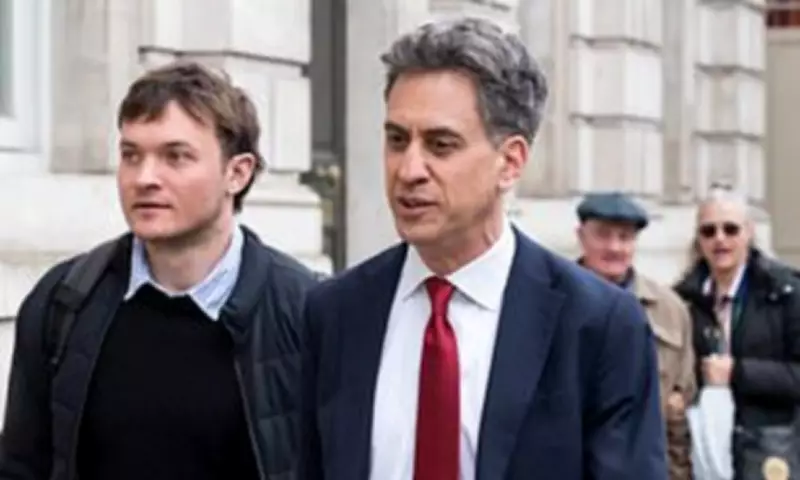
Despite these realities, Ed Miliband remains immovable in his opposition to extracting more North Sea oil and utilising Britain's substantial natural energy reserves. His dogmatic commitment to transitioning exclusively to renewables continues, even as evidence mounts that wind and solar cannot reliably meet national energy demands while simultaneously driving up consumer prices.
This represents a dramatic fall from grace for the Energy Secretary. At the beginning of the year, Miliband was celebrated as the darling of the Labour Left, the most popular Cabinet minister among party voters and members, and the leading contender to eventually succeed Keir Starmer as Prime Minister.
Industry Leaders Highlight Missed Opportunities
Industry experts have outlined how Britain could rapidly boost domestic energy production if government policy would permit it. Neil McCulloch, chief executive of oil company Adura, explained this week: 'We could technically be ready to start producing gas from the Jackdaw gasfield this October, with gas from Jackdaw going into the grid in time to supply British homes and businesses this winter.'
Francis Egan, chief executive of Australian-owned Cuadrilla Resources, predicted that fracking for gas in Lancashire and the East Midlands could begin within three months with government approval. 'This is the second wake-up call after the Ukraine invasion,' he stated. 'I don't know how many more of these the politicians need.'
Incredibly, Miliband has greenlit plans this year to permanently decommission Britain's fracking sites and seal shale gas wells with cement, further reducing domestic energy options.
The Costly Reality of Net Zero Targets
The government's commitment to achieving Net Zero by 2050 comes with staggering economic consequences. The direct cost of transitioning to renewables runs into tens of billions of pounds, while indirect economic damage is substantially higher as energy-intensive businesses become uncompetitive.
Britain now suffers from some of the most expensive industrial energy costs in the developed world, with domestic consumers facing similarly high prices. This contributes directly to stagnant economic growth and perpetuates the cost-of-living crisis affecting millions of families.
Miliband has accelerated this timeline with his personal mission to decarbonise the national grid by 2030, aiming to meet Britain's entire electricity demand through wind turbines and other 'clean sources' within just four years.
Questionable Foundations of Climate Policy
The ideological underpinnings of current energy policy have come under increasing scrutiny. The Net Zero concept originated from small island states and environmental advocates at the 2015 Paris climate conference, based on disputed scientific claims about rising sea levels.
Originally targeting the end of the century, the Intergovernmental Panel on Climate Change moved the deadline forward to 2050 in 2018. Critics argue this represents an ideological agenda masquerading as science, particularly when the IPCC openly discusses 'intentional societal transformation' as embedded in climate goals.

Global Realities Undermine UK Efforts
One of the greatest ironies of Britain's climate policy is that while UK emissions have decreased by a third over eleven years, this achievement has been completely offset by rising emissions elsewhere. China, India, and other developing nations have increased their emissions so dramatically that any British reductions are effectively negated every 140 days on average.
Furthermore, Britain has largely outsourced both emissions and manufacturing jobs to China, while Miliband has ruled that imported power should be classified as zero-carbon simply because emissions occur outside UK borders.
Growing International Skepticism
Even former advocates of aggressive climate action are reconsidering their positions. Former Canadian prime minister Mark Carney conceded at Davos last year that the era of UN climate summits was ending, while Bill Gates in 2025 rejected what he termed the 'doomsday view of climate change,' suggesting that fighting disease and poverty deserved greater priority than managing global temperatures.
Critics compare the Net Zero obsession to 1930s Soviet collectivisation policies that devastated agriculture and caused widespread famine through ideological rigidity.
Britain's Precarious Energy Future
By forcing reliance on unreliable renewable energy sources and rejecting domestic fossil fuel development, the government is creating genuine energy security risks. The worst-case scenario involves not 'societal transformation' but potential social breakdown should the energy grid fail during periods of high demand or international crisis.
Thanks to this rigid opposition to North Sea oil and gas development—combined with previous Conservative policies that eliminated coal power and banned fracking—Britain now stands on the brink of a substantial energy crisis that could have been avoided through more pragmatic policymaking.