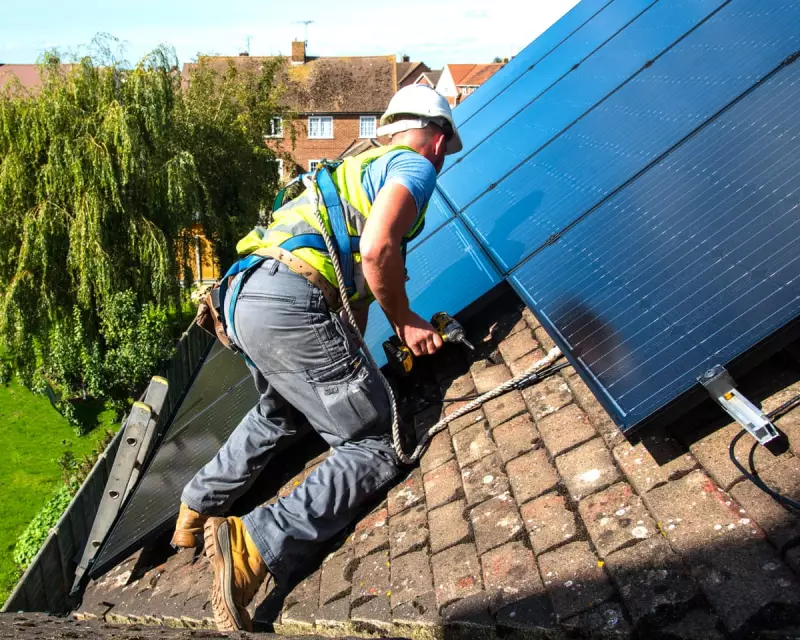
The Labour government has unveiled its long-awaited warm homes plan, a comprehensive strategy aimed at upgrading UK households with a significant shift in focus. Rather than emphasising insulation as the primary goal, the plan prioritises the installation of green technologies such as solar panels and heat pumps, backed by substantial financial incentives.
Financial Framework and Consumer Choice
Under this initiative, approximately £5bn will be allocated in the form of grants specifically targeted at individuals on low incomes. These grants are designed to facilitate home upgrades, including the installation of solar panels and battery storage systems. Additionally, £2bn has been earmarked for consumer loans, available to those who can afford them, enabling broader access to energy-efficient improvements.
A further £2.7bn is designated for "innovative finance" schemes, which may encompass options like green mortgages. These financial products offer households lower interest rates as an incentive for investing in energy efficiency measures, thereby reducing long-term costs and environmental impact.

Moving Away from Insulation-Centric Approaches
Historically, efforts to insulate the UK's draughty homes have faced repeated failures, with botched schemes over the past two decades leading to a dramatic decline in insulation upgrades. The Labour government's strategy seeks to bypass these challenges by leaning into what households reportedly desire: green technology rather than disruptive insulation work.
For years, the adoption of heat pumps was hindered by government policies that tied subsidies to maximum insulation levels, adding potential costs of up to £10,000 and causing significant disruption. By scrapping the Energy Company Obligation (ECO) scheme, which was funded through additions to energy bills, ministers have gained greater flexibility in funding allocations and provided an immediate reduction in bills for consumers.
No Ban on Gas Boilers
In a notable departure from previous proposals, the longstanding plan to ban gas boilers beyond 2035 has been quietly dropped. This decision is seen as an attempt to avoid political backlash from parties like Reform UK and the Conservatives, who have capitalised on headlines about boiler replacements. However, this appeasement comes with potential costs, as the UK relies heavily on "boiler slingers"—plumbers specialising in gas boiler installations—who may resist transitioning to heat pump technology.
Heat pumps require more meticulous installation, often taking several days compared to a single day for gas boiler replacements. While £90m is allocated to encourage domestic heat pump manufacturing and some funds are available for retraining, convincing an estimated 120,000 gas engineers to adapt remains a significant hurdle.
Expert Reactions and Future Implications
Jess Ralston, head of energy at the Energy and Climate Intelligence Unit thinktank, commented on the long-term necessity of moving away from gas boilers. She noted, "Over the years it will become increasingly obvious that the North Sea is running out of gas, and that we need to move away from gas boilers if we want energy independence. The government may prefer carrots now but at some point, a stick might be a more effective tool to ensure we're not ever more reliant on foreign gas supplies."
Garry Felgate, chief executive of the MCS Foundation, advocated for reinstating the proposed ban, stating, "The government must now commit to a 2035 phaseout date for fossil fuel boilers, meaning no new gas or oil boilers can be installed after that date. Without such a policy, boilers will continue to burn fossil fuels long after 2050, undermining our legally binding climate targets." He highlighted polling suggesting public support for a 2035 phaseout, which would provide certainty for industry and households.
Overall, the warm homes plan is framed as a consumer-centric approach, emphasising choice and financial incentives over regulatory mandates. With a total investment of £17.5bn over this parliament, including £15bn in public funding through the warm homes plan and about £2.5bn from the ECO scheme to date, the strategy aims to make home upgrades more attractive and accessible while addressing climate goals.