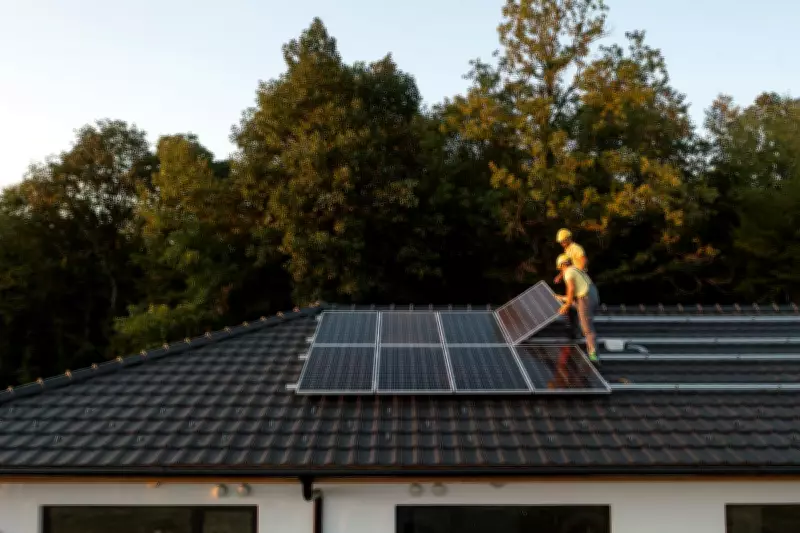
Ongoing hostilities in the Middle East are accelerating a significant shift among British households away from fossil fuel dependency, according to new data released by energy giant E.On. The electricity supplier has documented a striking 62% rise in solar panel sales during March compared to the previous month, with visits to its dedicated solar webpage witnessing a comparable surge in the first week of the month.
Driving Forces Behind the Renewable Rush
This pronounced pivot comes against a backdrop of sharply escalating crude oil and natural gas prices in recent weeks. Market volatility has been exacerbated by the effective closure of the critical Strait of Hormuz and substantial damage to key energy infrastructure within the conflict zone, underscoring the fragility of global fossil fuel supply chains.
Executive Insight on Energy Independence
Chris Norbury, Chief Executive of E.On UK, emphasised the timeliness of this transition. "There has arguably never been a more critical moment to introduce products capable of making a substantial and lasting impact on household energy bills," he stated. "Our customers consistently express a clear desire for solutions that deliver sustainable, enduring reductions in their energy costs, not merely temporary relief."

Norbury further argued that the rapid electrification of home energy systems, including the adoption of solar panels and battery storage, is imperative. He highlighted that such measures would particularly benefit households most vulnerable to the whims of price volatility in international energy markets.
Innovative Technology to Maximise Savings
Coinciding with this sales surge, E.On has announced the launch of a novel automated service designed to optimise savings for homes equipped with solar panels and batteries. The tool, branded Next Optimise, intelligently connects to wholesale electricity markets. It employs automation to charge home batteries during periods of low wholesale prices and subsequently deploys or exports the stored energy when market prices climb, thereby maximising financial returns for the consumer.
Learning from Global Pioneers
This technology is not untested; it has already been successfully deployed in approximately 80,000 Australian homes. Australia's sunnier climate has historically fostered a more advanced uptake of solar power relative to nations like the UK. Dan Adams, CEO of Amber Electric, E.On's technology partner for this initiative, believes this widespread adoption has rendered Australia "less exposed to major geopolitical energy shocks."
Government Backing for a Solar Future
The shift toward solar energy is receiving strong endorsement from government officials. Martin McCluskey, the Minister for Energy Consumers, linked current events directly to national policy. "The situation in the Middle East reinforces that our mission to achieve clean, domestically generated power is fundamental to our energy security," he remarked. "Solar power will be a cornerstone of that mission, and it is evident the British public is arriving at the same conclusion."
McCluskey also revealed forthcoming measures to enhance accessibility, noting that plug-in solar products would be available for purchase in high-street shops within months. This move aims to further empower consumers to save on bills and shield themselves from the unpredictability of fossil fuel markets.
A Long-Term Vision for Energy Decarbonisation
Reflecting on the broader energy landscape, E.On's Chris Norbury struck a cautiously optimistic note. "As a nation, we are in a stronger position than during the 2022 energy crisis, but a tremendous amount of work remains," he conceded. "We have the opportunity to accelerate this work, to continue decarbonising our energy system. Ultimately, this is what will insulate us from the disruptive impacts of fossil fuel-driven geopolitical events like the one we are witnessing."