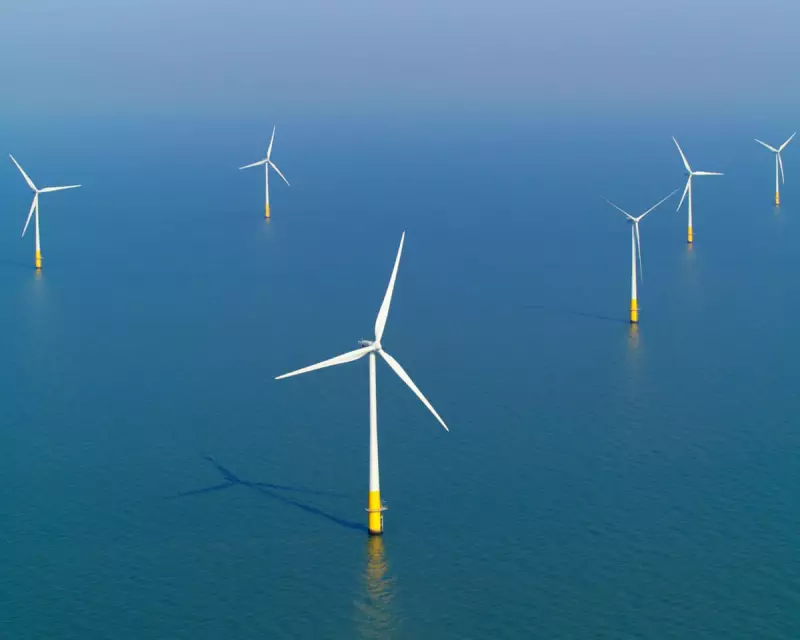
In a landmark move for Britain's green energy ambitions, the government has secured a record-breaking haul of new offshore wind power, enough to supply electricity to 12 million homes. The results of the latest subsidy auction mark the most competitive and financially significant round to date, injecting an estimated £22 billion of investment and creating 7,000 new jobs.
How the "Historic" Auction Works
The UK's pioneering "Contracts for Difference" (CfD) scheme is designed to support renewable energy projects through a reverse auction. Developers submit closed bids, stating the lowest price they would accept for the power they generate. The projects with the lowest bids win government support contracts.
This seventh auction saw around 25 offshore wind projects eligible to compete, representing a potential 24 gigawatts (GW) of capacity. Ultimately, contracts were awarded for 8.4GW of new offshore wind capacity. To encourage lower bids, the government this year offered longer 20-year support contracts, up from the previous 15 years.

The mechanism protects both developers and consumers. If the market electricity price falls below the agreed "strike price," a levy on bills tops up the developer's revenue. Crucially, if the market price rises above the strike price, the developer must pay back the difference, shielding bill-payers from price spikes.
A Crucial Step Towards 2030 Clean Energy Goals
This auction was viewed as the last realistic chance for the government to make significant progress towards its target of a clean power system by 2030. The plan involves quadrupling offshore wind capacity, and this result keeps that ambition on track.
Currently, the UK has about 27.6GW of offshore wind in operation, under construction, or with a contract. To hit the target of 43GW to 50GW by 2030, the country needs to add at least 16GW in the next two years. Energy Secretary Ed Miliband hailed the "historic auction" as proof that the government's pro-growth, green energy agenda is delivering.
Will Energy Bills Actually Fall?
The government is confident the auction will lead to cheaper energy. Official figures show the average strike price for offshore wind in this round was £90.91 per megawatt hour (MWh). This is significantly lower than the £147/MWh estimated cost for power from a new gas-fired plant.
While the current forward market price is around £74/MWh, meaning bill levies would initially be needed, analysis suggests the overall effect will be neutral or positive for households. Consultancies like Aurora Energy Research argue that the influx of cheap renewable power will push down future wholesale prices, offsetting any levy increases.
Separate analysis from the Energy and Climate Intelligence Unit suggests the UK's energy costs last year could have been 46% higher without existing wind power, highlighting the long-term bill-saving potential of renewables.
Despite the success, challenges remain. The industry must now deliver these projects at pace, with concerns about construction timelines and supply chains. Pressure is on to repeat this record investment in next year's auction, where another 8GW will likely be needed to stay on target for 2030, all while ensuring continued value for money for consumers.