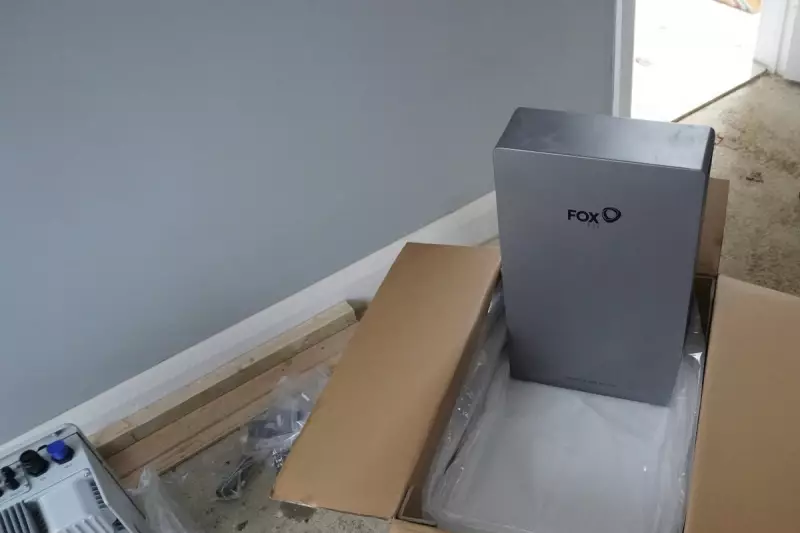
For UK homeowners investing in solar panels, the next logical step is often a solar battery. These large lithium-ion units, using technology similar to electric vehicles, store surplus solar power for use after dark, offering a potential path to greater energy independence and lower bills.
What Are Solar Batteries and How Do They Work?
At their core, solar batteries function like any rechargeable battery: they store energy for later use. In a home setup, they are charged primarily by free solar energy generated during the day. Alternatively, they can be topped up using cheap overnight grid electricity if your energy tariff permits.
A key component is the inverter, which converts the battery's lower voltage to the standard 230 volts required by your home's electrical system. Available capacities typically range from about 5 kilowatt-hours (kWh) to 14kWh, and systems can often be expanded by adding multiple units.

Lloyd Greenfield, founder of solar installer Glow Green, notes their suitability: “Batteries are definitely suited to people who typically use their energy in the evening. So if you're a high daytime consumer, it might be a faster payback, actually, without the battery.”
Costs, Savings, and Calculating the Return
The financial equation is crucial. A solar battery typically costs between £2,500 and £6,000, with installation adding around £3,000 more if done separately. Combining installation with new solar panels is usually the most cost-effective approach.
To understand the value, you can calculate the cost per stored kilowatt-hour. Taking the Duracell Dura5 system as a real-world example, priced at £2,280 (excluding fitting) and guaranteed for 10 years or 10,000 cycles, the maths suggests a storage cost of roughly 5 pence per kWh.
This is compelling when compared to the projected April price cap of 27 pence per kWh. It means stored solar energy costs a fraction of grid power. Furthermore, pairing a battery with a cheap overnight tariff (as low as 7.5 pence) could allow you to store grid power for just 12.5 pence per unit.
However, the calculation has complexities. Batteries degrade over time, holding less charge. Warranties are typically for 10 years, not cycles, so your usage pattern matters. The average UK home uses about 2,700kWh annually. If a battery's life ends at its 10-year guarantee, the cost per kWh rises for lower-usage households.
Key Advantages and Considerations
The primary benefit is maximising self-consumption of your solar energy. Without a battery, excess daytime power is exported to the grid, often for a lower price than you pay to import it back at night. A battery lets you use that cheap, clean power yourself, potentially slashing bills and your carbon footprint.
Additional advantages include providing backup power during outages (depending on setup) and future-proofing against rising energy prices. Some can even earn money by participating in smart grid schemes.
On the downside, the upfront investment is significant. The financial return hinges on your consumption patterns. High evening users, especially those with electric vehicles or heat pumps, stand to gain the most. You must also consider the export tariff you receive for surplus solar; if you can sell for 15 pence per kWh, storing it becomes less financially attractive.
Installation and Choosing the Right System
Professional installation by an MCS-certified installer is essential for safety and warranty compliance. The process involves mounting the battery (often in a garage or utility room), connecting it to your solar inverter, and configuring monitoring software.
Choosing the right size is critical. For most UK homes using 8-10kWh daily, a battery with 4-10kWh usable capacity is sufficient. Larger homes or those with EVs may need 10-15kWh. An oversized battery may never fully charge, reducing efficiency.

Should you invest? If you have high electricity usage, a sizable solar array, and are comfortable with a long-term investment, a battery can be highly effective. It allows you to capitalise fully on your solar generation and hedge against volatile energy markets. For lower-use households, the payback period will be longer, requiring more careful consideration.
As Mr. Greenfield summarises for a specific profile: “If you're a working, busy professional, and you're out the house all day... that's when you have a high consumption... you'd definitely be suited for a battery.” Ultimately, it's a personal calculation balancing upfront cost against long-term savings and energy resilience goals.