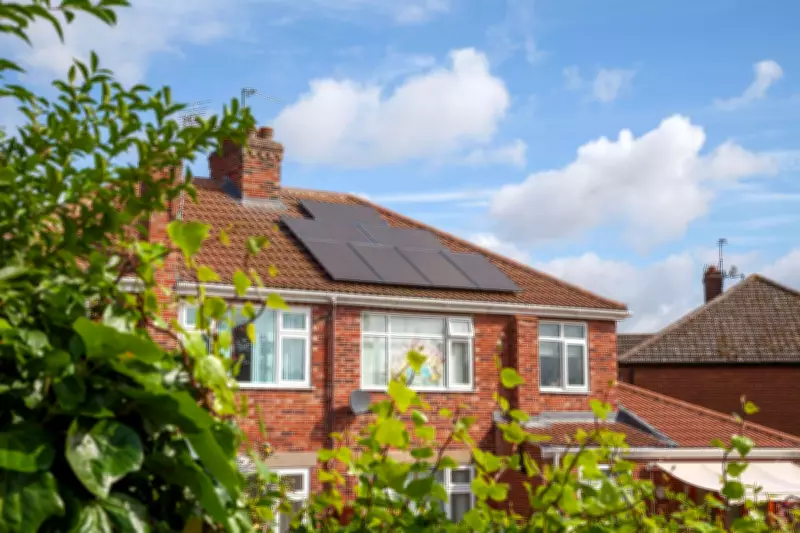
British households are increasingly turning to solar power as a strategic buffer against the turmoil in global oil and gas markets, according to leading electricity supplier E.On. The company has reported a remarkable 62% surge in solar panel sales this month compared to the previous month, alongside a similar spike in website visits to its solar energy pages during early March.
Geopolitical Unrest Drives Renewable Energy Adoption
This significant uptick in consumer interest comes against a backdrop of escalating conflict in the Middle East, which has severely disrupted energy supplies and sent crude oil and natural gas prices skyrocketing. The effective closure of the Strait of Hormuz and damage to critical energy infrastructure in the region have created widespread market volatility, prompting Britons to seek more stable and sustainable alternatives.
E.On Launches Innovative Automation Service
In response to this growing demand, E.On has announced the launch of a new automated service designed to maximise savings for homes equipped with solar panels and battery storage systems. The tool, named Next Optimise, intelligently connects to wholesale electricity prices, using automation to charge home batteries during periods of low prices and then utilise or export the stored energy when prices increase.

Chris Norbury, Chief Executive of E.On UK, emphasised the timeliness of such innovations, stating: "There has probably never been a more critical moment to introduce products that can substantially impact residential energy bills. Our customers consistently express their desire for solutions that reduce energy costs not just temporarily, but sustainably and over the long term."
Learning from Australia's Solar Success
The technology powering Next Optimise has already been successfully deployed in approximately 80,000 Australian homes, where sunnier climatic conditions have accelerated solar power adoption ahead of many other nations, including the United Kingdom. Dan Adams, Chief Executive of Amber Electric, E.On's technology partner, believes this widespread adoption has made Australia "less exposed to major energy shocks" due to its increased solar uptake.
Government Backs Clean Energy Transition
Martin McCluskey, Minister for Energy Consumers, reinforced the government's commitment to renewable energy, stating: "Recent events in the Middle East underscore that our mission for clean, domestically generated power is fundamental to our national energy security. Solar power will play a vital role in this mission, and it is evident that the British public recognises this reality."
The minister further announced plans to make plug-in solar products available in retail stores within months, aiming to help consumers save money on their energy bills while protecting them from the unpredictability of fossil fuel markets.
A Path Toward Energy Decarbonisation
E.On's Chris Norbury acknowledged that while the UK is in a better position than during the 2022 energy crisis, substantial work remains. "We have the opportunity to accelerate our efforts, continuing the decarbonisation of our energy system," he argued. "This transition is what will ultimately insulate us from fossil fuel-driven geopolitical events. Electrifying home energy through solar and battery technology needs to happen rapidly, particularly benefiting households most vulnerable to price fluctuations."
The record installation rates of solar panels during the first half of this year demonstrate a clear shift in consumer behaviour, as Britons increasingly view renewable energy not just as an environmental choice, but as a practical strategy for financial security and energy independence in an unstable world.