Global Leaders Scramble as Stopgap Measures Fail to Curb Soaring Gas Prices
Global leaders have been frantically attempting to contain the escalating costs of oil and gasoline since the onset of the Iran war. This conflict has removed a record volume of oil from the market, with tankers full of crude stranded in the Persian Gulf and military strikes damaging critical infrastructure including refineries, pipelines, and export terminals.
Emergency Responses Fall Short
In a bid to alleviate consumer pain, President Donald Trump and other heads of state have activated various emergency levers. A coalition of 32 nations within the International Energy Agency initiated the largest release of emergency oil reserves in history, totaling 400 million barrels. Concurrently, Trump has tapped into the Strategic Petroleum Reserve, lifted sanctions on Russian and Iranian crude, and temporarily waived the Jones Act—a maritime law restricting shipping between U.S. ports to U.S.-flagged vessels.
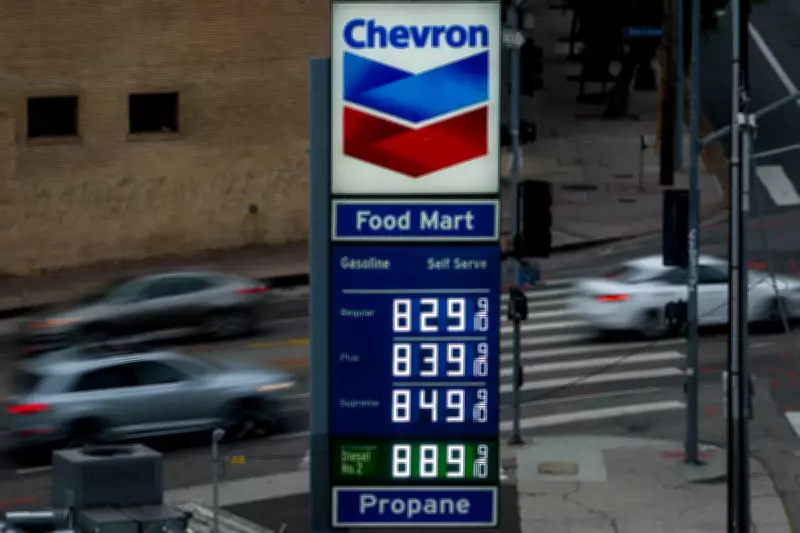
Despite these aggressive maneuvers, crude oil prices have surged beyond $100 per barrel, with U.S. gasoline averaging $4.06 per gallon. Experts caution that while these stopgap measures provide some relief, they are inadequate to replace the stranded oil supply.

"They're all incremental," stated Mark Barteau, professor of chemical engineering and chemistry at Texas A&M University. "These patches might contribute 1 to 2 million barrels per day each, but we need to reach 20 million. It's challenging to see them accumulating to the necessary volumes, and sustainability remains a critical question."
The Scale of the Supply Disruption
Prior to the war, approximately 15 million barrels of crude oil and 5 million barrels of oil products transited daily through the Strait of Hormuz, accounting for roughly 20% of global oil consumption, according to the International Energy Agency. Compounding this loss, several Middle Eastern oil-producing nations have halted production due to inability to ship fuel from the Gulf and full storage tanks, removing an additional 10 million barrels per day from the market.
Jim Krane, energy research fellow at Rice University’s Baker Institute, highlighted that the eight Persian Gulf nations, holding about 50% of global oil reserves, typically coordinate to stabilize prices, with Saudi Arabia often deploying spare capacity. "But all of that spare capacity is also bottled up inside the Persian Gulf right now and it can’t get to market either," Krane explained. "So the main emergency response system that we have is also blocked."
The IEA emphasized in a recent report that "the resumption of transit through the Strait of Hormuz is the single most important action to return to stable oil and gas flows and reduce the strains on markets and prices."
Limitations of Short-Term Fixes
Nations are exploring workarounds to extract oil from the Gulf. Saudi Arabia is utilizing its East-West pipeline to transfer about 5 million barrels per day to the Red Sea, noted Michael Lynch, distinguished fellow at the Energy Policy Research Foundation. However, this pipeline was already near capacity, offering limited room for additional stranded tanker oil.
Trump's temporary lifting of sanctions on approximately 140 million barrels of Iranian oil in transit did not augment market supply but merely expanded the buyer pool, according to Daniel Sternoff, senior fellow at the Columbia Center on Global Energy Policy. "As soon as you are moving to waive sanctions on your adversary with whom you’re fighting a military conflict, to do something in their benefit, it just shows you that you are running out of options to try to prevent a rise in the price of oil," Sternoff remarked.
The sanction waiver on Russian oil could have a more substantial impact by allowing stored barrels to clear, Sternoff added. Meanwhile, the Jones Act waiver may ease natural gas prices by facilitating LNG shipments from the Gulf Coast to New England, but experts like Lynch deem it "helpful, but not a game changer" for oil or gasoline prices.

Why U.S. Oil Production Cannot Bridge the Gap
Although the U.S. is a major oil producer and net exporter, it cannot instantly ramp up production to offset global shortages. "If the U.S. were to try to make up the global shortfall, we would need to nearly double our production," Barteau asserted. "We couldn’t drill wells that fast even if we wanted to."
Lynch pointed out that even replicating a 1 million barrel per day increase, achieved during the shale boom, is improbable due to market volatility. "If we run every drilling rig right now, what happens a week from now when the war is over and the price goes back down $20?" Lynch questioned. "People don’t want to develop long-term production based on a short-term price spike."
Halting U.S. exports would not lower gasoline prices either, as oil is traded globally, and U.S. refineries are optimized for heavy, sour crude, whereas domestic production is predominantly light, sweet crude. According to the American Fuel and Petrochemical Manufacturers, only 60% of crude processed in U.S. refineries is domestically extracted, with retooling requiring billions and likely raising prices further.
Lynch concluded, "A lot of people like the IEA are making the point that this is the biggest oil crisis ever, which is partly true, partly an exaggeration, depending on how you count things. A lot of it has to do with how long does this last ... if it goes on for another six weeks we get to be in some serious trouble."