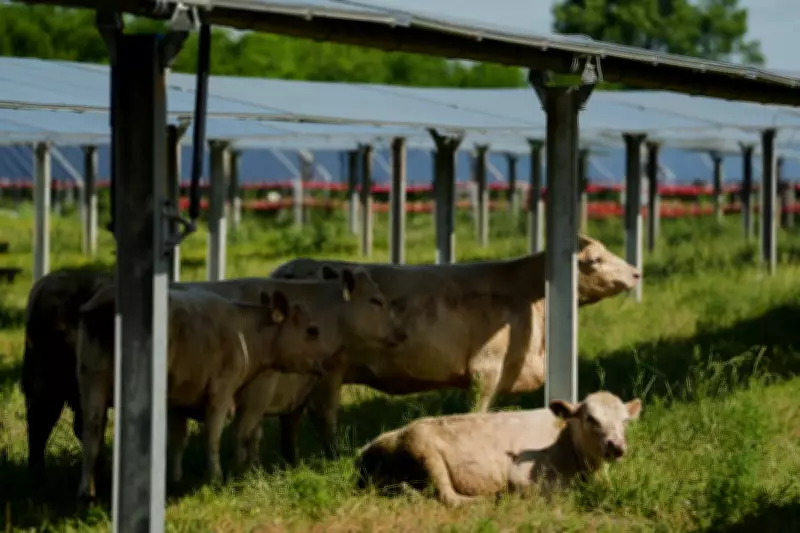
A Tennessee solar developer is betting that cattle-grazing and solar panels can coexist, potentially benefiting farmers and the electric grid. Silicon Ranch, which owns a 40-acre farm in Christiana near Nashville, believes cattle-grazing is the next frontier in agrivoltaics, which has mostly involved growing crops or grazing sheep beneath panels.
From a distance, the small solar farm looks like others dotting rural America, with rows of black panels absorbing sunlight. But beneath these panels is lush pasture instead of gravel, enjoyed by a small herd of cattle that spends its days munching grass and resting in the shade.
Silicon Ranch debuted the project this week and will spend the next year demonstrating that larger cattle can also thrive at solar sites. If successful, advocates say, this could jump-start new projects to meet soaring electricity demand from data centers without climate-warming emissions, and help cattle producers hold onto their land.

Making Room for Cattle
Though there are far more cattle than sheep in the U.S., their size poses challenges at solar sites, where both expensive equipment and animals weighing over half a ton must be protected. Solar panels often pivot to near-vertical angles, leaving little room underneath. Simply raising panels is cost-prohibitive due to steel requirements. Silicon Ranch raised panels slightly but also developed software to turn them close to horizontal when cattle graze, giving them room to wander, said Nick de Vries, chief technology officer.
Workers rotate the cattle—currently 10 cows and their calves—between paddocks every few days so panels on ungrazed portions operate normally, generating roughly 5 megawatts for Middle Tennessee Electric, a rural co-op. The hope is that the technology will be adopted more broadly. "We know it works," said de Vries. "But you need to prove it to other people."
Benefits for Farmers
For solar companies, agricultural land is generally easier to develop than other sites. But many farmers and communities need convincing that solar grazing benefits them, given past practices that destroyed topsoil and took land out of production permanently. "For many agricultural stakeholders, it is offensive to see high-quality farmland getting graded and piled when that's a farm family's legacy," said Ethan Winter, national smart solar director at American Farmland Trust.
However, Winter sees potential for solar grazing partnerships to help farmers keep land in production and earn extra income. "Agriculture is in a really tough spot right now, so maybe this is our moment where we can be helping states meet their energy needs and provide new opportunities for farmers."
Silicon Ranch will have almost 15,000 acres of pasture grazed—mostly by sheep—this year, working with ranchers, farmers, and researchers to adopt best practices. Findings show that pasture beneath solar panels retains more moisture, making it drought tolerant, said Anna Clare Monlezun, a rancher and rangeland ecosystem scientist. Grazing in the shade reduces heat stress, helping cattle gain more weight and drink less water. "There are more win-wins than trade-offs," she said.
Farmers often earn about $1,000 an acre leasing land for solar, easily 10 times more than traditional agriculture, Winter said. This can help diversify operations, pay down debt, and buy more land. "I think you'll start to hear more interest from farmers who are up against a serious financial wall right now," Winter added.