In a remarkable turn of events, global oil markets have experienced extreme volatility following statements from US President Donald Trump regarding the ongoing conflict with Iran. Brent crude, the international benchmark, initially surged to a staggering $119.50 per barrel on Monday as fears over Middle Eastern energy supplies intensified.
Presidential Reassurance and Market Reaction
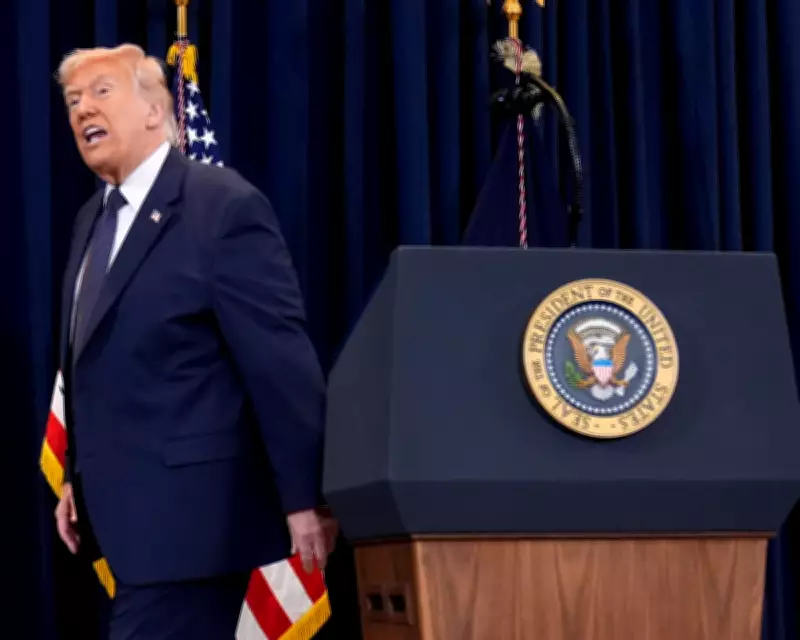
President Trump moved swiftly to calm nervous investors, describing the oil price increase as "probably less than I thought they'd go up" in an attempt to downplay the dramatic spike. Following his comments characterizing the war on Iran as "very complete, pretty much" during a CBS News interview, Brent crude fell sharply to $91.58 per barrel.
Conflicting Signals and Continued Threats
Despite this apparent reassurance, Trump later delivered contradictory messages that suggested the conflict would persist. "We have won in many ways," he stated, before adding, "But not enough." The president escalated tensions further through social media, warning that if Iran "does anything that stops the flow of Oil within the Strait of Hormuz, they will be hit by the United States of America TWENTY TIMES HARDER than they have been hit thus far."

This vital waterway typically handles approximately one-fifth of global oil shipments and seaborne gas tankers, having been effectively closed for a week prior to these developments. The closure has significantly heightened concerns about energy supplies, contributing to the price increases witnessed across international markets.
Iran's Response and Regional Implications
Tehran responded forcefully through Iranian state media, with a spokesperson for the Revolutionary Guards declaring that Iran would not permit "one litre of oil" to be exported from the region if US and Israeli attacks continue. This stark warning underscored the potential for further disruption to global energy flows.
French President Emmanuel Macron indicated on Monday that multiple countries might deploy naval vessels to escort container ships and tankers through the Strait of Hormuz once "the most intense phase of the conflict" concludes, highlighting international efforts to secure this crucial trade route.
Sanctions Policy Shifts
In a significant policy development, President Trump announced that Washington would temporarily waive certain oil-related sanctions to alleviate shortages. Although he did not mention Russia specifically, this disclosure followed a conversation between Trump and Russian President Vladimir Putin. Such a move could potentially complicate US efforts to penalize Moscow for its ongoing war in Ukraine.
"We have sanctions on some countries," Trump told reporters. "We're going to take those sanctions off until the strait is up." This statement came shortly after the Trump administration permitted Indian refiners to purchase Russian oil for thirty days, reversing a previous position where Trump claimed India had agreed to cease such purchases to help "END THE WAR in Ukraine."
Global Ripple Effects
While oil prices have retreated from Monday's peaks, they remain substantially elevated compared to levels seen just weeks ago. Governments across Europe and Asia have implemented emergency measures in response to heightened fuel costs and supply uncertainties.
Croatia, Hungary, South Korea, and Thailand have all instituted price caps on fuel in recent days to mitigate potential shortages. The Philippines ordered public officials to reduce air conditioning usage and limit travel, while Bangladesh closed all universities and brought forward Eid al-Fitr holidays as part of electricity and fuel conservation efforts.
The dramatic price movements represent one of the most volatile periods in energy markets since the peak of the COVID-19 crisis and the immediate aftermath of Russia's invasion of Ukraine, demonstrating how geopolitical tensions continue to reverberate through global commodity markets with significant economic consequences.