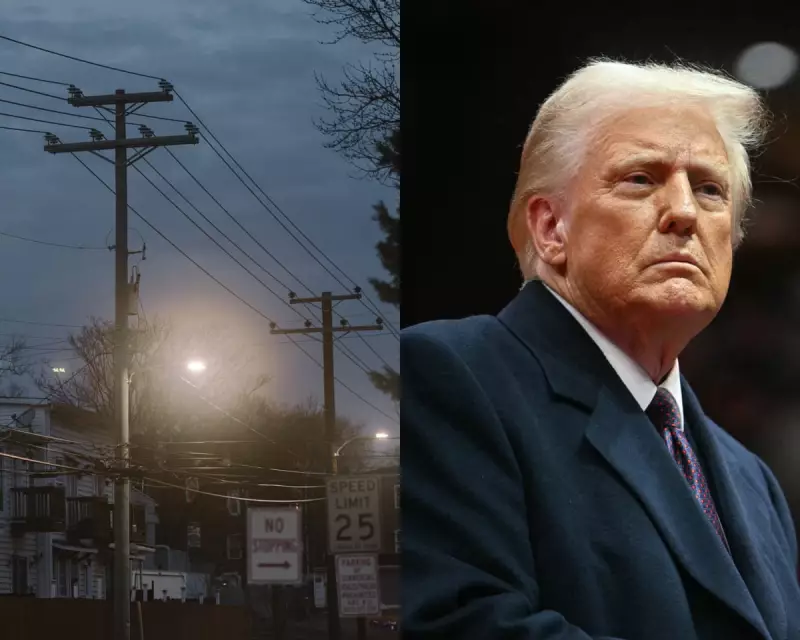
Donald Trump has failed to deliver on a central promise of his 2024 presidential campaign, with official data showing electricity bills across the United States have risen sharply instead of being halved.
Soaring Costs and Broken Promises
During the election, Trump repeatedly vowed to dramatically cut energy costs. "I will cut the price of energy and electricity in half," he declared at a rally in Detroit in October 2024, pledging the reduction would occur within 12 months of his inauguration on 20 January. However, a Guardian analysis of US Energy Information Administration (EIA) data reveals the opposite trend. The average household electricity bill in 2025 was 6.7% more expensive than the previous year, costing families nearly $116 more on average.
The increases have been severe in several regions. Residents of Washington DC faced the steepest rise at 23%, followed by Indiana at 17% and Illinois at 15%. The Midwest was the hardest-hit region. Furthermore, household gas bills jumped by an average of 5.2%, compounding the financial pressure on American families.

Policy Choices and Rising Demand
Experts link the rising costs to the administration's policy direction and surging energy demand. Trump's agenda has focused on maximising oil and gas drilling while rolling back environmental regulations. Simultaneously, he has aggressively promoted artificial intelligence (AI) development, which has significantly increased electricity demand for the first time in decades.
Concurrently, the administration has blocked numerous renewable energy projects, including halting five offshore wind farms last December. "We have not approved one windmill since I've been in office, and we're going to keep it that way," Trump stated this month. Energy expert Abe Silverman of Johns Hopkins University explained this creates a critical imbalance: "The demand-growth horse has got a shot of adrenaline... The supply horse is losing, by a lot."
Household Strain and Political Fallout
The financial impact on households is tangible and severe. The National Energy Assistance Directors Association (NEADA) reports that power bill disconnections have spiked, with New York seeing a fivefold increase. Executive Director Mark Wolfe noted the crisis now affects middle-income families, not just the poorest: "There's a limit to how much people are able to sacrifice."
Angie Shaneyfelt, a 52-year-old from Baltimore, saw her bill leap from under $300 to $400 monthly, forcing her to consider a second job. "I've already slimmed back so much stuff," she said. "And now I have to give up my time with my family?" Despite this, Trump recently dismissed affordability concerns as a "hoax" and "fake narrative" invented by political opponents.
The political repercussions are mounting. Jesse Lee of Climate Power warned, "We're going to make sure that every Republican who rubber-stamps Trump's anti-energy agenda pays the political price in 2026." A White House spokesperson defended the administration, stating lowering prices remains a "top priority" and blaming higher costs in Democrat-run states.