Former US President Donald Trump's aggressive move to seize control of Venezuela's vast oil reserves represents a global escalation of his "drill, baby, drill" policy, with climate scientists warning of catastrophic environmental consequences.
A Climate Catastrophe in the Making
Following the dramatic capture and arrest of Venezuelan leader Nicolás Maduro and his wife Cilia Flores in early January, Trump has orchestrated a plan to ramp up oil production in the country, which holds the largest known oil reserves on the planet – an estimated 300 billion barrels according to the Energy Institute.
Experts are sounding the alarm that fulfilling this vision would be financially fraught and, critically, "terrible for the climate." Paasha Mahdavi, an associate professor at the University of California, Santa Barbara, calculates that even boosting Venezuela's output from its current level of around 1 million barrels per day to 1.5 million would generate approximately 550 million tons of carbon dioxide annually when burned. This surpasses the yearly carbon pollution of entire nations like the UK and Brazil.

"If there are millions of barrels a day of new oil, that will add quite a lot of carbon dioxide to the atmosphere and the people of Earth can’t afford that," stated John Sterman, a climate and economics expert at MIT.
Dirty Oil and Global Repercussions
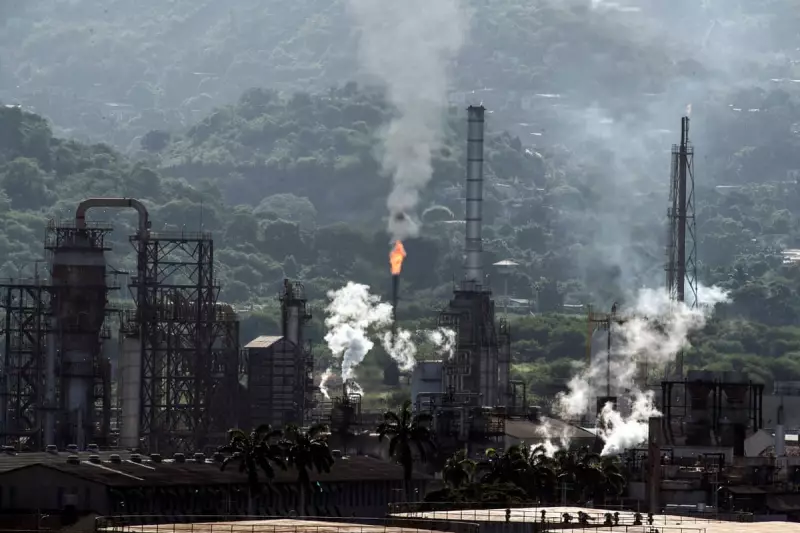
The climate impact is magnified because Venezuelan crude is among the world's most carbon-intensive. Its enormous deposits of extra-heavy oil are particularly dirty, and other reserves are also highly polluting, Mahdavi confirmed. This surge would come as the world teeters on the brink of breaching agreed temperature limits, already suffering intensified heatwaves, storms, and droughts.
Sterman added that increased Venezuelan production would likely depress global oil prices, slowing the vital transition to renewable energy and electric vehicles. "If oil production goes up, climate change will get worse sooner, and everybody loses, including the people of Venezuela," he said. "The climate damages... will almost certainly outweigh any short-term economic benefit of selling a bit more oil."
Imperial Ambitions and Economic Realities
Critics have accused Trump of a fossil fuel-driven "imperialism" that threatens both the climate and international stability. "The US must stop treating Latin America as a resource colony," said Elizabeth Bast of Oil Change International. Patrick Galey of Global Witness labelled the aggression "yet another conflict fuelled by fossil fuels."
However, realising Trump's vision faces significant hurdles. Reviving Venezuela's crippled industry would require tens of billions in investment and many years, far beyond a single presidential term. Production has collapsed from a 1970s peak of 3.7 million barrels per day due to mismanagement and US sanctions.
Analysts note that boosting output by 500,000 barrels daily would cost about $10 billion and take two years. Returning to 2 million barrels per day by the early 2030s could require a staggering $110 billion investment, according to Rystad Energy. While some US firms like Chevron may be positioned to benefit, the enormous political and financial risks may deter widespread participation.
Ultimately, while the commercial and political future of Trump's Venezuelan oil strategy remains uncertain, the climate outcome of any major expansion is clear. As Mahdavi concluded, it would be "terrible for the climate, terrible for the environment."