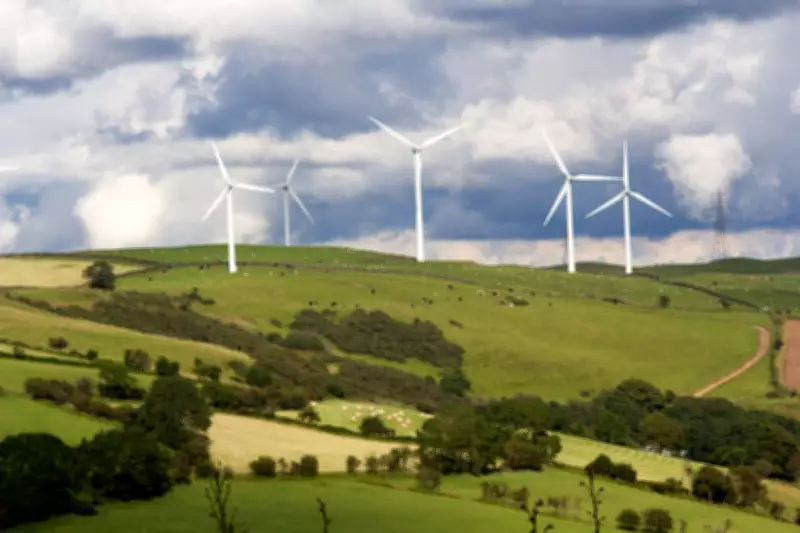
UK Government Proposes Small Wind Turbines for Businesses Without Planning Permission
The UK government has unveiled significant new proposals that would allow businesses, schools, and farms across the country to install small wind turbines without requiring formal planning permission. This initiative aims to reduce energy bills and boost clean power generation during the ongoing global energy crisis.
Details of the Proposed Changes
Under the new plans, organisations would be permitted to erect a single wind turbine up to 30 metres tall – approximately the height of a mature oak tree – without submitting a planning application, provided they meet specific conditions. This represents a substantial expansion of current permitted development rights for onshore wind, which are currently largely restricted to small domestic turbines with strict height and size limitations.
Energy Minister Michael Shanks emphasised that this move would provide businesses, schools, and farmers with "the tools to lower their bills and make the best use of their land." The proposal forms part of the government's broader clean energy drive, which officials have framed as a response to the current global energy situation.
Addressing Planning Barriers
The Department for Energy Security and Net Zero (Desnz) highlighted that existing planning regulations and associated costs have frequently stalled viable small wind turbine projects, even when they were financially sound. By extending permitted development rights to non-domestic settings, the government aims to overcome these barriers and accelerate the adoption of what they describe as one of the cheapest and quickest energy sources to install.
Officials stated that the changes would help protect organisations against volatile fossil fuel markets while maintaining strong safeguards to protect landscapes and communities. These safeguards could include:
- A buffer zone between any installed turbine and property boundaries
- Exclusion of conservation areas, national landscapes, and national parks
- Protection for sensitive habitats and heritage sites
- Restrictions on land belonging to listed buildings
Broader Clean Energy Context
This wind turbine proposal comes alongside several other recent government announcements on renewable energy. In recent days, ministers have also:
- Unveiled plans for plug-in solar panels suitable for balconies
- Backed reforms to accelerate nuclear site development
- Announced upcoming rounds of auctions for renewable power generation contracts
Energy Minister Shanks further explained: "In the midst of uncertain global markets, the only way for households and businesses to have certainty is to invest in clean homegrown power such as onshore wind, one of the cheapest and quickest forms of energy to build."
The government's approach represents a significant shift in planning policy for renewable energy infrastructure, potentially making it much easier for non-domestic organisations to generate their own clean electricity while reducing their exposure to fluctuating energy prices.