

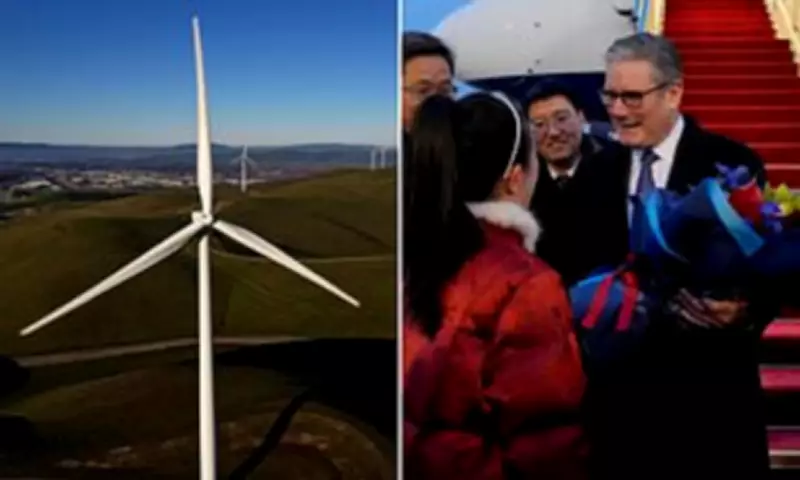
Chinese companies could face exclusion from constructing wind farms across Britain as national security considerations take precedence in government decision-making. Prime Minister Sir Keir Starmer has confirmed that his administration is actively reviewing whether to permit the Chinese firm Mingyang to establish a substantial £1.5 billion turbine manufacturing facility in Scotland.
Security Concerns Override Economic Benefits
This major industrial project, which had been anticipated to generate approximately 1,500 employment opportunities, was widely expected to receive formal approval during Sir Keir's diplomatic visit to Beijing this week. However, significant apprehensions have emerged regarding the potential for the United Kingdom to become excessively dependent on Chinese technology within the renewable energy sector.
International Warnings and Surveillance Fears
The Trump administration is understood to have communicated explicit warnings to UK authorities about the perceived national security risks associated with this development. Intelligence assessments suggest that Chinese-manufactured wind turbines could potentially incorporate sophisticated surveillance apparatus, enabling clandestine monitoring of sensitive military installations and communications.

When questioned about his position on the proposed Inverness-shire facility during his trade mission departure, the Prime Minister responded cautiously: 'No decision has been made in relation to Mingyang. There's no decision on that yet, one way or another, but obviously uppermost in our minds is the national security of the United Kingdom.'
Critical Infrastructure Comparisons
Further pressed on whether wind power infrastructure should be categorised alongside nuclear energy as critical national assets from which Chinese involvement should be restricted, Sir Keir stated: 'That's part of the consideration in any decision, but there is no decision.' This ambiguity reflects the complex balancing act between economic development and security imperatives.
Parliamentary Calls for Vigilance
Labour MP Liam Byrne, who chairs the influential Commons business committee, has articulated growing parliamentary concerns regarding Chinese economic influence. He emphasised to The Times: 'We need to be far more vigilant than we have been about safeguarding the UK economy from coercion and unfair competition from China.'
Byrne elaborated on the strategic implications, warning: 'If we do not block China from projects such as this, we risk Beijing using unfair state subsidies to undermine UK and EU energy independence by destroying the renewable energy market in Europe.' This perspective highlights broader anxieties about maintaining competitive fairness and strategic autonomy within the green energy transition.
The ongoing review signifies a pivotal moment in UK-China economic relations, where security assessments are increasingly influencing infrastructure development decisions within the renewable energy sector.






