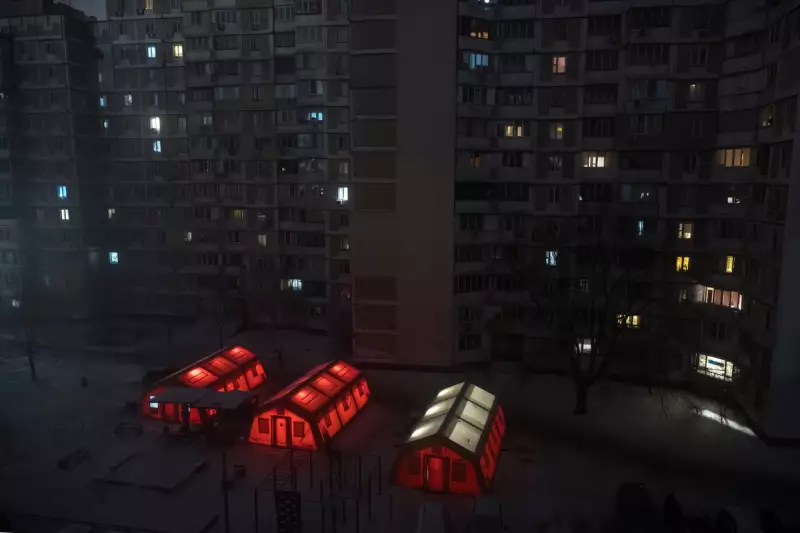
Ukraine's energy minister has issued a stark warning, stating that not a single power plant in the country has been spared from Russian attacks since the full-scale invasion began nearly four years ago. The grim assessment comes as a severe escalation in aerial bombardments plunges hundreds of thousands into darkness and cold during the harshest winter in years.
A Nation Plunged into Darkness
Energy Minister Denys Shmyhal addressed Ukraine's Parliament, the Verkhovna Rada, on Friday, 16 January 2026, detailing the scale of the assault. He revealed that Russia conducted 612 separate attacks on Ukrainian energy infrastructure last year alone. This barrage has intensified in recent months as nighttime temperatures have plummeted to a bitter minus 18 degrees Celsius.
"Nobody in the world has ever faced such a challenge," Shmyhal told lawmakers, framing the crisis as unprecedented. The Russian strategy, which Kyiv officials describe as "weaponising winter," aims to break Ukrainian resilience by targeting heat and power supplies during the coldest season.

International Response and Dire Consequences
The critical situation on the energy front coincides with ongoing uncertainty regarding international peace efforts. The human cost is immense. Jaime Wah, deputy head of the International Federation of Red Cross and Red Crescent Societies in Kyiv, stated this is "the hardest winter since the escalation of the conflict."
He explained that punishing cold combined with a lack of heating and electricity is affecting millions of people already worn down by years of violence and economic strain. In response to the desperate shortage, Minister Shmyhal has made a direct appeal to businesses, urging them to switch off illuminated signage and exterior decorations to conserve power. "If you have spare energy, better give it to people," he said. "This is the most important thing today."
Emergency Measures and UK Support
The Ukrainian government has enacted a series of emergency measures to cope. These include temporarily easing curfew rules to allow citizens to access public heating centres. Authorities are prioritising electricity and heat supplies for hospitals, schools, and other critical infrastructure.
Furthermore, state energy companies like Ukrzaliznytsia and Naftogaz have been instructed to urgently purchase imported electricity to cover at least half of their own consumption. International support is also arriving. On Friday, UK Deputy Prime Minister David Lammy was in Kyiv to mark the first anniversary of a "100-year partnership" between Britain and Ukraine.
To coincide with the anniversary, Britain announced a further £20 million in funding specifically for repairs to Ukraine's ravaged energy infrastructure. This aid comes as the war of attrition continues along the sprawling front line, with Russia occupying less than 20% of Ukrainian territory since 2014 despite its military onslaught.