Residents across Ukraine's Kyiv region are enduring sub-zero temperatures in their homes as emergency crews work around the clock to restore electricity following relentless Russian attacks on the nation's energy grid. Officials confirmed on Wednesday, 14 January 2026, that repair teams are working flat out to address the damage from the barrages, which have caused the most extensive blackouts since Russia's full-scale invasion began nearly four years ago.
Heroic Efforts in the Freezing Cold
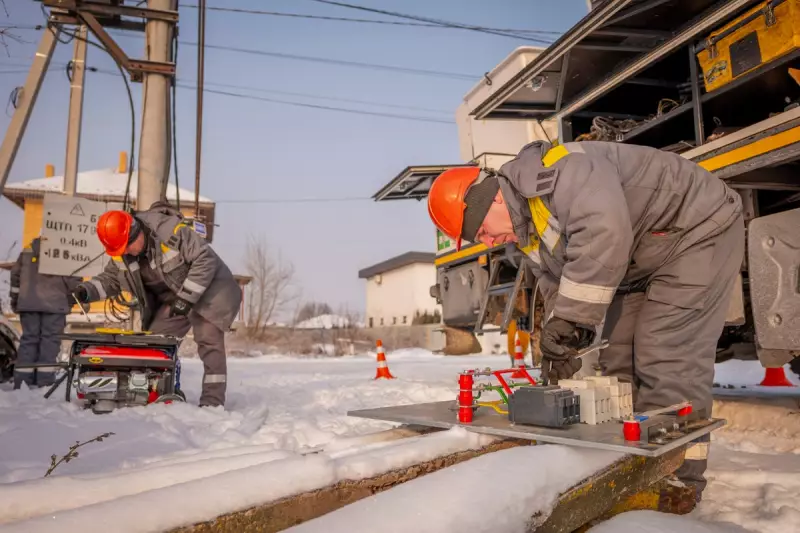
In the town of Boryspil, home to approximately 60,000 people, crews from private energy provider DTEK are dismantling and rebuilding burned-out electrical systems. Yurii Bryzh, head of the Boryspil regional department for DTEK, described teams labouring in -15°C (13°F) conditions from early morning until midnight. Their monumental efforts have managed to restore supply for just four hours each day in some areas.
However, Bryzh explained a critical challenge: when power briefly returns, residents immediately turn on all available appliances to cook, wash, or charge phones, overloading and collapsing the fragile system once more. This cycle of brief restoration and subsequent failure complicates recovery efforts significantly.

Civilians Huddle for Warmth in Darkened Homes
The hardship for civilians is acute. Kyiv Mayor Vitali Klitschko stated these are the longest and most widespread outages of the war. Some households have been without electricity for days. Apartments in the capital are freezing, forcing people to wear heavy layers indoors and out. Snow blankets the city, and at night, towering apartment blocks remain completely dark.
Residents shared their coping strategies with The Associated Press. A married couple, scientists Mykhailo, 39, and Hanna, 43, reported the temperature in their five-year-old daughter Maria's bedroom had plunged to -15°C. The family now sleeps together in one bed under every blanket they own, using a gas stove to cook and taking their daughter to work because her kindergarten has no heat. Their Christmas decorations, occasionally illuminated by flashlight, still hang on the walls.
Zinaida Hlyha, 76, heats water on her gas stove to fill bottles for warmth. She expressed a sentiment common among those suffering: "Of course it's hard, but if you imagine what our guys in the trenches are going through now, you have to endure. What can you do? This is war."
A System Pushed to Its Limits
The scale of the damage is immense. According to energy analyst Dennis Sakva from Dragon Capital, Russian barrages are deliberately targeting power plants and major substations. Replacing critical equipment like transformers can take months, creating a logistical nightmare for repair crews.
Sakva paid tribute to those battling the crisis, stating, "There are two types of heroes in Ukraine. They are the military and energy workers." Their work continues against a backdrop of ongoing threat and extreme weather, as the nation endures what is described as the coldest winter in years.
For others, like Tetiana Tatarenko, whose two sons are fighting, the fear is constant, especially after a Shahed drone struck the building next to hers. In her cold apartment, she feels as if normal life has stopped. Her 89-year-old neighbour, physicist Raisa Derhachova, sometimes plays the piano in "this terrifying cold," drawing on resilience forged during World War II.