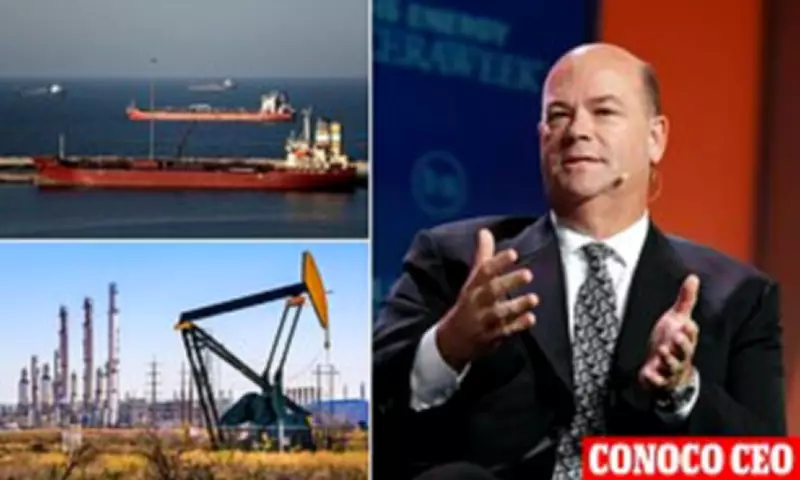
Major American petroleum corporations, including industry titans ExxonMobil, Chevron, and ConocoPhillips, stand to gain an astonishing $63 billion windfall this year if the ongoing conflict with Iran continues to drive crude oil prices upward. This substantial financial boon for energy giants emerges as motorists across the United States confront significantly elevated gasoline prices at the pump.
Drivers Feel the Pinch as Prices Soar
According to the latest data from AAA, the national average for a gallon of gasoline has climbed to $3.72, a notable increase from the sub-$3 levels observed before hostilities commenced. This surge is directly linked to Iran's strategic actions in the vital Strait of Hormuz, where the deployment of naval mines and suicide drones has effectively blocked approximately one-fifth of the global oil and gas supply from reaching international markets.
Analysts Predict Further Price Escalation
Financial experts from leading institutions Goldman Sachs and JPMorgan have issued forecasts suggesting that oil prices could escalate to between $120 and $150 per barrel should the war persist beyond a three-week timeframe. Such a scenario would inevitably exert additional upward pressure on retail fuel costs, compounding the financial strain on consumers.
Some commentators project even more dramatic gains for the industry. Industry analyst Adam Kobeissi estimates that US oil conglomerates could accumulate an additional $100 billion if elevated price levels are maintained over an extended period. These staggering figures underscore a profound transformation in the worldwide energy sector over the past twenty years.
The New American Energy Dominance
It is crucial to recognize that the global energy landscape has been fundamentally reshaped. The United States has decisively emerged as the planet's foremost oil and gas producer, a position solidified by the shale revolution. This technological advancement, centered on fracking techniques, has enabled the extraction of hydrocarbons from previously inaccessible underground reserves, thereby ending decades of reliance on imported crude.
This newfound energy independence affords American companies a triple advantage amid the current crisis. They profit directly from the spike in oil prices, enjoy reduced dependence on volatile Middle Eastern supplies, and benefit from robust global demand for domestically produced resources extracted from regions like west Texas and southeast Ohio.
Shale Producers Reap Immediate Rewards
The financial impact is already materializing. Investment bank Jefferies calculates that US shale operators alone will generate an extra $5 billion in cash during March, a direct consequence of the 47 percent price increase since the conflict's onset. This boom is built upon a historic shift; in 2020, the United States transitioned into a net oil exporter for the first time since the mid-20th century.
ConocoPhillips exemplifies this strategic pivot, deriving 63 percent of its total production from shale resources last year, with over a third originating from the prolific Permian Basin in West Texas. ExxonMobil, the nation's largest producer, has further diversified its portfolio, achieving record output in North America while expanding major projects in South America to secure a valuable stream of oil unaffected by Hormuz disruptions.
Winners, Losers, and Strategic Concerns
The benefits extend beyond industry behemoths. Smaller firms like Warren Buffett-backed Occidental Petroleum are also capitalizing, having acquired rivals to boost production and instantly gain from higher valuations on existing assets. In stark contrast, international oil majors with substantial Middle Eastern exposure, such as BP and Shell, face considerable losses and spiraling insurance premiums that negate gains from higher prices.
Paradoxically, Iran itself emerges as a significant beneficiary, with its crude oil tankers becoming the sole vessels navigating the Strait of Hormuz, feeding growing demand from nations like China and India.
Industry Leaders Voice Caution Amid Profits
Despite the prospective windfall, sector executives express deep concern over the macroeconomic repercussions of sustained high prices. Steven Pruett, CEO of Texas-based Elevation Resources, warned the Wall Street Journal, "The world does not need $120 oil. It's going to cause economic destruction."
Reflecting this apprehension, top executives from ExxonMobil, Chevron, and ConocoPhillips recently convened with Trump administration officials to strategize on mitigating the price surge. Discussions reportedly explored measures such as tapping the US Strategic Petroleum Reserve, relaxing sanctions on Russian oil exports, or waiving regulations that restrict domestic crude transportation between American ports.