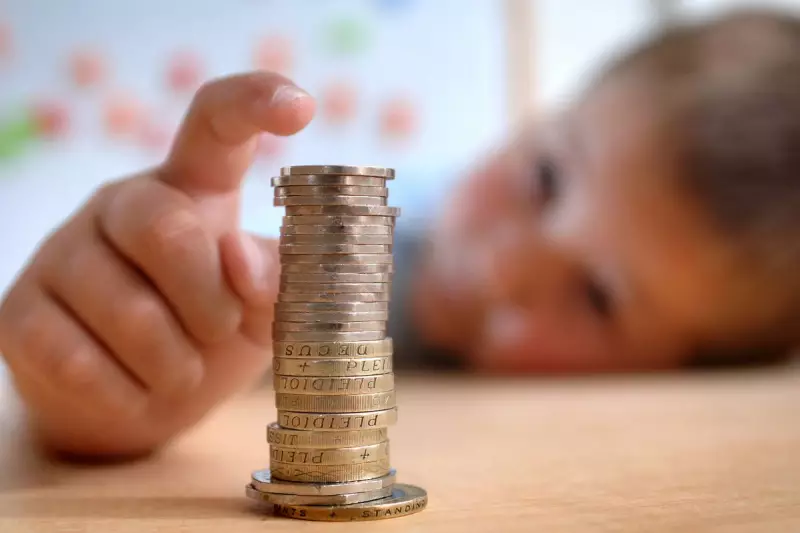
Deciding whether to give your children pocket money is a common parenting dilemma, with no universal right or wrong answer. According to finance and parenting specialists, while a regular allowance can be a powerful tool for teaching money management from an early age, it may not suit every family's circumstances.
When and How Much to Start Giving
Vix Leyton, a consumer finance expert at thinkmoney, emphasises that there is no one-size-fits-all approach. "Pocket money can be a brilliant tool for teaching children the value of money," she says, noting that practices vary widely—some parents give it, some don't, and some tie it to chores.
Matt Buttery, CEO of the Triple P UK and Ireland parenting programme, agrees, stating: "Pocket money can be a tricky area for any parent. Every family is different, and pocket money may not be the right choice for everyone."
The appropriate age to begin is entirely up to parents. Some start as young as four or five, using it to help children grasp basic maths concepts like addition and subtraction. Leyton advises that the 'right' time is as soon as a child understands that spending money means it's gone. "For younger children, that might mean very small amounts," she explains.
Setting the Amount and Creating Consistency
If you decide to provide an allowance, the next question is how much. Figures from the NatWest Rooster Money Pocket Money Index 2025 offer a benchmark. It found children received an average annual income of £474.76 (£9.13 per week), a slight decrease from the previous year. The weekly average breaks down to around £8.31 for 17-year-olds and £2.81 for six-year-olds.
Leyton stresses that the figure itself is less important than how it's used. "At its best, pocket money is a practical way to teach children that money isn't endless and that choices have consequences," she says. Crucially, she highlights that consistency is key. Without a regular schedule, parents risk becoming an "on-demand cash machine," setting a poor precedent for adult life.
Chores, Saving, and Broader Money Lessons
Linking pocket money to household chores is a common strategy. Buttery notes this can strengthen the connection between effort and reward but cautions that children should also learn about internal rewards like satisfaction. "Learning that some actions bring external rewards, like pocket money, while others bring internal rewards... is a really useful life lesson," he says.
Leyton adds that if tied to chores, expectations must be clear, turning the lesson towards earning and responsibility rather than pure money management.
Pocket money also provides a gentle introduction to saving. "Helping children put a little aside for something they want builds confidence and a sense of control," Leyton explains. It teaches patience, with the experience of spending everything immediately often being a more effective lesson than any lecture. As children grow older, it can evolve to cover phone credit or social activities, offering a safe space to practise budgeting.
Ultimately, both experts agree that the goal isn't to create perfect savers but to raise children who aren't scared of money. Leyton concludes: "The earlier we normalise that, the better." Buttery adds that age-appropriate discussions about money, alongside tools like pocket money, provide valuable opportunities to learn lifelong skills.