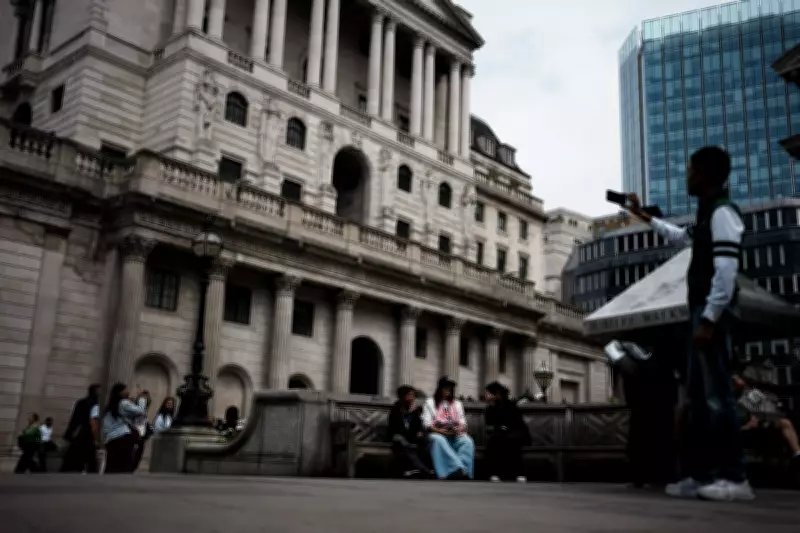
Economists across the financial sector are describing the Bank of England's decision to maintain interest rates at 3.75% this Thursday as a 'near-certainty'. This consensus follows December's unexpected inflation rebound, which has prompted policymakers to adopt a more cautious stance.
Inflation Rebound Alters Monetary Policy Landscape
The Monetary Policy Committee (MPC) is widely expected to leave the bank rate unchanged at 3.75% when it announces its decision this Thursday. This would mark the first interest rate setting of 2026, following a pre-Christmas cut in December 2025 that brought borrowing costs down for the fourth time that year.
Governor Andrew Bailey had previously indicated that the UK had 'passed the recent peak in inflation', creating room for that reduction. However, he cautioned that future cuts would present a 'closer call' for the committee.

December Data Shifts the Calculus
Official data released since the December decision has significantly altered the economic picture. The Consumer Prices Index (CPI) inflation rate rose to 3.4% in December, up from 3.2% in November. This marked the first increase in five months, driven primarily by factors including tobacco duties and rising airfares.
This inflation reading, which remains substantially above the Bank's 2% target, is considered sufficient by most analysts to encourage the MPC to pause further easing this month.
Expert Analysis Points to Hold Decision
Philip Shaw, an analyst at Investec, explained the rationale behind the expected hold: 'The principal reason to hold off from easing again is that at 3.4% in December, inflation remains well above the 2% target. With the stance of policy less restrictive than previously, there are greater risks that further easing is unwarranted.'
Shaw noted that while December's 3.4% figure sits slightly below the Bank's November projection of 3.5%, and medium-term forecasts remain consistent with hitting the target, the recent data creates sufficient uncertainty to warrant caution.
Supporting Economic Indicators
The MPC will also consider other positive economic signals, including gross domestic product (GDP) figures showing 0.3% growth in November. This return to economic expansion provides additional justification for maintaining current rates rather than implementing another cut.
Matt Swannell, chief economic advisor to the EY ITEM Club, reinforced this view: 'Keeping bank rate unchanged at 3.75% at next week's meeting looks a near-certainty. Although the data over the last few weeks has tilted in a slightly dovish direction, this does not appear to be anywhere near enough to prompt a majority of the MPC to favour back-to-back cuts.'
Looking Ahead to Future Policy Moves
Edward Allenby, senior economic advisor at Oxford Economics, forecasts that the next rate cut is more likely to occur in April rather than this month. He highlighted the ongoing challenges facing policymakers: 'The MPC will continue to face a delicate balancing act between supporting growth and preventing inflation from becoming entrenched, with forthcoming data on pay settlements likely to play a decisive role in shaping the next policy move.'
This reference to wage growth underscores a persistent concern for the Bank's policymakers. The rate at which wages are increasing across the UK continues to exert upward pressure on overall inflation, complicating the path toward the 2% target.
The consensus among economists suggests that Thursday's meeting will result in a holding pattern, with the MPC opting for stability amid mixed economic signals and persistent inflationary pressures.