British shoppers are facing a double blow this Christmas as their favourite festive chocolates have simultaneously shrunk in size and soared in price, according to new analysis. The phenomenon, known as 'shrinkflation', has hit popular lines from Terry's Chocolate Orange to Cadbury's Dairy Milk, with some products costing over 50% more than just four years ago while containing less chocolate.
The Shrinking Festive Selection
Detailed data analysed by BBC News from market researchers Assosia reveals the stark reality facing consumers. The research, which compiled prices from major supermarkets including Tesco, Sainsbury's, Asda and Morrisons between December 2021 and December 2025, shows consistent patterns across leading brands.
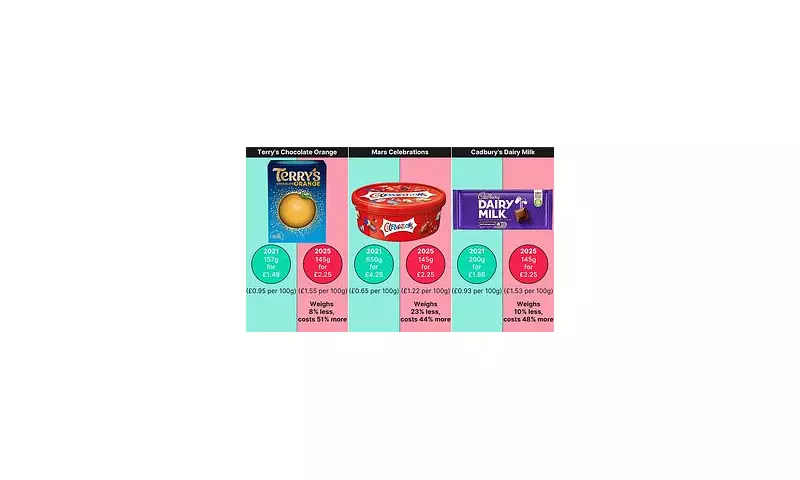
Terry's Chocolate Orange has undergone one of the most dramatic transformations. In December 2021, it retailed for £1.49 for a 157g product, equating to 95p per 100g. This month, the same treat costs £2.25 but weighs only 145g, making the price per 100g £1.55. This means the popular product now weighs 8% less but costs a staggering 51% more than it did four years ago.

The festive tub of Mars Celebrations has also been significantly affected. In 2021, a 650g tub cost £4.25 (65p per 100g). Now, shoppers pay £6.11 for a 500g tub (£1.22 per 100g). This represents a 44% price increase alongside a 23% reduction in weight.
Even the nation's beloved Cadbury's Dairy Milk bar has not been spared. Previously priced at £1.86 for 200g (93p per 100g), it now retails for £2.75 for 180g (£1.53 per 100g). The bars are 10% lighter but cost 48% more.
Behind the Rising Costs and Shrinking Sizes
Manufacturers point to a perfect storm of economic pressures. The soaring wholesale cost of cocoa is a primary driver, exacerbated by extreme weather in West Africa and diseases like cacao swollen shoot virus. The price of cocoa butter is rising even faster, as cocoa beans yield more solids than oils.
Reena Sewraz, retail editor at the consumer group Which?, summarised the festive frustration: 'Each year there are three things we can count on at Christmas: the decorations go up earlier, food prices go up, and chocolate tubs get smaller and smaller.' She warned that shrinkflation makes shoppers feel 'cheated' when they get less for the same price or more.
The situation is compounded by 'skimpflation', where manufacturers replace expensive ingredients with cheaper alternatives. For instance, the Toffee Crisp bar now contains so little cocoa it must be labelled as having a 'milk chocolate flavour coating' rather than being proper milk chocolate, which UK regulations define as containing at least 20% cocoa solids.
Industry Response and Wider Inflation Impact
A spokesperson for Mars Wrigley UK, maker of Celebrations, stated the company absorbs costs where possible but 'rising manufacturing costs' forced adjustments. 'It's not a decision we take lightly, but it ensures families can still enjoy their favourite Celebrations without compromising on quality or taste,' they told the Daily Mail.
Mondelez, which produces Dairy Milk, echoed this, calling price increases a 'last resort' after facing far higher costs for ingredients like cocoa and dairy. A spokesperson explained they had to 'slightly reduce the weight and increase the list price' over several years to keep providing the brands consumers love.
The Food and Drink Federation highlighted the scale of the problem: Cocoa prices quadrupled between 2022 and 2024, reaching a 45-year high. Combined with other rising costs, manufacturers are paying 40% more for ingredients and energy than in January 2020.
The data underscores a broader trend. Julia Buech, senior consumer foods analyst at Rabobank, noted chocolate bar prices across Western Europe have risen by more than 50% since 2021, calling it a 'dramatic shift for a category built on affordable indulgence'. Separate figures show average chocolate prices in UK supermarkets are now up 18.4% on last year, with overall grocery price inflation at 4.7% for the four weeks to November 30.

With Christmas approaching, consumers are advised to check the price per 100g and compare pack sizes and brands to ensure they get the best value, as the era of shrinking, costlier treats appears set to continue.