

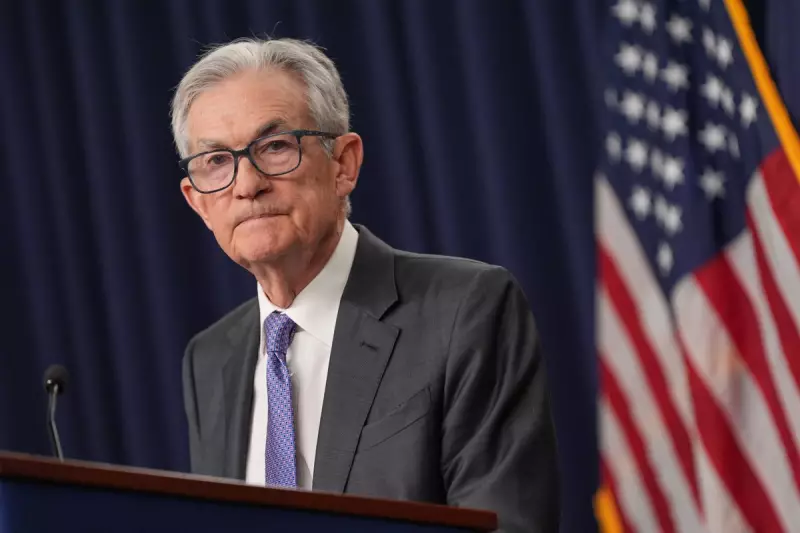
The United States Federal Reserve has opted to maintain its benchmark interest rate at current levels, delivering a decision that underscores ongoing concerns about inflationary pressures while simultaneously resisting mounting political calls for monetary easing. The central bank's latest policy move comes amid robust economic expansion data and a complex labour market picture, setting the stage for continued debate about the appropriate path for borrowing costs in the coming months.
Policy Decision and Economic Assessment
Following a two-day meeting of the Federal Open Market Committee, policymakers voted 10-2 to keep the federal funds rate within the existing range of 3.50% to 3.75%. This decision marks a pause in the monetary easing cycle that began during the latter stages of the Biden administration and resumed after a nine-month hiatus during President Donald Trump's current term in office. The Fed's accompanying statement noted that "economic activity has been expanding at a solid pace," reflecting continued strength in the broader US economy despite various headwinds.
Inflation and Labour Market Dynamics
The central bank's assessment of inflation remains cautious, with officials observing that price pressures "remain somewhat elevated" despite some moderation in recent readings. This persistent inflation continues to complicate the Fed's policy calculus, particularly as it works toward its longstanding 2% target. Meanwhile, the labour market presents a mixed picture, with the Fed acknowledging that "job gains have remained low" while simultaneously noting that the employment situation has "shown some signs of stabilization."

Notably, policymakers removed previous language concerning rising downside risks to employment, suggesting reduced concern about a rapid deterioration in job market conditions. The unemployment rate stood at 4.4% in December, with Fed officials having previously characterised the labour market as being roughly in balance. Some analysts attribute smaller employment gains to slower growth in the number of job seekers, partly resulting from stricter immigration policies implemented by the current administration.
Internal Divisions and Dissenting Views
The latest policy decision revealed continued divisions within the Federal Open Market Committee, with Governors Christopher Waller and Stephen Miran both dissenting in favour of a quarter-percentage-point rate cut. These divisions are not new, having been evident during the December 9-10 rate cut when three of twelve voting members dissented—one advocating for a deeper reduction and two opposing any cut at all.
Governor Waller, considered a potential successor to current Fed Chair Jerome Powell, and Governor Miran, who is currently on leave from his role as an economic adviser at the White House, represent the more dovish wing of the committee. Their dissenting votes highlight the ongoing debate between officials concerned about inflation not progressing sufficiently toward target and those worried about potential labour market deterioration if credit conditions remain too restrictive.
Political Pressure and Leadership Transition
The Fed's decision to maintain rates comes despite increasing pressure from President Trump for lower borrowing costs to stimulate economic activity. The political dimension adds complexity to the central bank's traditionally independent decision-making process, particularly as the institution prepares for a leadership transition. Chair Jerome Powell's term concludes in May, with President Trump indicating he has a top choice for the position but declining to reveal the name publicly.
This ongoing policy debate is expected to significantly influence the initial weeks in office for whoever assumes the top Fed role. The new chair is anticipated to be in place for the central bank's June 16-17 policy meeting, with financial markets currently expecting rates to remain unchanged until that gathering. The succession decision represents a critical moment for monetary policy direction amid competing economic priorities and political considerations.

Future Policy Trajectory and Economic Outlook
The Fed's statement provided minimal guidance about the timing of future rate adjustments, stating only that "the extent and timing of additional adjustments" to the policy rate would depend on incoming economic data and the evolving outlook. This cautious approach reflects the challenging balancing act facing policymakers as they navigate persistent inflation against signs of economic resilience.
Recent economic indicators have done little to resolve the internal debate between officials focused on inflation containment and those concerned about maintaining economic momentum. The current monetary policy stance follows three-quarter-percentage-point reductions during the final three meetings of 2025, suggesting the Fed remains prepared to adjust course if economic conditions warrant, but currently sees insufficient justification for further easing.
As the central bank enters this period of transition and continued policy evaluation, market participants will closely monitor both economic data releases and political developments for clues about the future direction of US monetary policy. The interplay between economic fundamentals, institutional independence, and political pressure creates a complex backdrop for decision-making in the months ahead.





