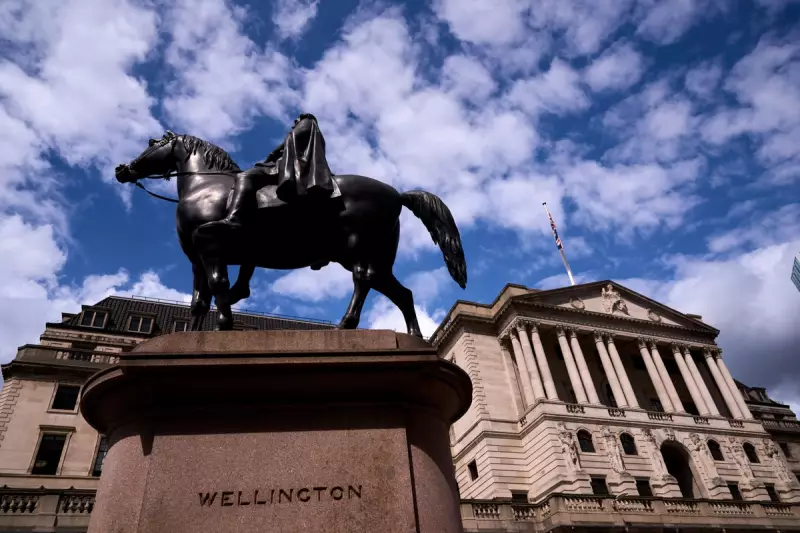
A senior Bank of England official has issued a stark warning that faster interest rate cuts in the United States could inadvertently fuel inflationary pressures in the United Kingdom, potentially forcing the UK central bank to maintain a more restrictive monetary policy stance for longer.
Monetary Policy Interdependence
Megan Greene, an external member of the Bank's Monetary Policy Committee (MPC), highlighted the complex international dynamics at play. Speaking at an event hosted by the Resolution Foundation think tank, Greene emphasised that as a relatively small and open economy, the UK is highly susceptible to price movements and policy decisions made abroad.
"Prices in the UK are likely to be influenced by price dynamics abroad," Greene stated, underscoring the interconnected nature of global economics.

Challenging the 'Follow the Fed' Doctrine
Greene directly challenged the long-held market assumption that other central banks must inevitably "follow the Fed"—the US Federal Reserve—in their policy decisions. She argued there is a "strong case for the Bank of England doing exactly the opposite" in certain scenarios.
Her analysis suggests that if the Federal Reserve were to implement more aggressive rate reductions than the Bank of England this year, the resulting stimulus to the US economy could increase American demand for UK exports. This surge in external demand would, in turn, exert upward pressure on UK domestic inflation.
Inflation Persistence Concerns
"The markets are currently pricing in a large risk of a looser Fed policy stance in 2026," Greene noted. "If this were to materialise, then it would—all else equal—push up on UK inflation."
She expressed particular concern that such a development would heighten the risk of inflation persistence in the UK, outweighing worries about weaker domestic demand. This scenario, Greene argued, would warrant a slower withdrawal of monetary policy restriction by the Bank of England, meaning interest rates would need to remain higher for a longer period.
Political Pressure and Policy Uncertainty
Greene's comments arrive amid significant political pressure on the Federal Reserve from US President Donald Trump, who has repeatedly called for faster interest rate cuts. The future path of US monetary policy is further clouded by uncertainty surrounding the leadership of the Federal Reserve, with Chairman Jerome Powell's term concluding in May.
President Trump has indicated he will nominate a successor willing to accelerate the pace of rate reductions, adding another layer of potential volatility to the global policy landscape.
Domestic Inflation Outlook
On the domestic front, Greene offered a slightly more optimistic view regarding recent disinflation trends. She revealed she is less concerned about a slowdown in disinflation than she was several months ago, attributing this partly to policy measures announced in Chancellor Rachel Reeves' autumn budget.
A key factor is the planned £150 reduction to the average household energy bill set to take effect in April, which is widely expected to contribute to a fall in headline inflation figures.
Wage Growth and Forward Indicators
Despite this, Greene maintained a watchful stance on forward-looking indicators. She stressed the importance of monitoring whether household and business inflation expectations align with actual inflation readings in the coming months.
"Even more concerning, in my view, are the forward indicators for wage growth," she added. While private sector wage growth has been moderating, the Bank's outlook suggests this decline may have run its course, posing a potential upside risk to the inflation trajectory.
Greene's analysis presents a nuanced picture of the challenges facing the Monetary Policy Committee, balancing domestic economic conditions against powerful external forces that could significantly alter the UK's inflation path and the appropriate timing for interest rate adjustments.