

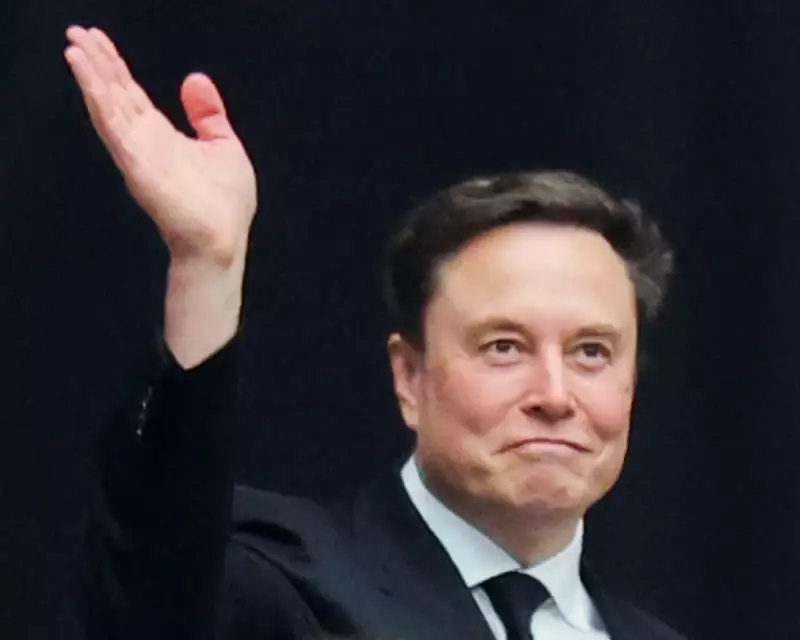
The relentless surge in artificial intelligence has triggered an unprecedented wealth explosion among America's technology magnates, adding more than half a trillion dollars to their collective fortunes in just one year. New data reveals the top ten US tech founders and executives now command a staggering $2.5 trillion, a monumental leap from $1.9 trillion recorded the previous Christmas Eve.
The AI Gold Rush's Biggest Winners
Leading the charge is Elon Musk, whose net worth soared by nearly 50% year-on-year to an astonishing $645 billion. The Tesla and SpaceX boss, who also owns the AI venture xAI, became the first person to surpass the $500 billion net worth milestone in October 2024. Analysts suggest he is on a trajectory to become the world's first trillionaire if Tesla meets its ambitious targets. Musk solidly outpaces his rivals, sitting ahead of Google co-founder Larry Page ($270bn) and Amazon founder Jeff Bezos ($255bn) in the global wealth rankings.
The co-founders of Google have been significant beneficiaries of the investor frenzy. Larry Page and Sergey Brin saw their wealth swell by approximately $102 billion and $92 billion respectively. This growth is largely attributed to confidence in the company's AI advancements, including its development of proprietary Tensor Processing Unit chips.

Nvidia's Meteoric Rise and a Warning from Threadneedle Street
Perhaps no company epitomises the AI boom more than chipmaker Nvidia. Its CEO, Jensen Huang, witnessed a personal fortune increase of $41.8 billion, bringing his total wealth to $159 billion. This places him ninth on the Bloomberg Billionaire Index. Huang sold close to $1 billion in shares this year, capitalising on Nvidia's soaring valuation. The company's advanced processors are crucial for AI development, propelling it to become the world's first $5 trillion company in October—a valuation exceeding the entire economic output of nations like Japan or India.
However, this breathtaking concentration of wealth and market speculation has not gone unnoticed by regulators. The Bank of England has issued a stark warning about a potential "sudden correction" in global markets if the exuberant investor confidence in AI proves to be misplaced. In October, top policymakers noted that equity valuations, particularly for AI-focused tech firms, appear "stretched," leaving markets "particularly exposed" to any downturn in AI optimism.
Beyond Tech: Luxury and Retail Also See Major Gains
While technology dominates the list of financial winners, other industries also produced notable gains. Bernard Arnault, the 76-year-old French chairman of luxury conglomerate LVMH, saw his wealth rise by $28.5 billion, bolstered by robust spending from affluent North American consumers.
Similarly, Spanish retail tycoon Amancio Ortega, founder of the Inditex group which owns Zara, enjoyed a $34.3 billion increase. His fortune now stands at $136 billion, boosted by a record €3.1 billion dividend from the retail giant.
This dramatic accumulation of wealth among a tiny global elite continues to fuel intense debate about economic inequality and the need for more effective wealth taxation to rebalance economies. The figures underscore how technological disruption, particularly in AI, is reshaping not just industries but the very landscape of global wealth and power.






