

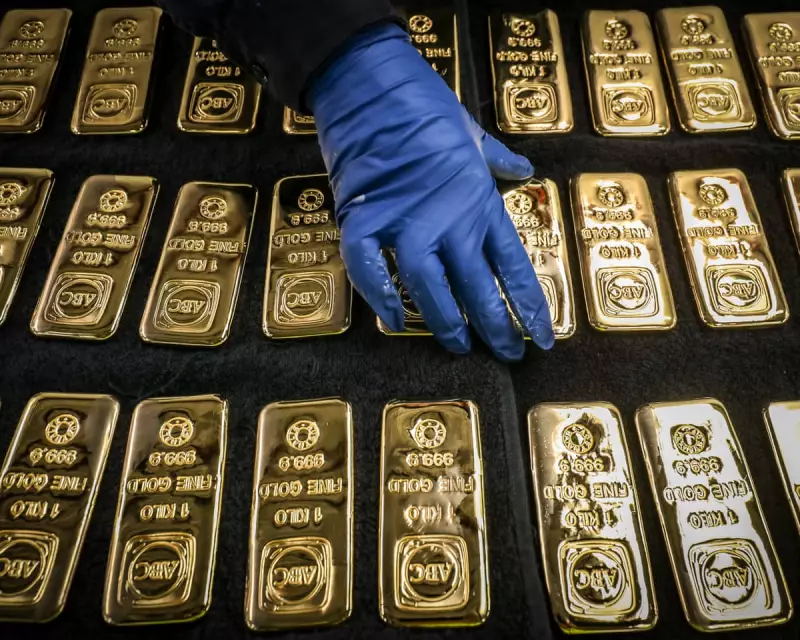
In a world gripped by escalating geopolitical tensions and erratic leadership, investors are seeking refuge in a classic safe haven: gold. This flight to safety has sent the precious metal's price skyrocketing, delivering an unexpected windfall to major producers like Australia. However, a fateful decision made decades ago means the nation is now missing out on tens of billions in potential wealth.
The Global Rush to Gold Amid Trump-Era Turmoil
Global markets are facing profound uncertainty, largely driven by the actions of the United States under President Donald Trump. So far this month, his administration has ordered military action in Venezuela, expressed a desire to "take" Greenland, issued warnings to Cuba, Colombia, and Mexico, and even launched an investigation into Federal Reserve Chair Jerome Powell. This climate of unpredictability has made investors deeply skittish.
As a direct consequence, the price of gold has surged dramatically. Earlier this week, it surpassed US$4,600 per ounce for the first time. This represents a staggering increase of approximately 73% since Trump took office 14 months ago. Analysts note this price rise is faster than during the pandemic lockdowns, the 2008 Global Financial Crisis, and the aftermath of the September 11 attacks. The only periods with sharper increases were the 1973 OPEC crisis and the 1979 oil shock following the Iranian revolution.

Australia's Missed Golden Opportunity
Australia, as the world's third-largest gold producer, is benefiting indirectly from this boom. Rising gold prices have significantly increased the value of the nation's gold exports, pushing the sector close to becoming Australia's second-largest export, potentially overtaking liquefied natural gas (LNG) and coal.
The Australian government is seeing higher corporate tax receipts from gold mining companies, with last month's Mid-Year Economic and Fiscal Outlook (MYEFO) revising corporate tax revenue up by $4.3 billion for 2025–26, partly due to higher mining profits.
The Reserve Bank of Australia (RBA) also holds gold, and the value of its 80-tonne reserve has jumped from $9.6 billion in December 2024 to $15.7 billion last month—a 64% gain. Yet, this windfall pales in comparison to what could have been.
The Costly 1997 Sale That Backfired
In 1997, with the full backing of then-Treasurer Peter Costello, the RBA sold off 167 tonnes of gold—a staggering two-thirds of its 250-tonne reserve. The rationale was that gold was a stagnant asset and the gold standard was obsolete. The proceeds were reinvested into other assets, a move Costello defended in parliament, claiming they would yield higher annual profits.
For a time, during the mining boom, the decision appeared sound. However, the long-term outcome has been disastrous. The 167 tonnes of gold sold would be worth around A$33 billion at December's prices, compared to the roughly $2.5 billion earned from the sale. Had the proceeds been invested in the RBA's average non-gold assets, they would now be worth about $9.6 billion.
This means the 1997 gold sale has left the RBA's balance sheet approximately $23.4 billion worse off. While no one could have predicted the specific rise of Trump, gold's role as a long-term hedge against global instability was well-established. In today's volatile world, that missing safety net represents a monumental financial misstep.






