

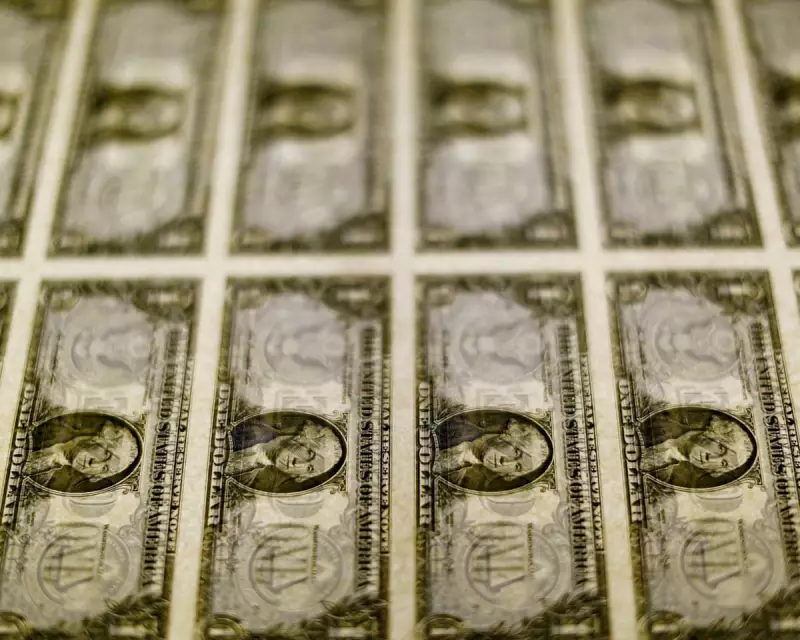
The US dollar has plunged to its weakest position in four years, following remarks from President Donald Trump that downplayed concerns over the currency's significant slide. This dramatic downturn has triggered a flight of investors towards traditional safe-haven assets, including gold and the Swiss franc, as market volatility intensifies.
Trump's Remarks Ignite Currency Sell-Off
During a visit to Iowa to promote his economic record, President Trump was questioned about the dollar's decline. He responded emphatically, stating, "No, I think it's great." When pressed on whether he was concerned about the slide, he told reporters, "I think the value of the dollar – look at the business we're doing. The dollar's doing great." These comments precipitated an immediate sell-off, with the dollar dropping by 1.3% against a basket of major currencies on Tuesday, marking its fourth consecutive day of losses. It then slipped a further 0.2% during Wednesday morning trading.
Historical Context and Market Impact
The greenback has now tumbled by a substantial 10% over the past year. Notably, Tuesday's fall represents the largest single-day drop since April of last year, when Trump's announcement of sweeping tariff plans triggered a global market sell-off. The currency has reached its lowest point since February 2022, a decline exacerbated by unpredictable US policymaking. Recent geopolitical shocks, such as Trump's threats to acquire Greenland and impose tariffs on European allies, have further unsettled investors.

Market strategist Steve Sosnick of Interactive Brokers highlighted the dual nature of a weaker dollar. "A weaker dollar is a two-sided coin," he explained. "If you have operations around the world and foreign currency revenue that will have a conversion advantage when you turn it into US dollars, that will be good. On the other, it makes imported goods more expensive and there might be some inflationary impact from that."
Safe-Haven Assets Surge to Multi-Year Highs
The dollar's precipitous fall has propelled several rival currencies and commodities to remarkable heights. The Swiss franc, a traditional haven insulated from global volatility, has soared to its highest level against the dollar in over a decade. It has already climbed 3% against the dollar this year, following a 14% rise in 2025.
Simultaneously, the euro has surged to $1.20 against the dollar, setting a significant new milestone. The European single currency has climbed approximately 2% over the past week, marking its most substantial weekly gain since last April. The year 2025 was its best performance since 2017, with a 13% rise.
Gold has continued its extraordinary and historic rally, breaking through the $5,200 per ounce barrier to reach new record highs. The precious metal, which investors traditionally seek during periods of political uncertainty, touched $5,000 an ounce for the first time on Monday. Since Trump's second inauguration just over a year ago, the price of gold has skyrocketed by almost 90%.
Federal Reserve Under Pressure
The dollar's weakness unfolds against a backdrop of heightened tension between the White House and the Federal Reserve. The US central bank is due to announce its first interest rate decision of the year on Wednesday, with widespread expectations that it will keep rates on hold. This is despite Trump's persistent demands for policymakers to implement rate cuts.
President Trump has launched unprecedented attacks on Fed Chair Jerome Powell, whom he has labelled "stupid" and threatened to dismiss. In a further complication, the Justice Department has opened a criminal investigation into Powell concerning renovations to the Federal Reserve's headquarters. Powell's term as chair is set to expire in May, and Trump could name his successor shortly after the interest rate decision is announced.
Analysts Forecast Further Declines
Several financial analysts anticipate the dollar may weaken further in the coming months. Concerns are mounting over ongoing presidential pressure on the Federal Reserve's independence, combined with a challenging US economic outlook and the nation's escalating debt burden. This confluence of factors suggests continued volatility and potential depreciation for the world's primary reserve currency.






