

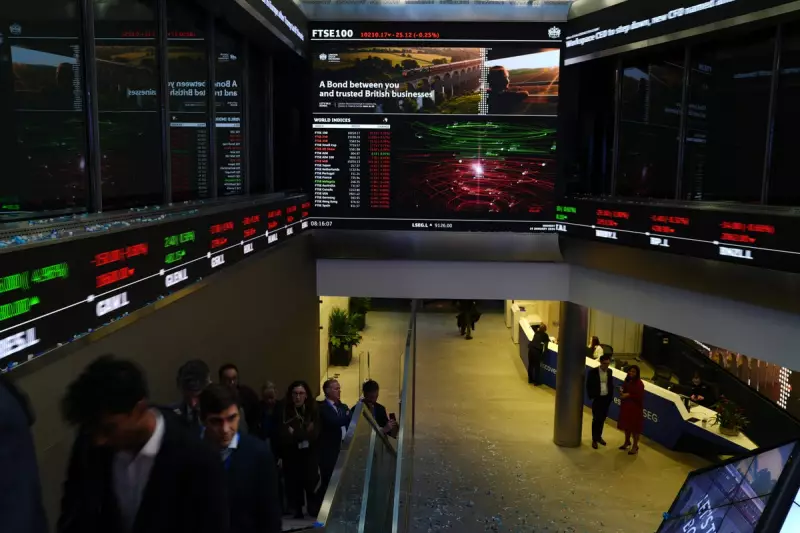
European Markets Retreat as Trump's Greenland Tariff Threats Rattle Investors
European shares fell on Friday, poised to conclude their longest weekly winning streak since May, as market participants assessed the potential repercussions from renewed transatlantic trade tensions centred on Greenland. The pan-European STOXX 600 index edged down by 0.2 per cent by 0803 GMT, signalling an end to a five-week period of consecutive gains. The benchmark has retreated by 1 per cent over the course of this week.
Market Jitters Over Tariff Threats
Financial markets were unsettled by US President Donald Trump's threats to impose tariffs on eight European nations until Washington secured permission to purchase Greenland. Although President Trump withdrew these tariff threats on Wednesday, claiming he had obtained permanent US access to Greenland through a NATO agreement, the episode has left investors cautious. The lingering concern is that tariffs could be deployed again as a bargaining tool in future geopolitical negotiations.
European Union leaders have indicated readiness to reactivate an EU-US trade agreement, but have simultaneously warned they would retaliate if tariff threats were renewed. This delicate diplomatic stance underscores the fragile nature of current trade relations between the two economic blocs.

Economic Indicators and Corporate Movements
Attention is also turning to forthcoming purchasing managers' index (PMI) data from both Europe and the United States. Investors are scrutinising these surveys for new insights into economic momentum. Economists at ING noted in a research briefing, "They are likely to confirm the ongoing resilience of the euro zone's gradual recovery despite geopolitical headwinds."
On the corporate front, several significant movers were observed. BASF shares declined by 2 per cent after preliminary results revealed the German chemical conglomerate's profit decreased in 2025, attributed to reduced margins and adverse currency impacts. Meanwhile, French banking institution BNP Paribas saw its stock dip by 0.7 per cent. Reuters reported on Thursday that the bank intends to eliminate approximately 1,200 positions within its asset management division by the conclusion of 2027.
Emerging Markets Rebound as Tensions Ease
In contrast to European equities, emerging market assets extended their advances on Friday. This uptick coincided with a reduction in geopolitical anxieties following President Trump's moderated rhetoric towards Europe regarding Greenland. The MSCI emerging equities index ascended by 0.3 per cent, reaching a new record peak and marking a fifth consecutive week of gains. The corresponding emerging market currencies index also climbed by 0.2 per cent.
Both indexes are set to register weekly increases after stalling earlier in the week when Trump's tariff threats against European allies, driven by his ambition to control Greenland, prompted investors to retreat from risk-sensitive assets. The recovery highlights how swiftly market sentiment can shift in response to changing political narratives.






