

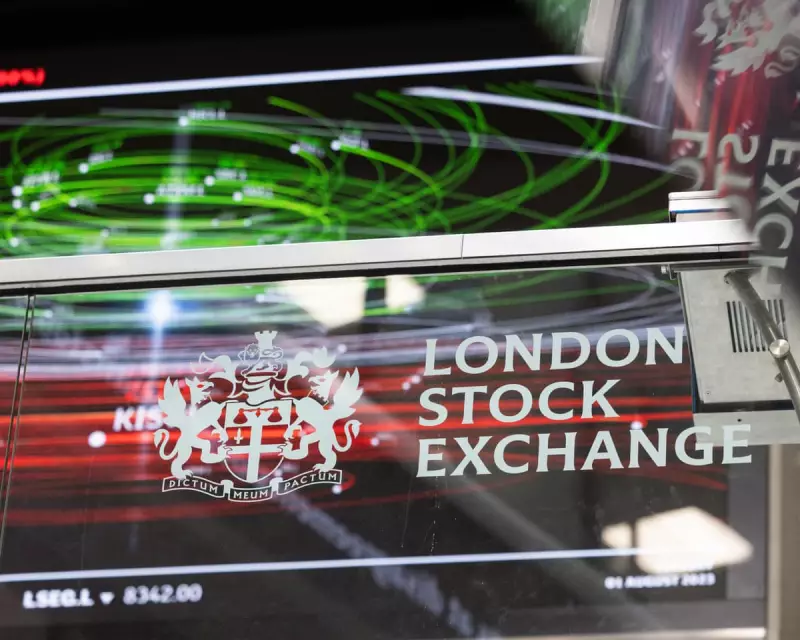
The FTSE 100 index has finally crossed the 10,000-point threshold, a landmark moment for the UK's premier share index. Yet, the occasion was met with a curious quiet, a missed opportunity for the kind of promotional fanfare that could have been used to galvanise public interest in the stock market.
A Milestone Met with Muted Response
There are several ways to interpret the FTSE 100's ascent to 10,000 points for the first time. The most cynical view is that round numbers are essentially meaningless in financial markets. Created in 1984 with a base value of 1,000, the index was statistically likely to reach this level eventually through long-term growth. Furthermore, the points figure itself doesn't account for the substantial dividends paid by its constituent companies, which form a critical part of total investor returns when reinvested.
Chancellor Rachel Reeves opted for a different interpretation, declaring on social media that the breakthrough was "a vote of confidence in Britain's economy." This claim, however, is tenuous. The FTSE 100 is heavily populated by multinational giants like Fresnillo, last year's top performer, a Mexican silver miner. With roughly 75% of the index's revenues generated overseas, its level is a poor barometer for the domestic UK economy.

The Case for Capitalising on the Moment
A third, more pragmatic approach would have been to acknowledge the milestone's symbolic nature while seizing it for a clear marketing push. The core message is simple and evidence-based: over medium and long-term horizons, equities have historically outperformed cash savings. For Reeves, who is championing the 'Leeds Reforms' to encourage greater financial risk-taking, and for the London Stock Exchange Group (LSEG), this was an open goal.
The index had just completed a stellar year, rising 21.5% and even outperforming key US indices. This narrative could have been a powerful tool to nudge cautious savers away from cash ISAs and towards considering investments. Instead, the moment passed without the "razzmatazz" seen elsewhere; no commemorative caps in Paternoster Square, unlike the tradition on Wall Street when the Dow Jones hits a round number.
A Lost Chance for Hustle and Public Engagement
This reticence is particularly notable given the context. LSEG frequently faces criticism that it neglects the exchange itself in favour of its larger financial data business. A public celebration of the 10,000 mark would have been a direct retort to such claims, embodying the very "hustle" called for by figures like Octopus Energy's Greg Jackson.
Ironically, a coalition of City banks, investment platforms, fund managers, and the exchange itself is reportedly preparing a £15 million per year national advertising campaign to explain the benefits of investing. The 10,000-point breakthrough offered a perfect, news-driven hook to launch such an initiative organically, potentially saving a considerable sum.
While some may deem such tactics gimmicky or fear a rapid market reversal making them look foolish, the fundamental principle of marketing and public engagement is to capitalise on positive momentum when it arises. In the quest to re-energise the UK's equity culture, a historic moment was left on the table.






