

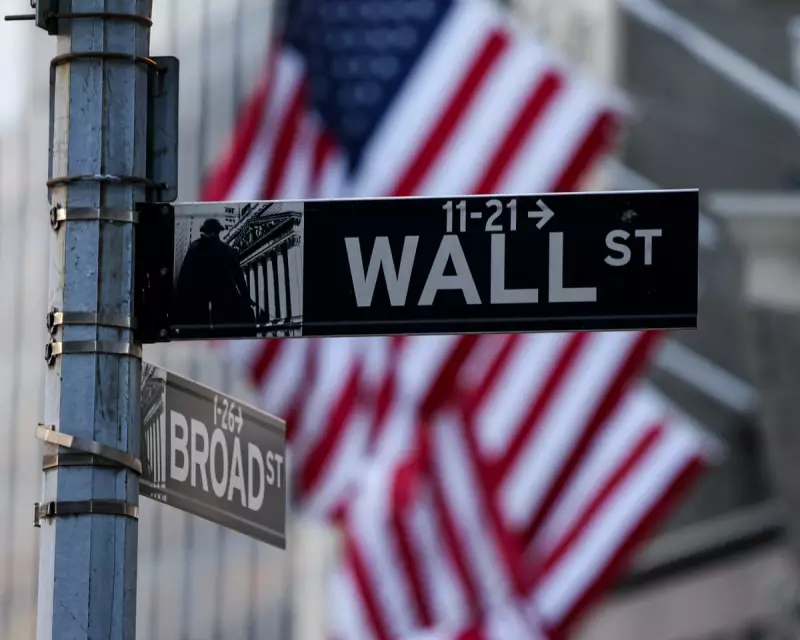
Global financial markets are preparing for a turbulent start to the week following a dramatic escalation in trade tensions by former US President Donald Trump. His threat to impose sweeping new tariffs on eight European countries has sent shockwaves through trading desks, with significant losses predicted for London and New York indices.
Weekend Markets Signal Sharp Declines
Indications from weekend trading point to a difficult Monday for investors. According to data from the brokerage IG, Britain's FTSE 100 index is on track to open 0.9% lower. Across the Atlantic, the picture is similarly gloomy, with IG's Weekend Wall Street market pointing to a 0.5% fall for the Dow Jones Industrial Average.
The trigger for this risk-off sentiment is a bold move from Trump. He has threatened to impose new trade levies of 10% on goods from Denmark, Norway, Sweden, France, Germany, the UK, the Netherlands, and Finland starting 1 February. These tariffs are then slated to rise sharply to 25% on 1 June unless the countries support his ambition to acquire Greenland.

Safe-Haven Rush and European Outcry
As equity markets brace for impact, the uncertainty is driving investors towards traditional safe-haven assets. On IG's weekend bullion market, gold was trading 0.6% higher at $4,625 an ounce, edging closer to last week's record peak of $4,642. Spot silver also gained, rising 0.5% to $90.41 per ounce.
Market analyst Tony Sycamore at IG linked the moves directly to the geopolitical flare-up. "This latest flashpoint has heightened concerns over a potential unravelling of Nato alliances and the disruption of last year's trade agreements," he said, noting it was driving demand for gold and silver.
The announcement drew swift condemnation from European leaders over the weekend. UK Prime Minister Sir Keir Starmer and European Commission President Ursula von der Leyen were among those who criticised a policy that threatens to undermine the Nato defence alliance.
"Migraine-Inducing" Blow for Businesses and Economy
The reaction from business groups and trade experts has been one of profound concern. Susannah Streeter, chief investment strategist at Wealth Club, warned Trump's policy has "whipped up fresh economic chaos" and represents a setback for the UK economy.
"This is a migraine-inducing development for politicians who have already had to go through tortuous negotiations," Streeter stated. She warned that companies have little capacity to absorb further costs, meaning the new duties are likely to be passed on to American consumers.
In Germany, industry voices raised the alarm. The VDMA engineering association urged the EU to consider using its "anti-coercion instrument" against the US. Its president, Bertram Kawlath, argued that giving in would only encourage "the next ludicrous demand." Hildegard Müller, president of the German auto industry association, said the cost of additional tariffs would be "enormous."
For UK exporters, the outlook is equally grim. William Bain, head of trade policy at the British Chambers of Commerce, predicted the tariffs would be "more bad news." He urged the UK government to prioritise implementing the frozen UK-US economic prosperity deal and to negotiate for the threat's removal.
The coming days will test the resilience of global markets and the resolve of European capitals as they confront this unexpected and severe challenge to transatlantic trade stability.






