

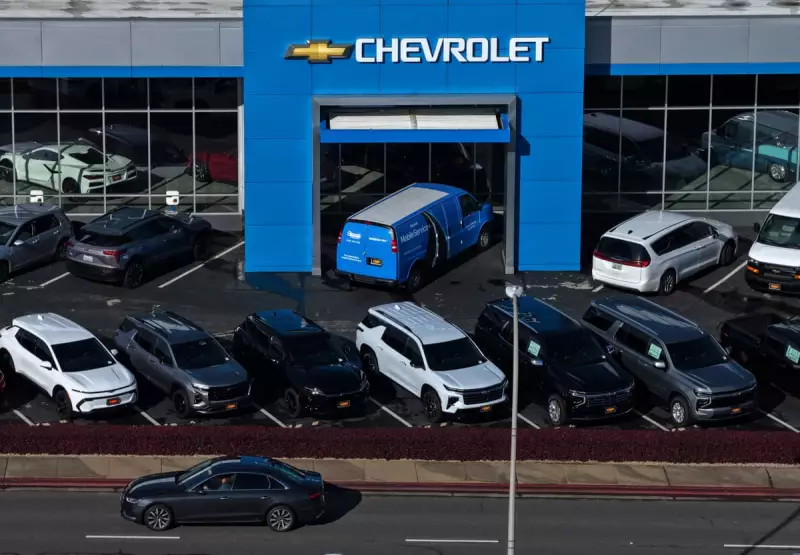
American automotive titan General Motors (GM) has announced a staggering one-time earnings charge of $7.1 billion, a direct consequence of its strategic retreat from aggressive electric vehicle (EV) investments. The company disclosed the financial blow in a securities filing on Thursday, attributing the move to a significant slowdown in consumer demand for EVs throughout 2025.
A $6 Billion Electric Shock
The colossal charge is predominantly linked to the company's pivot away from its previously ambitious electric future. According to the filing, $6 billion of the total stems from write-downs and reversals connected to EV investments and capacity. This follows a previous $1.6 billion write-down taken in the third quarter, signalling a rapid and costly strategic U-turn for the Detroit-based manufacturer.
GM explicitly linked the shift to changes in the US regulatory landscape. "With the termination of certain consumer tax incentives and the reduction in the stringency of emissions regulations, industry-wide consumer demand for EVs in North America began to slow in 2025," the company stated. "As a result, GM proactively reduced EV capacity." This policy reversal is widely seen as a consequence of the administration under former President Donald Trump, who has dismissed the climate crisis and dismantled EV initiatives championed by President Joe Biden.

Broader Industry Retreat and China Restructuring
GM's profit warning is not an isolated incident in the automotive sector. It comes shortly after rival Ford announced on 15 December that it would write off approximately $19.5 billion over several years due to the altered policy outlook. This indicates a broader recalibration across the traditional auto industry as government support wanes.
The remaining $1.1 billion of GM's charge is unrelated to its EV manoeuvres. This portion includes costs associated with restructuring its China operations through the joint venture SAIC General Motors Corporate Limited, alongside an additional legal accrual. This highlights the multifaceted challenges facing global automakers, balancing technological transitions with complex international market dynamics.
Long-Term Vision Meets Short-Term Reality
Under CEO Mary Barra, GM had been a vocal proponent of an electric future, announcing in 2021 a target to make its light-duty vehicle fleet emissions-free by 2035. Throughout Biden's presidency, the company invested heavily in building EV capacity. Barra has since clarified that while EVs remain a long-term priority for the corporation, investments are being "modified" in direct response to current market demand.
This dramatic financial adjustment underscores the profound impact of government policy on the pace of the automotive industry's electrification. As incentives disappear and regulations loosen, consumer appetite has cooled, forcing giants like GM to absorb billions in losses as they navigate an uncertain road ahead.






