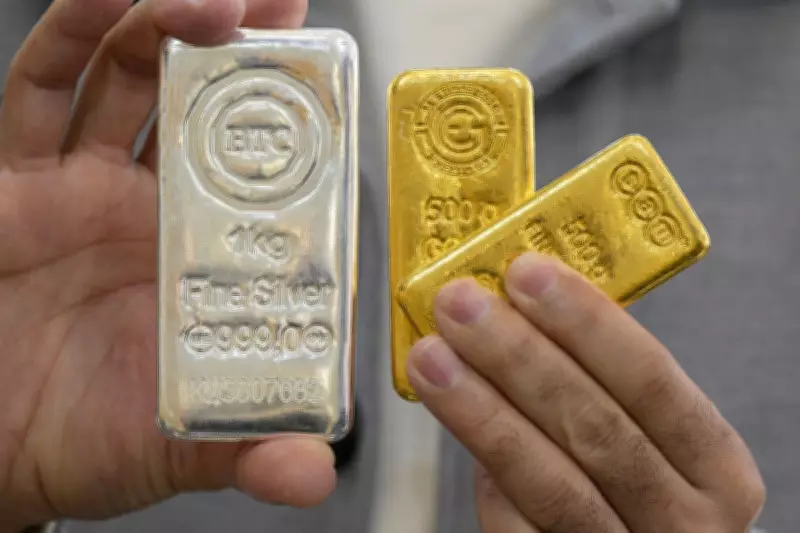
Precious Metals Plunge After Historic Rally
The opening months of 2026 witnessed a breathtaking rollercoaster in the precious metals markets, with both gold and silver soaring to record-breaking highs before experiencing a sharp and dramatic reversal. This volatility has left investors questioning the stability of these traditional safe-haven assets and reconsidering their portfolio strategies.
Unprecedented Peaks Followed by Steep Declines
Gold achieved a remarkable milestone on Thursday, surpassing US$5,500 per ounce for the very first time in history. This represented a significant leap beyond previous records, demonstrating the metal's extraordinary momentum. However, the celebration was short-lived as prices tumbled to approximately US$5,068 per ounce by Friday's close, marking a substantial correction that caught many market participants off guard.
Silver's performance was even more spectacular in its ascent, though equally dramatic in its descent. The metal had been appreciating at a faster rate than gold, reaching over US$120 per ounce last week during one of its most impressive rallies in decades. This remarkable run came to an abrupt halt on Friday when silver prices collapsed to US$98.50 per ounce, wiping out significant gains in a single trading session.

The Driving Forces Behind the Surge
Gold has long been regarded as the quintessential safe-haven asset, purchased by investors seeking protection during periods of financial uncertainty and geopolitical instability. Several interconnected factors contributed to its recent ascent to record levels. Rising international political tensions, ongoing trade war concerns, fluctuating interest rate expectations, and broader questions about the global economic order have all driven investors toward assets perceived as stable during turbulent times.
Central banks worldwide have been accelerating their gold acquisitions, reinforcing the metal's reputation as a reliable store of value. This institutional buying has provided substantial support to prices, creating a foundation for the broader market rally. Meanwhile, retail investors in Australia and internationally have increasingly turned to precious metals as both a hedge against uncertainty and a momentum play, attempting to capitalise on upward price trends.
Silver's Dual Appeal and Supply Constraints
While gold captured headlines throughout much of 2025, silver emerged as the standout performer with even more dramatic gains. Before Friday's correction, silver had surged more than 60% in just one month, far outpacing gold's impressive 30% increase over the same period. Silver's unique position stems from its dual identity as both a precious metal and an industrial commodity.
Industrial applications are creating substantial demand for silver, particularly in clean energy technologies. Every solar panel contains approximately 20 grams of silver, with the solar industry consuming nearly 30% of global silver demand. Electric vehicles utilise 25-50 grams each, while artificial intelligence data centres require silver for semiconductor manufacturing. Compounding this demand pressure, the silver market has experienced supply deficits for five consecutive years, with consumption outstripping mining production. Most silver emerges as a byproduct of other metal extraction, making rapid supply expansion particularly challenging.
Retail Investor Behaviour and Trading Patterns
Analysis of trading activity reveals fascinating patterns in how everyday investors have engaged with precious metals. Data from CommSec, one of Australia's most popular online investment platforms with approximately 3 million customers, shows significant increases in retail participation. Over the past year, gold exchange-traded fund (ETF) trades on the platform grew by 47%, with cumulative net buying reaching A$158 million, reflecting gold's established role in investment portfolios.

Silver trading activity tells an even more dramatic story. Despite attracting slightly lower total investment at A$104 million, silver trading volume exploded by 1,000% compared to the previous year. This indicates retail investors made far more frequent, smaller trades in silver, demonstrating classic momentum-chasing behaviour as they piled into an asset showing spectacular price appreciation. The pattern suggests that while gold remains the portfolio anchor, silver has become the speculative play, with its lower per-ounce price, compelling industrial demand narrative, and social media buzz making it particularly accessible to retail investors.
Essential Risk Considerations for Investors
The recent volatility underscores several crucial risks that every investor must understand before allocating capital to precious metals. The "fear of missing out" mentality that drives buying during rapid price increases can lead to dangerous investment timing. Retail investors often enter markets near peaks, while professional investors and central banks have typically accumulated positions at much lower price levels over extended periods.
Volatility represents a double-edged sword. From February 2025 until just before Friday's decline, silver prices had surged an astonishing 269%. Even before the recent drop, silver exhibited annualised volatility of 36%, nearly double gold's 20% volatility over the same period. This demonstrates that assets experiencing rapid appreciation can suffer equally dramatic declines.
Unlike shares or bonds, precious metals generate no income through dividends or interest payments. Investors' entire return depends solely on price appreciation from already elevated levels, creating substantial risk if markets reverse. Financial advisers typically recommend limiting precious metals exposure to 5-15% of a diversified portfolio, a guideline that becomes particularly relevant following periods of extraordinary price volatility.
The recent market movements serve as a powerful reminder that all investments carry inherent risks, and careful consideration should precede any allocation to volatile asset classes like precious metals.