

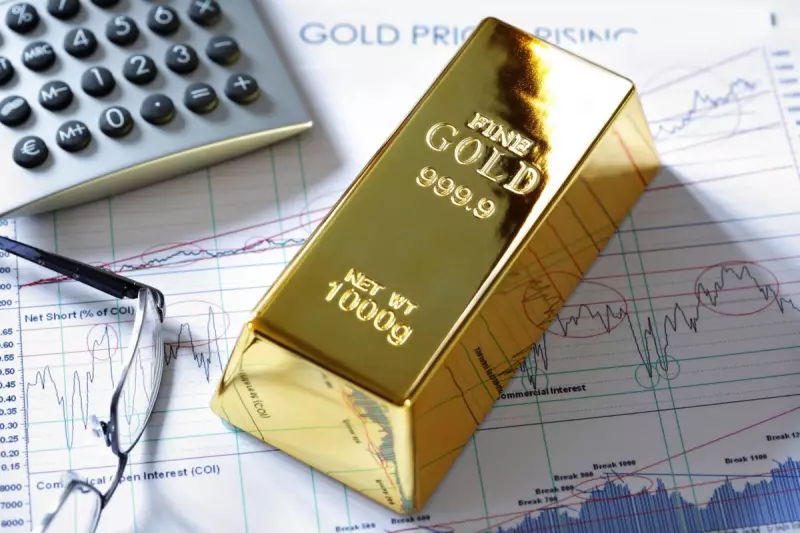
The price of gold has soared to a historic milestone, shattering the $5,100 per ounce barrier for the very first time as investors worldwide flock to the precious metal amid mounting global uncertainty. This remarkable surge underscores gold's enduring role as a premier safe-haven asset during turbulent times.
Unprecedented Price Surge and Market Dynamics
On Monday morning, spot gold was trading at $5,089.78 per ounce, marking a significant 2.2 per cent increase. Earlier in the session, it touched an astonishing all-time high of $5,110.50 per ounce. This follows a spectacular performance in 2025, where gold surged by 64 per cent, representing its most substantial annual gain since 1979. Prices have already climbed more than 18 per cent in the current year, setting consecutive record peaks over the past week.
Key Drivers Behind the Rally
A confluence of powerful factors is propelling gold's meteoric rise:

- Safe-Haven Demand: Escalating global tensions and political volatility are driving investors toward assets perceived as stable stores of value.
- Monetary Policy Shifts: Expectations of U.S. interest rate cuts have reduced the opportunity cost of holding non-yielding gold.
- Robust Central Bank Purchases: Institutions worldwide, particularly in emerging markets, are aggressively accumulating gold reserves. China, for instance, extended its buying spree for a fourteenth consecutive month in December.
- Record ETF Inflows: Exchange-traded funds witnessed unprecedented investment, with global inflows reaching $89 billion in 2025, led by North American funds.
- De-dollarisation Trends: A gradual shift away from the U.S. dollar in international reserves is bolstering gold's appeal.
Analyst Forecasts and Future Outlook
Market experts anticipate that gold prices could climb further toward $6,000 this year, supported by persistent geopolitical risks and sustained demand from both central banks and retail investors. Philip Newman, director at Metals Focus, commented: "We expect further upside for gold. Our current forecast suggests that prices will peak at around $5,500 later this year. Periodic pullbacks are likely as investors take profits, but we expect each correction to be short-lived and met with strong buying interest."
Global Trading Hubs and Investment Avenues
London remains the most influential hub for the spot gold market, with the London Bullion Market Association setting industry standards and facilitating over-the-counter trades among major banks and institutions. Other significant trading centres include China, India, the Middle East, and the United States.
Investors can gain exposure to gold through several channels:
- Spot Market: Direct purchases from large banks, with prices determined by real-time supply and demand.
- Futures Market: Trading on exchanges like COMEX in New York or the Shanghai Futures Exchange, allowing contracts for future delivery at fixed prices.
- Exchange-Traded Products (ETPs): Securities backed by physical metal, enabling investment without taking physical delivery.
- Bars and Coins: Physical gold available from retailers, with growing preference in markets like China and India amid high prices.
Underlying Market Influencers
Several macroeconomic and political elements continue to shape gold's trajectory:

- Investor Sentiment: Speculative activity driven by news and global events significantly impacts price movements.
- Currency Fluctuations: Gold often moves inversely to the U.S. dollar, serving as a hedge against currency volatility.
- Central Bank Policies: Decisions on interest rates and reserve management directly affect gold's attractiveness.
- Geopolitical Tensions: Recent developments, including trade disputes and international incidents, have heightened market uncertainty.
Central bank demand remains particularly robust. According to World Gold Council data, net purchases in November 2025 totalled 45 metric tons, bringing the eleven-month figure to 297 tons. Poland's central bank, holding 550 tons at end-2025, aims to increase reserves to 700 tons, reflecting a broader trend among national institutions.
As gold continues its record-breaking ascent, it reaffirms its status as a critical component of diversified investment portfolios and a barometer of global economic sentiment. With analysts forecasting further gains, the precious metal's rally appears far from over, capturing the attention of investors navigating an increasingly complex financial landscape.





