

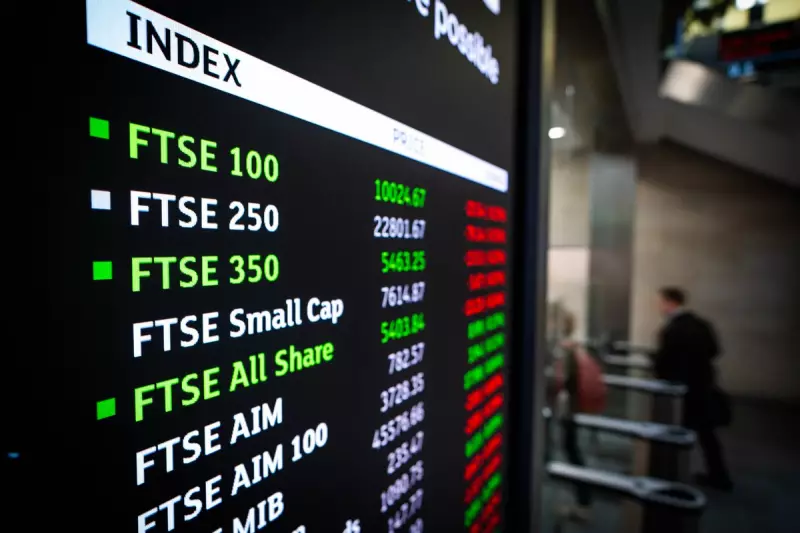
Global financial markets have been thrown into turmoil following renewed geopolitical threats from former US President Donald Trump regarding the acquisition of Greenland. The FTSE 100 Index in London plunged dramatically, shedding over 120 points in early trading as investors reacted with alarm to the unfolding situation.
Market Turmoil and Safe Haven Rush
European indices followed suit with substantial losses, reflecting widespread concern over Trump's aggressive stance. In a move that escalated tensions further, Trump explicitly threatened to impose tariffs on nations that refuse to support his controversial plans for Greenland. He detailed these intentions on his Truth Social platform, adding fuel to the fire of market uncertainty.
As risk aversion swept through trading floors worldwide, investors flocked to traditional safe haven assets. This surge in demand propelled gold prices to a fresh all-time record, reaching an astonishing $4,728 per ounce. The precious metal's rally underscores the depth of anxiety permeating global financial circles.

Political Condemnation and Diplomatic Fallout
UK Labour leader Sir Keir Starmer has condemned Trump's approach as "completely wrong," criticising the use of tariff threats against allied nations. This political dimension adds another layer of complexity to an already volatile situation, with international relations potentially at stake.
The controversy is set to reach a critical juncture at the upcoming World Economic Forum in Davos, where Trump is expected to participate in high-level discussions concerning Greenland's future. This meeting could prove pivotal in determining whether tensions escalate further or find diplomatic resolution.
Market analysts are closely monitoring developments, warning that continued uncertainty could trigger further sell-offs across multiple asset classes. The intersection of geopolitics and economics has created a perfect storm that continues to unsettle investors and policymakers alike.






