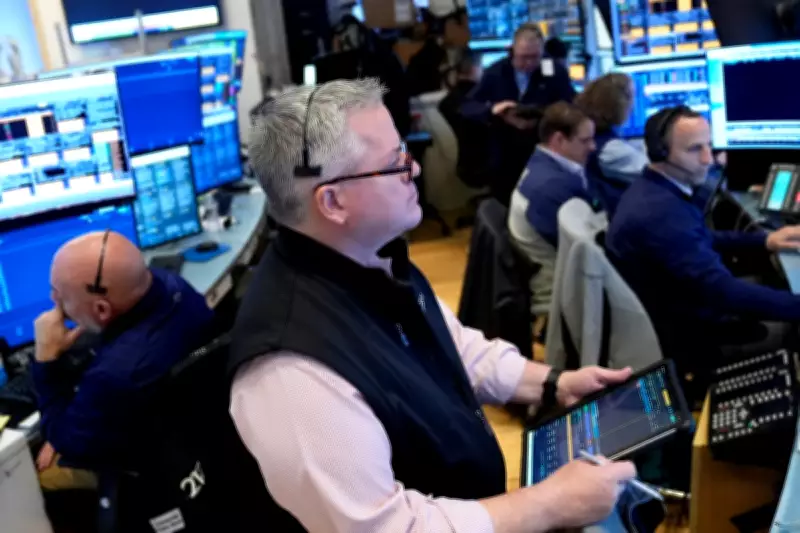
Oil prices have surged by more than 5%, with Asian shares also climbing on Monday, as a tense standoff between Iran and the United States has effectively blocked tankers from using the critical Strait of Hormuz. The Persian Gulf waterway, a vital conduit for global oil shipments, was closed once again after Iran reversed its decision to reopen the strait. Concurrently, President Donald Trump confirmed that a U.S. Navy blockade of Iranian ports remains firmly in place, exacerbating the geopolitical tensions.
Market Reactions and Price Movements
U.S. benchmark crude oil experienced a significant rise of 5.6%, reaching $87.20 per barrel, while Brent crude, the international standard, increased by 5.3% to $95.16 per barrel. Despite ongoing uncertainties regarding the timeline for resuming oil transport from the Middle East, share prices across Asia predominantly trended higher. In Tokyo, the Nikkei 225 gained 1% to close at 59,045.45, and South Korea's Kospi rose 1.1% to 6,260.92. Hong Kong's Hang Seng added 0.8% to 26,373.71, and the Shanghai Composite index advanced 0.6% to 4,075.08. Australia's S&P/ASX 200 remained nearly unchanged at 8,943.90, while Taiwan's Taiex jumped 1.4%.
Analyst Insights and Market Sentiment
Stephen Innes of SPI Asset Management provided commentary on the market dynamics, stating, "The problem for markets is not the absence of hope; it is the overpricing of it. The latest move higher in equities has started to feel less like conviction and more like momentum feeding on itself." This observation highlights the fragile optimism driving recent gains, as investors grapple with the volatile situation.

Recent Volatility and Historical Context
On Friday, oil prices had retreated to levels seen in the early stages of the Iran war, following Iran's announcement that the strait was reopened for commercial tankers. This temporary relief spurred a rally in U.S. stocks, with the S&P 500 leaping 1.2% to an all-time high of 7,126.06, marking its third consecutive week of substantial gains—the longest streak since Halloween. The Dow Jones Industrial Average surged 1.8% to 49,447.43, and the Nasdaq composite climbed 1.5% to 24,468.48. A freer flow of oil at that time had the potential to alleviate pressure on gasoline prices and reduce costs for various products transported by vehicles, potentially easing financial burdens such as credit-card interest and mortgage bills.
Geopolitical Developments and Their Impact
The U.S. stock market has rallied more than 12% since hitting a low in late March, buoyed by hopes that the United States and Iran might avoid a worst-case economic scenario. However, this optimism was short-lived. After Iran's foreign minister, Abbas Araghchi, posted on social media that the strait was "declared completely open" amid a ceasefire in Lebanon, U.S. benchmark crude plunged 9.4%, and Brent crude fell 9.1%. President Trump quickly countered, asserting on his social media network that the U.S. Navy's blockade of Iranian ports remained "in full force" pending a war deal, though he hinted at rapid negotiations. Trump also disclosed on Sunday that the U.S. had seized an Iranian-flagged cargo ship attempting to circumvent the naval blockade, prompting Iran's joint military command to label the act as piracy and vow a response.
Ongoing Tensions and Future Outlook
A fragile, two-week ceasefire between the U.S. and Iran is set to expire on Wednesday, with escalating tensions in the Strait of Hormuz casting doubt on new talks to end the war. Since the conflict began, market sentiment has oscillated between optimism and gloom, reflecting uncertainties over the war's duration and its economic costs. A strong start to the earnings reporting season for major U.S. companies has provided some support to stocks. In early Monday trading, the U.S. dollar strengthened to 158.90 Japanese yen from 158.79 yen, and the euro climbed to $1.1757 from $1.1742, indicating broader financial market reactions to the geopolitical standoff.