

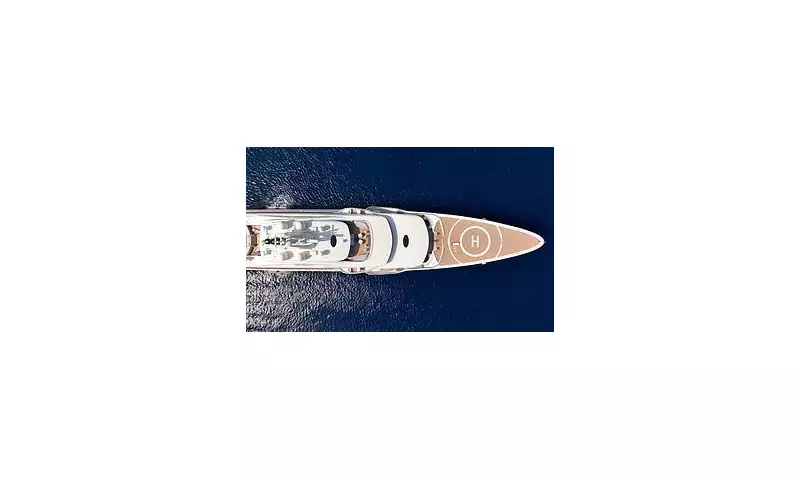
In the 19th century, a quaint rule of thumb suggested a gentleman's boat length in feet should match his age in years. The attendees of the 40th annual Palm Beach International Boat Show in March 2022 would have rendered that Victorian notion utterly obsolete. The event, held on Florida's Gold Coast, showcased vessels of such staggering scale and price they redefine modern luxury.
The New Currency of Extreme Wealth
A prime example was the 203-foot superyacht Sea Owl, offered second-hand for a cool $90 million (approximately £67 million). Its owner, hedge fund magnate Robert Mercer, included furnishings like a Steinway piano, assorted frescoes, and a fingerprint-recognition security system. Yet, this package was considered relatively modest. Today's largest superyachts exceed 500 feet, rival naval destroyers in size, and command prices up to six or seven times Mercer's asking figure.
This new class of vessel, dubbed the 'gigayacht', has now surpassed prime real estate as the single most expensive asset humanity has conceived. As one boating insider recounted, a friend who owns one of the world's largest yachts explained its allure: "The boat is the last vestige of what real wealth can do... So, the one place where I can make clear to the world that I am in a different category than you, is the boat."

Beyond sheer status, these floating palaces offer unique advantages over property. They can "absorb the most excess capital" and provide unparalleled flexibility. "If you're on your boat and you don't like your neighbour, you tell the captain, 'Let's go to a different place'," one owner clarified, highlighting a solution to discord far simpler than trying to buy out a troublesome land-based neighbour.
A Perfect Storm of Pandemic and Profits
Gaining entry to this rarefied world is a finely tuned art. At the Palm Beach show, expert greeters scan crowds for tell-tale signs of the 'super-rich'—the right shoes, jewellery, or pets—while weeding out 'ineligible visitors' marked by cameras or pop-culture attire. One greeter even used binoculars to identify a $100,000 watch on a passerby.
This scrutiny exists because the industry is experiencing its greatest boom ever. In 2021, a record 887 superyachts were sold globally, nearly double the previous year's total. Raphael Sauleau, CEO of the International Yacht Company, attributes this to "Covid and wealth – a perfect storm for us." The pandemic fuelled a desire for socially-distanced travel and existential reflection among the ultra-wealthy, while a deeper, global wealth imbalance created more potential buyers.
Since 1990, the number of U.S. billionaires has soared from 66 to over 800. Concurrently, the fleet of yachts longer than 250 feet has exploded from under ten to more than 170. As the Financial Times wryly observed, owning a superyacht is "like owning a stack of ten Van Goghs – only, you are holding them over your head as you tread water, trying to keep them dry."
Conspicuous Consumption and Secret Machinations
The extravagance onboard knows few bounds. Modern tales echo the excess of Greek tycoon Aristotle Onassis, who in 1954 converted a frigate into the Christina O, featuring Renoirs, a mosaic pool-dance floor, and bar stools upholstered in whale foreskin. Today, helicopters deliver fresh bagels from New York, rare melons from Hokkaido, or other exotic demands to anchored yachts.
For the 'bored billionaires', material luxury alone is insufficient. Firms like Berkeley Rand create 'experiential' offerings, using immersive technology to recreate historical sea battles complete with cannon smoke smells, or flying 3D-printed restaurants to transient sandbanks in the Maldives.
Yet, a superyacht's primary function often transcends entertainment. It serves as a discreet, mobile boardroom for the global elite. Veteran captain Brendan O'Shannassy, who has skippered for Microsoft co-founder Paul Allen and other billionaires, describes them as spaces where powerful "solar systems converge and combine." The exchange of favours, referrals, and insights is a constant, subtle backdrop to the apparent leisure.

O'Shannassy recalls one owner who limited newspapers onboard as a "mind game" among guests, forcing them to subtly rank themselves for access. The culture of secrecy is enforced by strict NDAs. On one vessel, the captain used a coded message about the presence of a Pomeranian dog in the owner's helicopter to alert the crew to prepare for the wife or the mistress, requiring a swift swap of everything from dresses to family photos.
Scrutiny, Seizures, and a Dark Underbelly
This insular world has recently faced intense external scrutiny. Following Russia's invasion of Ukraine, yachts linked to Putin's circle have been frozen or seized, highlighting the industry's deep ties to Russian capital. However, brokers swiftly moved on, stripping photos from websites and vetting clients, as demand from other billionaires remained insatiable.
Public relations challenges abound. Film producer David Geffen faced backlash early in the pandemic for posting from his 545-foot yacht The Rising Sun, saying he was "avoiding the virus." In 2022, plans to dismantle a historic bridge in Rotterdam to allow a new yacht for Jeff Bezos to pass sparked a protest plan involving rotten eggs from thousands of citizens, forcing a change of plan.
Beneath the opulence, life for the crew—'yachties'—can be fraught. They trade manual labour and obedience for cash and adventure, with deckhands earning around $3,500 (£2,600) a month and captains commanding about $1,000 per foot of yacht per year. However, they operate with little protection, reporting instances of sexual abuse, psychological pressure, and threats. Bound by NDAs and fearing surveillance, many have limited recourse.
As the Palm Beach show ends, the seasonal migration begins, with the largest yachts heading to the Mediterranean. In Monaco, they bob in the marina like bath toys, symbols of a world where wealth has created a new, floating frontier of power, pleasure, and profound inequality—a world where, however briefly, one can feel the planet tilt to their advantage.





