

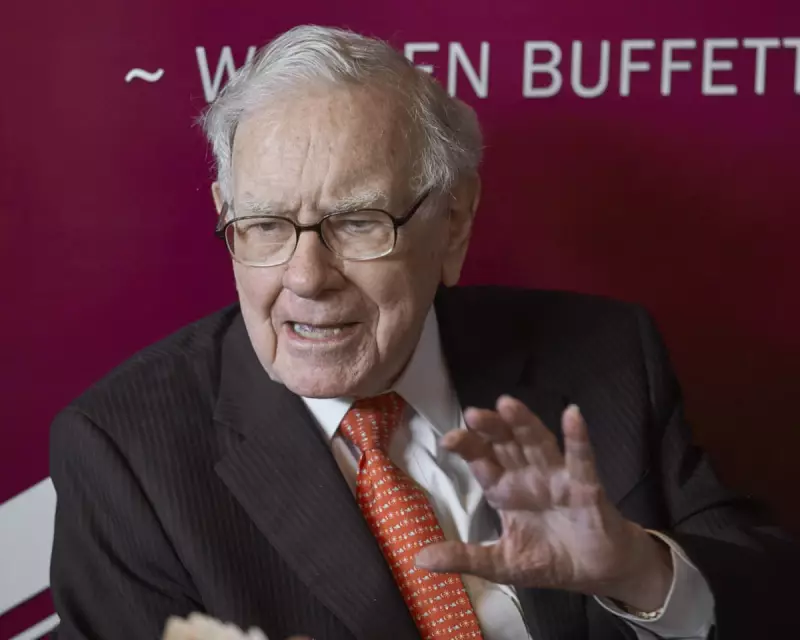
The legendary investor Warren Buffett, known globally as the Sage of Omaha, is set to retire at the end of 2025. For decades, he has guided shareholders of his conglomerate, Berkshire Hathaway, with wit and wisdom through his annual letters. These missives charted the firm's extraordinary journey from a struggling textile business with $25 million in equity to a financial empire now valued at over $1 trillion.
The Foundational Principles of Buffett's Success
Buffett's approach to capital allocation became the cornerstone of Berkshire's growth. He later admitted that buying the original textile operation was a mistake, but it taught him a crucial lesson: his team faced no institutional restraints. The only limit was their own ability to understand a business's future. By 1982, he explained that the ideal was buying wonderful businesses outright at fair prices, a task he called "extraordinarily difficult."
Another hard-learned lesson was to use cash, not shares, for acquisitions. A pivotal error was using 272,000 Berkshire shares to buy reinsurer General Re in 1998. Buffett later called this a "terrible mistake" that caused shareholders to give up more than they received.

A Dual Strategy for Investment Success
Buffett famously employed a two-pronged strategy: taking stakes in excellent public companies while also seeking to purchase similar businesses in full. In his 1995 letter, he likened this eclectic approach to an advantage, quoting Woody Allen: "The real advantage of being bisexual is that it doubles your chances for a date on Saturday night."
Perhaps his most enduring advice came in 1986: "be fearful when others are greedy and greedy only when others are fearful." He acknowledged that timing these epidemics of market emotion was difficult, but the principle remained a beacon for disciplined investors.
Warnings on Pitfalls and 'Weapons of Mass Destruction'
Buffett has long been sceptical of acquisitions, believing most damage the acquirer's shareholders. He suggested in 1994 that a CEO's "animal spirits and ego" could override discipline, making them respond to deal-making advice "much as would a teenage boy."
His most stark warning concerned derivatives, which he labelled "financial weapons of mass destruction" in 2002. He described a "frightening web of mutual dependence" among institutions, a prediction that proved prescient during the 2008 financial crisis. He noted that trouble in derivatives could spread like disease, quipping: "it’s not just whom you sleep with, but also whom they are sleeping with."
Building an Empire with Incredible People
Berkshire's expansion was fuelled by its insurance operations, like Geico, whose 'float' provided low-cost capital for investments. Even catastrophes like Hurricane Andrew in 1992, which cost Berkshire $125 million, taught a lesson. Buffett observed it revealed which insurers were under-protected, coining another classic phrase: "It’s only when the tide goes out that you learn who’s been swimming naked."
Buffett credited much of Berkshire's success to its managers, favouring experienced leaders. He celebrated figures like Rose Blumkin ("Mrs B"), who founded a furniture store with $500, sold most of it to Buffett at 89, and worked until 103. "After retiring, she died the next year, a sequence I point out to any other Berkshire manager who even thinks of retiring," Buffett joked in 2011.
The Legacy and Looking Beyond Buffett
Buffett's long-term goal was always to outperform the S&P 500, which required keeping "dry powder" ready. He envisioned economic storms that would briefly "rain gold," promising in 2016 to go outdoors "carrying washtubs, not teaspoons."
On succession, shareholders have been reassured since 2005 that the board has capable candidates. With characteristic humour, Buffett wrote in 2007 that he had discarded the idea of managing the portfolio after his death, "abandoning my hope to give new meaning to the term 'thinking outside the box'." As his tenure concludes, the lessons from his letters remain a masterclass in rational, long-term investing.






