

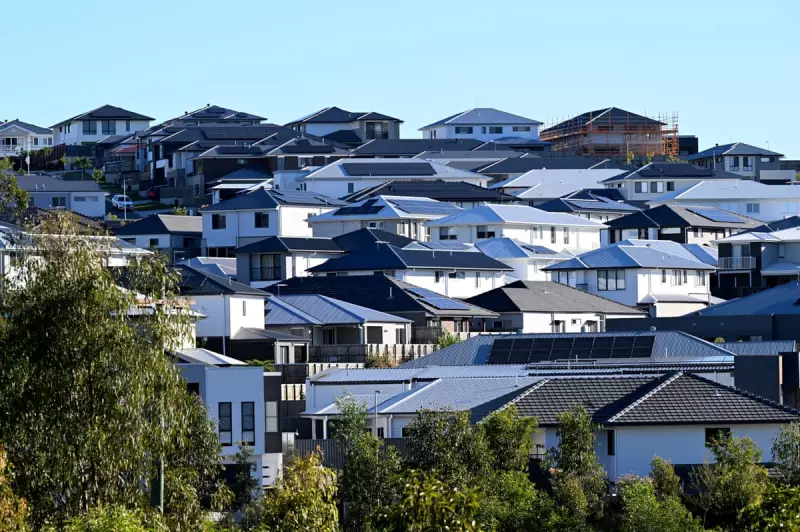
Australian homeowners can expect the value of their properties to continue climbing this year, with economists predicting a nationwide rise of at least 5%. This follows a significant surge of 8.6% recorded across the country in 2025, placing further strain on an already critical housing affordability crisis.
Capital Cities Lead the Charge
Data from property analytics firm Cotality reveals that every single state and territory capital city saw prices increase last year. The most dramatic rises were not in the traditional eastern powerhouses, but in Darwin with an 18.9% leap, Perth at 15.9%, and Brisbane with a 14.5% increase.
Sydney, Australia's most expensive market, recorded a more modest but still substantial gain of 5.8%, pushing its median dwelling value above $1.28 million. The 8.6% national annual rise was the largest jump since 2021, though the pace of growth did show signs of slowing towards the end of the year.

Demand Outstrips Supply Amid Rate Uncertainty
Most property analysts agree that prices will continue their upward trajectory in 2026, primarily because demand for housing continues to severely outpace supply. However, this growth is expected to be tempered by worsening affordability and the potential for interest rate hikes.
Tim Lawless, Research Director at Cotality, noted that market momentum has cooled slightly as expectations for further rate cuts have evaporated, replaced by the possibility of increases. "A 'higher for longer' setting on interest rates, alongside a resurgence in cost-of-living pressures and worsening affordability pressures, looks to have taken some heat out of the market," Lawless said. He added, however, that a significant boost in housing supply is unlikely in 2026, which will help prevent a major slowdown in price growth.
The interest rate outlook is shifting, with two of the four major retail banks anticipating a rate rise at the Reserve Bank of Australia's first meeting of the year in February. None are currently forecasting additional cuts.
A Deepening Generational Divide
The relentless climb in property values is exacerbating a stark generational gap, pushing home ownership increasingly out of reach for younger Australians. Analysis by financial comparison site Finder highlights the dramatic shift: over 40 years ago, the average home cost 3.3 times annual income. Today, that figure has ballooned to more than 10 times annual income.
Finder's personal finance spokesperson, Taylor Blackburn, stated, "Today, Aussies face more years of saving, higher deposits and larger debt, all while pay packets haven't really kept up. For previous generations, home ownership was achievable with steady work and discipline."
The situation is compounded by an investor boom. Favourable tax policies, including negative gearing and capital gains discounts, fuelled an explosion in investor lending during 2025. This has increased competition in the market, often leaving prospective owner-occupiers stranded in the rental sector, where nationwide rents rose by 5.2% last year.
With property price increases consistently outpacing wage growth, the ability for many younger adults to purchase a suitable home is now less about their own job and more about their parents' wealth.
Looking ahead, forecasts vary but remain firmly in positive territory. SQM Research predicts capital city price growth of 6% to 10% for 2026, led by double-digit gains in Perth, Brisbane, Adelaide, and Darwin. AMP's chief economist, Shane Oliver, expects a slightly more conservative but still robust increase in the 5% to 7% range.






