A property investor in Atlanta has made an extraordinary historical discovery while renovating a century-old building, uncovering a piece of American beverage heritage that had lain hidden for over a hundred years.
Unexpected Find in Historic Attic
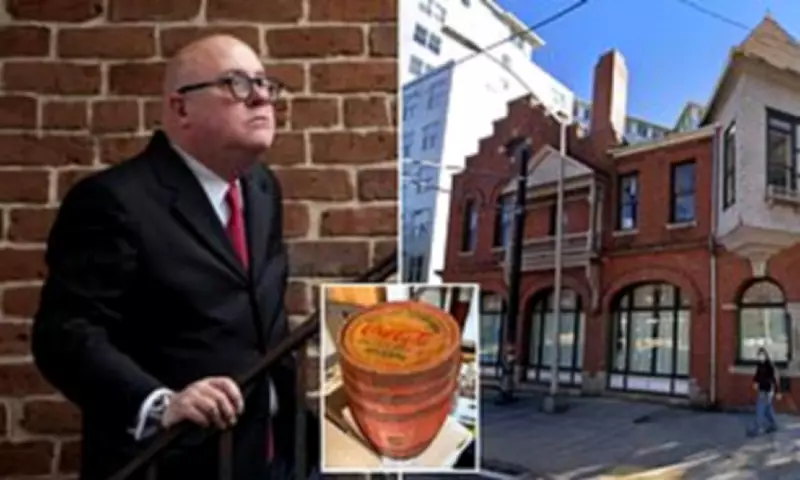
Jeff Notrica, president of Inman Park Properties, purchased the historic property at 125 Edgewood Avenue for nearly $1 million in September. The 135-year-old building, once owned by Coca-Cola magnate Asa Candler, contained a surprising secret in its attic.
During renovation work, Notrica's team discovered a five-gallon wooden barrel that almost certainly held the syrup used to create the famous Coca-Cola drink. According to historical experts and The Atlanta Journal-Constitution, this remarkable artifact dates back to the early 1900s.

Preserving Atlanta's Industrial Heritage
The building represents one of the last remaining structures from Coca-Cola's early days in Atlanta, where the global beverage company maintains its headquarters to this day. This particular property housed the very first Coca-Cola bottling operation, making the discovery particularly significant for local historians.
Notrica explained his motivation for purchasing the property, stating he had witnessed too many historical buildings being demolished in Atlanta's rapid development. "It's extremely exciting to be involved with something that is so quintessentially Atlanta," he told local media.
Transformation Plans for Historic Space
The property investor now plans to transform the historic brick building into a commercial space that honors its legacy while serving contemporary needs. Potential uses include a coffee shop or comedy club, with Notrica emphasizing the importance of preserving the city's rich history through adaptive reuse.
To ensure the project's success, Notrica has hired fellow Atlanta native Alison Gordon to lead restoration efforts, working in partnership with the Atlanta Preservation Center. Although preservation and renovation work continues, the property has already been listed for $3 million.
Financial and Historical Considerations
Broker Danny Glusman explained that seeking a new tenant will help finance the completion of the restoration project. The building may also qualify for state tax credits as it's officially designated as a historic place, providing additional financial support for preservation efforts.
This structure stands as one of the oldest remaining buildings in the area, having witnessed significant historical events including the Civil Rights Movement and the Atlanta Race Massacre of 1906.
Coca-Cola's Atlanta Origins
The discovery provides a tangible connection to Coca-Cola's early history in Atlanta. The beverage first became available at Jacob's Pharmacy in 1886, with Asa Candler purchasing the recipe two years later and establishing the Coca-Cola Company.
Initially available only through soda fountains, the company's expansion into bottled products began with a landmark $1 agreement in 1899 between Candler and lawyers Benjamin Thomas and Joseph Whitehead, who possessed the financial resources to rapidly grow the brand.
From Local Operation to Global Phenomenon
The first Coca-Cola bottling plant opened in Chattanooga before expanding to Atlanta in 1900. The Edgewood Avenue property served as a bottling operation until 1901, after which the company moved to Spring Street.
Today, Coca-Cola operates bottling facilities in more than 200 countries and remains the world's most popular soda, generating billions in annual profits while maintaining its Atlanta headquarters.
W. Wright Mitchell, president and CEO of The Georgia Trust for Historic Preservation, emphasized the building's significance, telling The Atlanta Journal-Constitution that such structures "have served as visual reminders to our achievements and our successes and our hopes and dreams."
Notrica's discovery and preservation efforts represent a meaningful contribution to maintaining Atlanta's architectural and industrial heritage for future generations.