

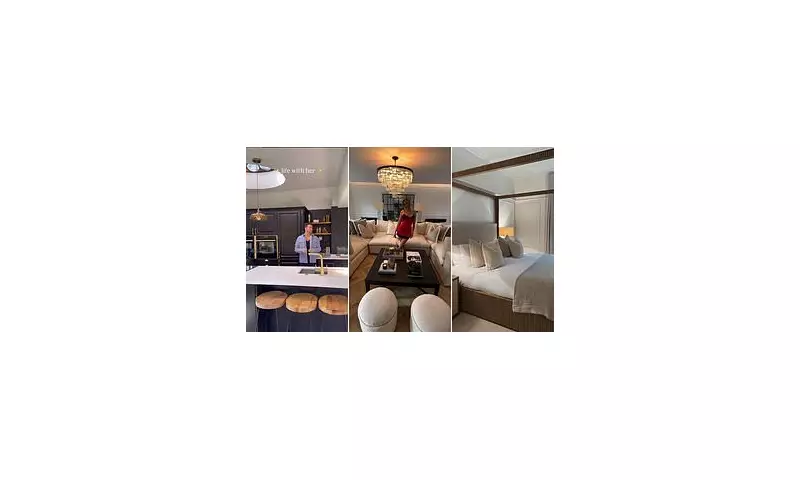
Scroll through the Instagram feeds of Britain's mid-tier celebrities, and a distinct aesthetic emerges: vast expanses of grey crushed velvet, carpets in shades of nothingness, and a monochrome palette that screams curated perfection. From Molly-Mae Hague to Michelle Keegan, the 'clean girl' beige and grey look reigns supreme in these monotone palaces.
Yet, according to a leading interiors expert, splashing cash on high-end appliances and deep-pile neutral carpets doesn't guarantee enviable style. Speaking to the Daily Mail, design authority Jordana Ashkenazi pinpointed the telltale signs that a home signals 'new money' – choices that the established elite might view with a sceptical eye.
The Status Symbols That Miss the Mark
Ashkenazi's critique highlights several recurring trends in celebrity homes that prioritise show over substance. The first culprit is the huge, prominently displayed television, as seen in Michelle Keegan and Mark Wright's living room. "A massive TV slapped on the wall is peak nouveau riche," Ashkenazi states. Her advice? Integrate it into joinery so it disappears when not in use, rather than having a screen on constant display.

Another common feature is the all-neutral interior, famously favoured by Molly-Mae Hague. While these beige and white schemes photograph beautifully for social media, Ashkenazi argues they often fall flat in reality. "True luxury has confidence, depth and contrast, not a fear of colour or personality," she explains.
Outdated Trends and Excessive Statements
Some trends have stubbornly persisted past their prime. Silver carpets and crushed velvet furnishings, which were all the rage around 2020, still appear in A-lister abodes. Ashkenazi doesn't mince words: "Silver and grey carpets are dated and scream 'I wanted it to look expensive quickly'." She is even harsher on crushed velvet, calling it "tacky" and pleading for its demise.
Similarly, the overuse of marble – seen on counters and floors in homes like Hague's – can backfire. "When it's used excessively it starts to feel more hotel lobby than home," the expert cautions. She advocates for selectivity, using one or two standout marble pieces as a focal point for a far more expensive look.
Aspirational Appliances and Predictable Textures
Certain purchases are more about signalling status than utility. The iconic Aga range cooker, proudly showcased by Stacey Solomon at her Pickle Cottage home, falls into this category for Ashkenazi. "An Aga that's never switched on is a classic status purchase," she notes. "It's less about cooking and more about saying 'we've arrived', even if no one has a clue how it works."
When it comes to soft furnishings, the bouclé fabric adored by celebrities like Lucy Mecklenburgh has become predictable. "When it's everywhere, it starts to look more showroom than sophisticated home," Ashkenazi remarks, suggesting moderation is key.
Lighting, Pillows and Glass: The Final Offenders
Other design missteps include overly statement light fixtures, as seen in Chloe Ferry's and Stacey Solomon's homes. Ashkenazi warns that if everything fights for attention, a room loses balance, and fake chandeliers simply "say tacky."
Even bedroom styling isn't safe from critique. Molly-Mae Hague's display of four stacks of pillows on one side of a bed is deemed excessive. "Luxury doesn't require a nightly pillow workout," Ashkenazi quips, recommending four to five high-quality cushions as plenty.
Finally, geometric glass decor, a favourite of Gemma Collins, can tip into 'new money' territory when overused. "Minimal use is chic. Overuse is very new money," Ashkenazi concludes, emphasising that the most expensive interiors understand the power of subtlety and knowing when to whisper rather than shout.






