

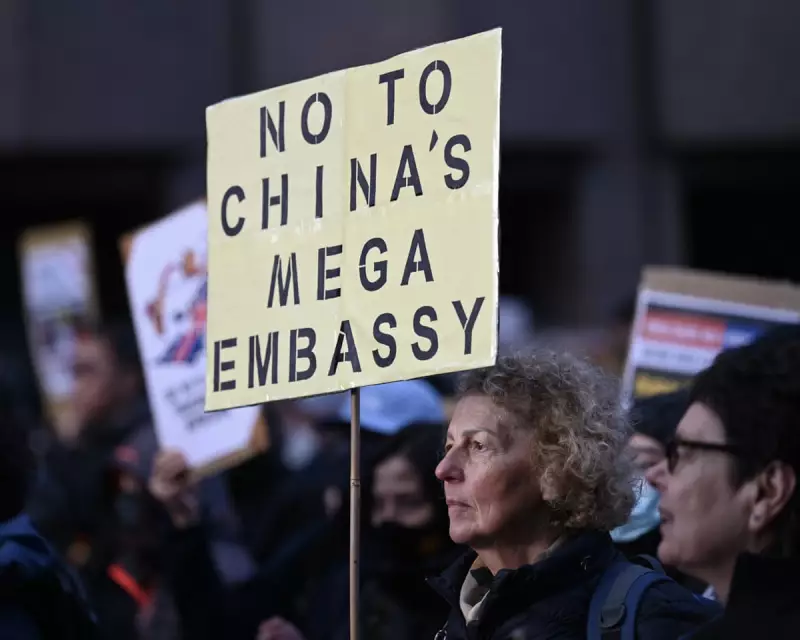
Residents of a historic London enclave are gearing up for a legal battle against the government, should ministers give the green light to China's controversial plans for a sprawling new embassy complex. The decision, expected imminently from Local Government Secretary Steve Reed, could trigger a judicial review challenge from the Royal Mint Court Residents' Association.
Residents Fear Eviction and 'Government Interference'
The association has raised nearly £37,000 towards a legal fund, with a target of £145,000 needed to instruct lawyers. Mark Nygate, the group's treasurer, stated that locals fear "government interference in what is supposed to be an independent process." A significant concern is that China already owns the freehold of adjacent residential properties, and residents worry approval of the embassy will lead to their eventual eviction. "We will be looking directly at the 230 flats they want to build for embassy staff and guests; they won't want us here," Nygate said.
A Legacy of Political Promises and Planning Disputes
The saga has deep political roots. In 2018, then-Foreign Secretary Boris Johnson sent a letter to the Chinese ambassador agreeing to designate the site—acquired by China for £255 million—as diplomatic premises. Campaigners argue this letter prejudged the planning outcome. However, in recent correspondence, the Foreign Office stated Johnson's consent was conditional on obtaining planning permission and could be withdrawn.

This clarification has done little to assuage critics. Iain Duncan Smith, co-chair of the Inter-Parliamentary Alliance on China (Ipac), wrote to planning officials arguing the process was unfair and that Johnson's letter appeared to be a "binding international commitment." The local Tower Hamlets council initially rejected China's application in 2022, before it was resubmitted and called in by the government in October 2024.
Security Concerns and Diplomatic Timetables
Opponents have also highlighted potential espionage risks, given the site's proximity to high-speed data cables. However, security service MI5 has reportedly indicated it does not view the risks as greater than normal for a diplomatic post. Some officials see an advantage in consolidating China's seven current London sites into one.
The looming legal challenge creates a tight political timetable. Residents would have six weeks to file for a judicial review, potentially delaying the project for years. This window could also impact Prime Minister Keir Starmer's diplomatic calendar, possibly allowing time for a potential trip to Beijing—which would be the first visit by a British PM in eight years.






