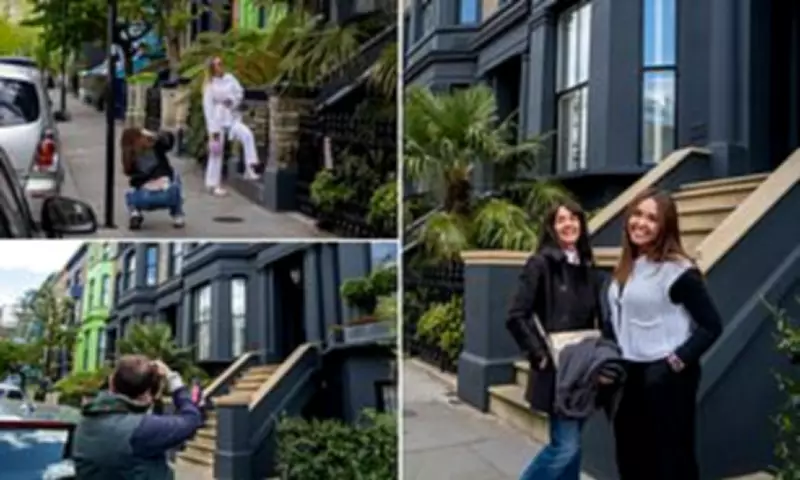
In a surprising twist, Notting Hill residents who painted their homes black to discourage selfie-taking tourists and influencers have discovered their plan has spectacularly backfired. The distinctive dark facades, intended to blend in and reduce attention, are now drawing even larger crowds to Lancaster Road, amplifying the very nuisance they sought to eliminate.
The Unintended Allure of Darkness
Last year, homeowners on Lancaster Road took inspiration from the Rolling Stones and applied pitch-black paint to three properties, starkly contrasting with the rainbow hues of neighbouring houses. Located near the trendy Portobello Road Market, a magnet for the Instagram elite, these homes were meant to become less photogenic. Instead, tourists report finding the black paint sophisticated and eye-catching, making the houses a must-see destination.
Tourist Perspectives on the Dark Facades
French tourist Inès Bourdet, 23, visited the street specifically after seeing it online. She remarked, "The colour is black, but it's very attractive for the eyes. I think it's different from the other houses. It's a statement near the other colours. It's more classy." Her mother, Bertrice Marreiot, 43, accompanied her, both undeterred by the sombre shade.

Spanish visitors Edelweiss and Jose Rodriguez, both 27, also paused to photograph the black houses. Edelweiss noted, "I think it's a good idea, but the other houses are white, all in London are white. It's a contrast." Jose added, "For me, that colour makes me sad – it's not a good day if you see that house. But the colourful houses give me peace and make me joyful."
Italian tourists Leonardo Lepri, 43, and his partner Laura, with their four-year-old daughter Flaminia, chose to take photos on the stairs of a black home. Mr Lepri observed, "It's just a little bit sad – it's an austerity colour. It could be a good way to avoid too much chaos."
Resident Frustrations and Community Impact
A nearby resident, who wished to remain anonymous, revealed that the situation worsened after an American created a Google Maps listing dubbing the area the "Notting Hill House of Colors." They described issues like rubbish left on porches, shouting, and impolite behaviour from tourists who refuse to move for residents. "It's impeding our neighbours' lives," they said. "We all accept we live in London and it's a very busy city, but it gets to a point where it's not respectful – we do actually live here."
Another resident of a black house explained last year, "My family moved in about a month ago and the previous owner painted it black just before because they were fed-up with how many people stop out front. It gets crazy. People get on the steps and take loads of photos. On the weekends, there can be hundreds of people." They hoped the black paint would make the houses less picturesque, but it has had the opposite effect.
Historical Context and Gentrification
Notting Hill has transformed dramatically over the past three decades, evolving from a bohemian, gritty area with a significant Windrush generation presence to a highly gentrified, expensive hotspot. One local commented, "This was a no-go area in the '90s – there were prostitutes, pimps, and drugs. These were hard to let properties. Then gentrification came along. In the last two or three years there have been a lot of tourists around."
While acknowledging the economic benefits, they added, "Sometimes I'm in my kitchen and I quite like listening to the babble of different languages. I'm quite an internationalist, really. Sometimes it's annoying if you're in a rush with your shopping, but it's generally OK."

Failed Measures and Ongoing Struggles
Residents have tried various tactics to reclaim their privacy, including distributing letters urging collective repainting, installing "quiet zone" signs, and placing ropes across front terraces. George Hencken, a 29-year resident, painted her house grey seven years ago after tiring of attention from her pink facade. She warned, "The thing is, and something those who have painted their homes black will soon find out, is that even if people aren't using their house as a photo backdrop – they'll still be here. They'll be having their picnic lunch in their doorway, sheltering outside when it's raining, and even changing outfit on their front steps."
Ms Hencken attributed part of the tourism surge to the 1999 rom-com Notting Hill, starring Hugh Grant and Julia Roberts. "Ever since Richard Curtis made that stupid film every American banker or rich guy from Switzerland who spends a few months here, when asked where they want to live, says: 'Oh, my wife likes that film.' It's changing the area. Our doorsteps used to be social places. We'd sit out here and chat to friends and neighbours. But now you can't do that. If you do, any random person thinks they can come and sit here too."
As the black houses continue to attract crowds, residents' dreams of peace and quiet remain unfulfilled, highlighting the challenges of living in a photogenic urban area in the age of social media.