

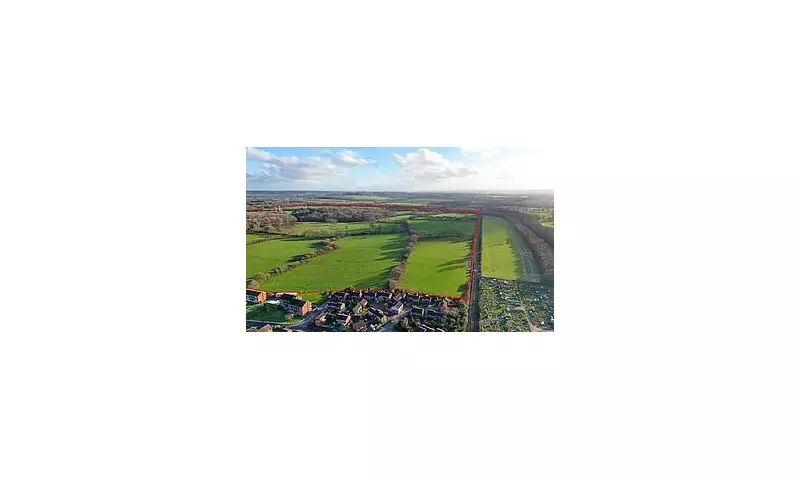
Plans spearheaded by a descendant of Queen Victoria to construct a vast new housing estate on the edge of a historic Hampshire market town have ignited fierce local opposition. Residents of Romsey are up in arms over the proposal to build 920 homes on farmland bordering the iconic Broadlands Estate.
A Royal Connection and a Controversial Proposal
The scheme is being led by Timothy Knatchbull, 61, the great-great-great grandson of Queen Victoria and a godson to King Charles. Mr Knatchbull heads a consortium named The Ashfield Partnership, which has submitted an outline application for the development on land south of Romsey. The site neighbours the 4,500-acre Broadlands Estate, a location steeped in royal history where Queen Elizabeth II and Prince Philip spent their honeymoon in 1947, and where then-Prince Charles and Princess Diana began theirs in 1981.
This is the consortium's third and largest project in the area, following smaller developments in Luzborough and North Baddesley. The current plan, scaled back from an initial proposal for 1,100 homes in 2022, includes provisions for a new primary school, business spaces, a community hall, and open spaces. However, it is the potential addition of around 2,500 bedrooms – potentially swelling the town's population by up to 15% – that has caused deep concern among locals.

Local Fears: Infrastructure, Access, and 'Pristine' Countryside
Opponents have launched a concerted challenge against the development, accusing the developers of cutting corners to save money. A central point of contention is the alleged omission of a footbridge over the railway line that separates the site from Romsey town centre. Test Valley Borough Council had originally deemed this bridge necessary for sustainable access.
Richard Buss, a 68-year-old freelance film editor and 35-year resident leading the opposition, stated: "They are doing everything they can to get out of building a bridge... If you don't have a bridge you are forcing everyone to use their car in an age in which we are trying to make people do everything they can not to." He accused Mr Knatchbull of "trying to do what is convenient for him and what saves him money."
Borough councillor Mark Cooper, a 39-year resident, echoed these concerns, stating the site is "simply not sustainable" without easy pedestrian access to the town. He also warned that the development would expand Romsey towards Southampton, blurring the separation between the two.
Beyond access, residents have voiced fears over serious traffic issues, an overstretched local GP surgery, and the loss of natural habitat. Local Jeffrey Clark warned that 920 homes could mean 1,800 extra cars on Romsey's narrow, medieval roads, which he believes are already at capacity. Dr Mark Willett highlighted the strain on the sole NHS GP surgery, suggesting an influx of roughly 3,000 new people could lead to unsustainable pressures and delayed care.
Many objectors are dismayed at the potential loss of green space. Dr Willett described the proposed site as "pristine countryside," adding, "We can't just keep destroying wildlife habitats and the clean air and natural beauty provided from the green belts."
A Personal History Shadowing the Plans
The controversy is set against the poignant personal history of Timothy Knatchbull. He is the grandson of Lord Louis Mountbatten, the last Viceroy of India and uncle to Prince Philip, who had a strong influence on King Charles's upbringing. In 1979, Mr Knatchbull survived an IRA bombing that killed his grandfather and his twin brother, Nicholas. The King, during a visit to the site of the attack in 2015, described Lord Mountbatten as "the grandfather I never had."
Despite this lineage, Councillor Cooper remarked, "To be honest I think it is irrelevant that it is Timothy Knatchbull. We just need to make sure that the estate keeps Romsey and Southampton separate." The focus for locals remains firmly on the perceived flaws in the planning application itself. Following recent amendments to the plans, 20 local residents have submitted formal objections. The Ashfield Partnership has declined to comment on the ongoing dispute.






