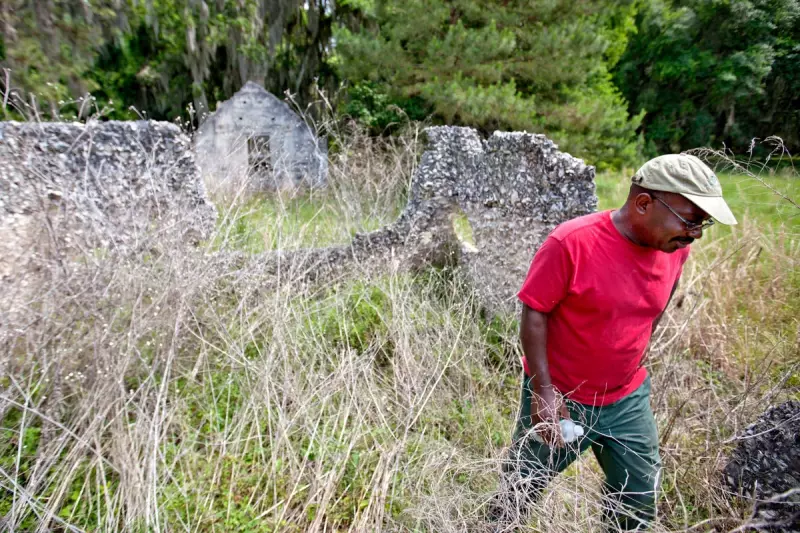
Descendants of freed slaves on a remote Georgia island are taking their decades-long fight to protect their ancestral homes directly to voters in a crucial referendum. The community of Hogg Hummock on Sapelo Island faces a pivotal decision that could determine its cultural and financial future.
A Historic Community at a Crossroads
Voters in coastal McIntosh County will decide on Tuesday, 20 January 2026, whether to allow significantly larger homes on Sapelo Island. Black landowners in the Hogg Hummock community, one of the South's few remaining Gullah-Geechee settlements founded by freed slaves, fear the change will trigger unaffordable property tax increases. The referendum, organised by island residents, aims to overturn a 2023 decision by McIntosh County commissioners that doubled the permitted size of homes in the area from 1,400 to 3,000 square feet.
This vote represents the latest chapter in a tense dispute spanning over a decade. Tensions have been fuelled by outsiders purchasing land and constructing holiday homes, which long-time residents worry will inflate property values and their associated taxes. County officials have previously blamed the changing landscape on native owners who sold their parcels.

Legal Battles and a Threatening Tax Reassessment
The path to this special election was hard-fought. Black residents and supporters gathered more than 2,300 petition signatures and challenged the commissioners all the way to the Georgia Supreme Court to force the ballot. However, the vote may not be the final word. Commissioners have suggested that if voters repeal the zoning changes, they might consider Hogg Hummock to have no development limits at all, rather than reverting to the protective restrictions in place for thirty years, potentially sparking another court battle.
Simultaneously, a separate threat looms. County assessors are proposing to recalculate the taxable value of Hogg Hummock properties for the first time since 2012. Chief Appraiser Blair McLinn predicts land values per half-acre could skyrocket from an average of $27,500 to $145,000, citing recent sales where lots fetched up to $210,000. "To leave it alone is not going to be an option," McLinn stated, indicating steep tax hikes are likely unavoidable.
Preserving a Unique Cultural Heritage
Sapelo Island, located about 60 miles south of Savannah, remains largely unspoiled, with no bridge to the mainland. The Hogg Hummock community, also known as Hog Hammock, occupies less than a square mile and is home to between 30 and 50 Black residents. The Gullah-Geechee people, descendants of enslaved Africans, have maintained distinct cultural traditions and dialects due to their historical isolation along the Southeast coast.
Hogg Hummock was listed on the National Register of Historic Places in 1996. Yet, for practical protections, residents depend on the local McIntosh County government, where 65% of the 11,100 residents are white. "People worked hard to get this land on Sapelo and they worked hard to preserve who they are," said island native Maurice Bailey. "Without this land, all of our descendants lose their connection."
This is not the first fiscal clash. In 2012, sharp tax increases prompted protests and a subsequent lawsuit accusing the county of taxing residents while providing minimal services. A 2022 settlement froze property assessments, making the 2023 zoning change—passed without warning, according to residents—a profound shock. As referendum organiser and landowner Jazz Watts put it, "I strongly believe we’re going to win. What happens next is still kind of a legal question based on what the county does." The outcome will resonate far beyond this small island, testing the resilience of a unique American community.