Rainbow Way: Somerset's Council Housing Success Story Highlights National Challenges
In the Somerset coastal town of Minehead, a remarkable development called Rainbow Way stands as a beacon of hope in Britain's deepening housing crisis. This collection of 54 new council homes represents the first such construction in this part of Somerset for three decades, offering secure, affordable accommodation to local residents who desperately need it.
A Life-Changing Move for Residents
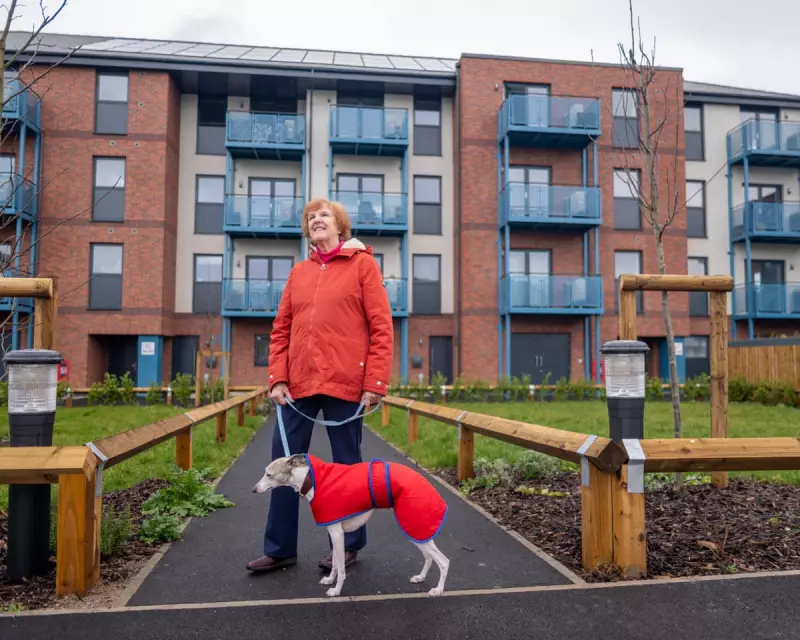
Carole Guscott, a retired former carer, embodies the transformative impact of Rainbow Way. Previously paying £780 monthly for private rented accommodation in Minehead's town centre, she now enjoys a bright, open flat with stunning views of surrounding hills for just over £500 per month. "I knew as soon as I saw it," she recalled of her first viewing. "I just thought: 'I can make this place my home.'"
Guscott's experience reflects the profound difference secure council housing makes. "Without a council house, there just isn't the security," she observed, adding simply: "I feel blessed that I'm here." Her whippet Gracie accompanies her on walks past the local Premier Inn to their new cul-de-sac home, where gentle contemporary architecture meets zero-carbon design principles.

The Development's Composition and Community Impact
Rainbow Way comprises 33 flats and 21 houses, with approximately half of residents having recently experienced homelessness, faced harassment, required urgent moves from supported accommodation, or needed additional bedrooms due to changing family circumstances. Significantly, 89% of tenants were already Minehead residents, with the remaining 11% having strong local connections.
This local focus matters profoundly in Minehead, where seasonal employment centred around the town's vast Butlin's resort creates economic vulnerability and where deprivation remains a persistent challenge. The development includes a compact children's playground and careful attention to community wellbeing, creating what visitors describe as a tangible sense of calm and positive transformation.
Political Context and National Housing Challenges
Rainbow Way's success emerges amid a national housing crisis affecting countless communities across the United Kingdom. Somerset's new unitary council, formed from four previous district authorities, has maintained 10,500 existing council homes while pursuing new construction. Currently, 11,644 households remain on Somerset's waiting list, highlighting the scale of unmet need.
The development raises urgent questions about why similar projects remain vanishingly rare across Britain. Despite government promises of "the biggest increase in social and affordable housebuilding in a generation," progress remains frustratingly slow. Labour ministers have implemented significant policy changes, including restricting right-to-buy discounts, allowing councils to retain sales receipts, and planning to exclude new properties from the scheme for 35 years.
Financial Constraints and Historic Debt Burdens
Substantial barriers continue to hinder wider council house construction. The housing charity Shelter acknowledges government progress while noting that planned annual completions of 18,000 council homes fall dramatically short of the 90,000 needed annually to properly address the housing crisis.
More fundamentally, a labyrinthine 2012 agreement between central government and local authorities transferred £13 billion of historic housing debt to councils based on assumptions about rising rents and right-to-buy sales that failed to materialise. Somerset now carries £190 million of this debt, which officials say they can service but which inevitably limits construction capacity.
Other local authorities face even greater constraints. Southwark Council leader Sarah King reported that her authority built 600 new homes in London last year but cannot undertake further construction due to £408 million in housing debt alongside post-Grenfell fire safety requirements imposed without additional funding. "We have sites with planning permission, but we can't build on them because of the state of our finances," she explained.

The Case for Debt Relief and Continued Investment
Council leaders across Britain are urging central government to write off at least portions of this historic debt, arguing that such action would unlock significant housing investment. As King noted: "If you invest in council homes, you save massive amounts on the housing benefit bill. You make savings on people's health because people are living in homes that are warm, safe and dry. You provide space for children to do their homework."
These arguments underscore the broader social benefits of quality social housing beyond mere accommodation provision. The government has allocated £39 billion for affordable housing over ten years, aiming to deliver 180,000 homes for social rent by 2035, though tangible results aren't expected until the current parliament's conclusion.
A Model for the Future Amid Ongoing Challenges
Rainbow Way demonstrates what becomes possible when political will, sensible design, and community focus converge. During a recent visit, councillors and officers celebrated the development with ceremonial ribbon-cutting before four-storey apartment blocks as gulls called overhead and delivery vans brought furniture to new residents.
Yet the project also highlights persistent national challenges: funding constraints, bureaucratic complexities, and the legacy of decades of underinvestment in social housing. As Britain continues to grapple with a severe housing shortage, developments like Rainbow Way offer both inspiration and a sobering reminder of how much remains to be accomplished. The contrast between this Somerset success story and the struggles of countless other communities underscores the urgent need for comprehensive, adequately funded national housing strategy.