Amtrak could soon permit passengers to bring firearms on most of its trains, a significant policy shift that critics argue would compromise security rather than enhance it, especially following the recent shooting at the White House Correspondents' Association dinner.
Proposed Policy Change
Since early this year, the railroad has been considering a change that would allow customers to store guns in lockboxes aboard trains. This comes after pressure from the Trump administration to ease weapon transport restrictions. Two sources familiar with the plan told the Associated Press that Amtrak has not abandoned the proposal despite the arrest of Cole Tomas Allen, who allegedly traveled from California to Washington, D.C., with firearms intending to kill President Donald Trump and other officials.
Details of the Incident
Allen was arrested after attempting to breach security barriers near the hotel ballroom hosting the dinner, leading to an exchange of gunfire with Secret Service agents. One officer was shot in the vest but survived. Authorities say Allen carried a shotgun and semiautomatic pistol on Amtrak from Torrance, California. It remains unclear if he complied with existing rules requiring passengers to declare firearms and allow them to be locked with checked baggage. Allen's lawyer asserts he has no criminal record and is presumed innocent.

Impact on Security
Under the proposed change, lockboxes would be added to all trains, allowing guns on over 1,500 daily routes, including the Northeast Corridor serving 750,000 passengers daily. Currently, firearms are only permitted on a few dozen long-distance trains with locked baggage cars. John Feinblatt of Everytown for Gun Safety condemned the move, stating it would decrease safety and urging Congress to intervene.
Current versus Proposed Rules
Currently, passengers must declare firearms, secure them unloaded in a hard case meeting size and weight requirements, and only in checked baggage. The new plan would still require guns to be locked aboard, with the conductor holding the key. However, it is unclear how Amtrak would verify legal gun ownership or compliance with local laws, which vary widely, from strict regulations in New York City to looser rules elsewhere.
Lack of Passenger Screening
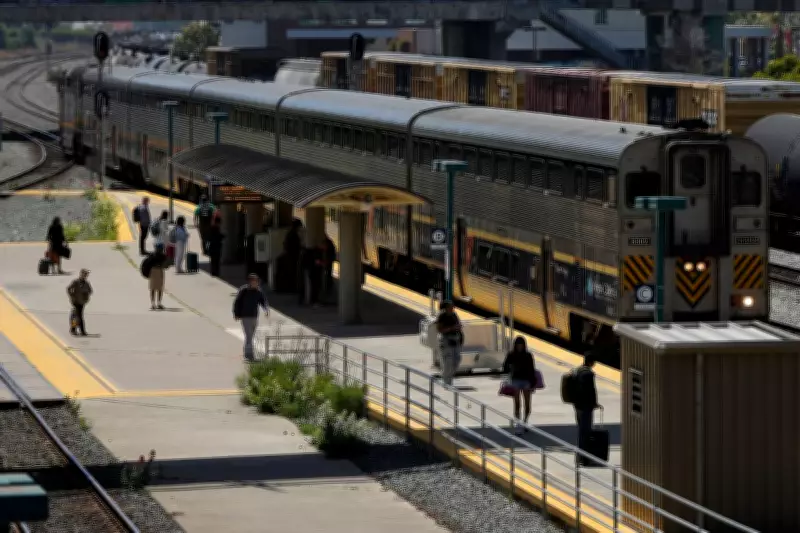
Unlike airports, Amtrak does not screen passengers or their luggage, nor does it check names against criminal databases. This applies even at major terminals like Washington's Union Station and unstaffed stations where passengers board without conductor contact for several minutes. Security expert Sheldon Jacobson, who contributed to the TSA PreCheck system, advocates for better pre-travel information collection and background checks but acknowledges that eliminating guns on trains is impractical given the prevalence of firearms in the U.S. He notes that rail travel poses lower risks than air travel, so extensive screening may not be cost-effective unless a major tragedy occurs.
Union Advocacy for Worker Protection
Unions have sought stronger protections for passenger rail workers for nearly a decade, especially after incidents like the 2017 shooting of a conductor in Naperville, Illinois. Two congressional bills would make assaulting rail workers a federal crime, similar to protections for airline crews. After 9/11, Amtrak and other ground transporters banned weapons but did not implement screening. A 2010 law required Amtrak to allow checked firearms, but the new proposal expands this significantly.