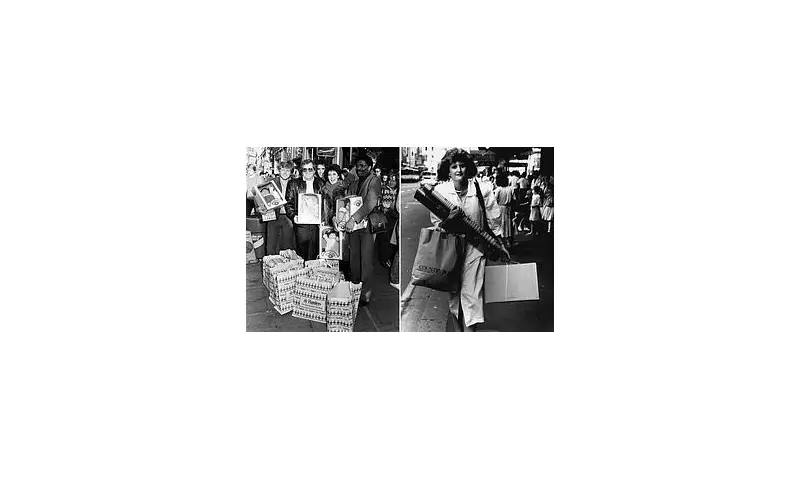
If you think festive shopping today is a challenge, cast your mind back to the mid-1980s. Securing that year's must-have toy – be it a Cabbage Patch Doll or an Obi-Wan Kenobi figure – required a physical mission to the shops, often culminating in a determined dash against other parents. All this unfolded to the relentless soundtrack of Shakin' Stevens' 'Merry Christmas Everyone'.
The Booming High Street: A Festive Frenzy
Today, a YouGov survey reveals around a third of Britons avoid in-person shopping altogether. The modern experience is often reduced to accepting a parcel from a retreating delivery driver. This contrasts sharply with a past where high streets were thriving hubs. In the 1980s, the British high street was booming, with the Christmas period and the Boxing Day sales forming the most lucrative season.
For most, November 30 marked the final payday before Christmas, with wages often received in cash. From December 1 until late on Christmas Eve, stores were packed. Major shopping centres and precincts were crowded from dawn until dusk, with shops extending their hours for last-minute shoppers.

Department stores like Owen Owen in Coventry enjoyed their peak sales. The retail landscape was dominated by familiar names: music lovers headed to Woolworths ('Woolies') to browse the latest cassettes, lined up by their Top 40 chart position. Shoppers seeking clothing gifts wandered through C&A, Littlewoods, or BHS. For the latest tech, relatives would visit Dixons, Tandy, or Currys for coveted items like the Sony Walkman, VHS players, or boomboxes.
The Must-Have Toys and Tech of the Decade
The 1980s Christmas list was defined by hype and specific, hard-to-get items. Popular TV characters ruled, with Transformers, Care Bears, Rainbow Brite, My Little Pony, and He-Man top of many lists. The arrival of Toys 'R' Us in 1985 saw parents spend hours in these vast out-of-town toy temples.
Every generation subjects parents to frenzy, and 1983's craze was for Cabbage Patch Dolls. Queues formed outside Hamleys in London, with reports of five wealthy Americans flying in on Concorde specifically to buy them. The Star Wars original trilogy (1977-1983) made Jedi figures essential. For younger children, a Texas Instruments Speak and Spell or an Atari games console were key requests, years before the Nintendo Game Boy arrived in 1989.
Other lusted-after items included the Raleigh Burner BMX, electronic keyboards, and animatronic toys like Gabby Bear Dolls. The festive soundtrack in stores, looping from mid-November, was pulled from the 50s, 60s, and 70s until 1984, when Wham!'s 'Last Christmas' and Band Aid's 'Do They Know It's Christmas?' changed the playlist forever. The Pogues' 'Fairytale of New York' joined the canon by the decade's end.
The Grocery Rush and the 'Book of Dreams'
Without online deliveries, the Christmas food shop was an unavoidable in-person marathon. On December 24, long queues snaked through Asda, Safeway, Sainsbury's, and Kwik Save. The German discounters Lidl and Aldi were decades away from the UK market.
One revolutionary retail success story of the era was Argos. Consumers browsed the hefty catalogue – the 'book of dreams' – wrote down an order number on a slip with a provided pencil, and collected it from the counter. It offered everything from jewellery and games to the latest gadgets and quirky items like automatic tea makers.
Today, Argos survives through 664 stores and concessions in Sainsbury's, a move following its 2016 acquisition. However, this model faces huge competition from online giants like Amazon, mirroring the broader challenges of the modern high street, now a mix of nail bars, coffee chains, and boarded-up shops – a stark contrast to the bustling, stressful, and vibrant Christmas shopping experience of the 1980s.