A rediscovered Christmas shopping catalogue from 1996 has sent shockwaves across the internet, offering a stark and sobering comparison to today's supermarket prices. The festive flyer from Australian supermarket giant Coles has sparked a wave of nostalgia, disbelief, and what many are describing as a mild existential crisis among shoppers.
A Blast from the Past: Prices That Look Like Typos
The catalogue, which resurfaced on Reddit, features prices so low by modern standards they appear to be misprints. It has prompted thousands of Australians to compare the figures directly with current supermarket costs, leading many to question when the weekly grocery shop, especially for Christmas, transformed into a luxury expenditure. "Oh my god, the price is killing me," one user exclaimed as images of the catalogue spread online.
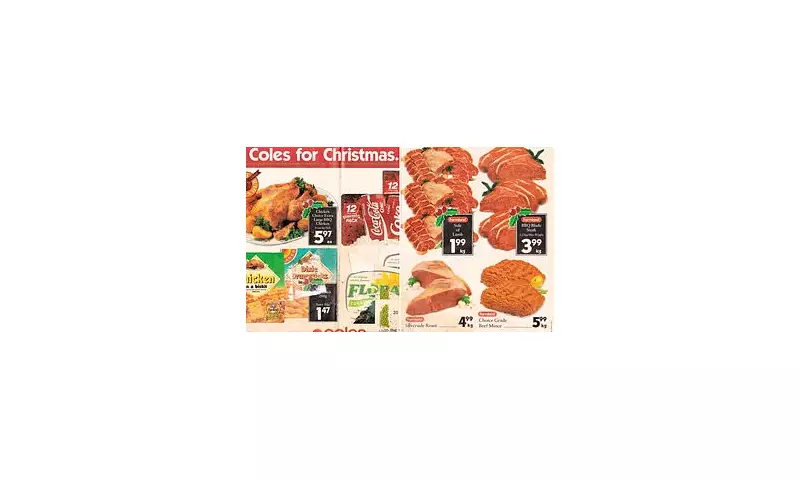
The comparisons are indeed startling. In 1996, an extra-large BBQ chicken cost a mere $5.97. Today, shoppers are paying around $12.50. A 12-pack of Coca-Cola cans was priced at $6.97, whereas a 10-pack now costs roughly $20. Everyday items like Chicken in a Biskit crackers, Flora spread, and a loaf of white sandwich bread all shared the same price tag: $1.47 each.

Festive Treats and Staples: A Costly Evolution
Iconic Christmas confectionery highlights the dramatic shift. A 200g family pack of Ferrero Rocher was $6.27; it now retails for closer to $19. A 500g box of Cadbury Roses cost $10.77. Today, many consumers pay $20 for a smaller 380g box, with one commenter noting they had just purchased a half-price box at Woolworths for that amount.
The story was consistent across pantry staples. Mars Bars were 75 cents, Arnott's plain biscuits $1.27, and Cottee's cordial $3.37. Moccona freeze-dried coffee, once $10.47, now sits at approximately $23.60. Even frozen pizzas and ice cream were dramatically cheaper, with some products like Paul's two-litre ice cream no longer available.
The Meat of the Matter: When Lamb Became a Luxury
Perhaps the most shocking revelations were in the meat aisle. The catalogue shows a time when lamb was an affordable, everyday protein for many Australian families. A side of lamb sold for $1.99 per kilogram, BBQ blade steak was $3.99 per kilo, and beef mince was $5.99 per kilo.
Fast forward to today, and those prices have skyrocketed to between $20 and $24 per kilogram, and often far higher. "Those lamb prices are wild," wrote one commenter. Another reflected on how diets have quietly changed: "I remember eating way more lamb cutlets and chops as a kid... It's a shame, because I love lamb, but it's such a luxury now."
Shoppers were quick to point out that standard inflation calculations don't fully account for such extreme jumps. While $2 in 1996 is worth just over $4 today, lamb prices have increased by more than tenfold. Some attributed the rise to shifting food culture, where once-cheap cuts like lamb shanks and pork belly were rebranded as gourmet ingredients thanks to cooking shows and food blogs, driving up demand and price.
A strong sentiment emerged that it's not just prices that have changed, but portions too. "Not only have the prices gone up," one person observed, "the sizes have shrunk." As users compared $2.97 frozen pizzas to today's near-$10 versions, the online discussion began to feel like collective therapy. "Well, that's sent me into a spiralling depression," one concluded, while another mused, "Ahh nostalgia for affordable groceries."
Dated by the inclusion of Doritos corn chips featuring Tazos collectibles released in 1996, the catalogue serves as a potent reminder of an era when stocking up for Christmas didn't require military-style planning, visiting multiple supermarkets, or anxiously hunting for discount stickers.