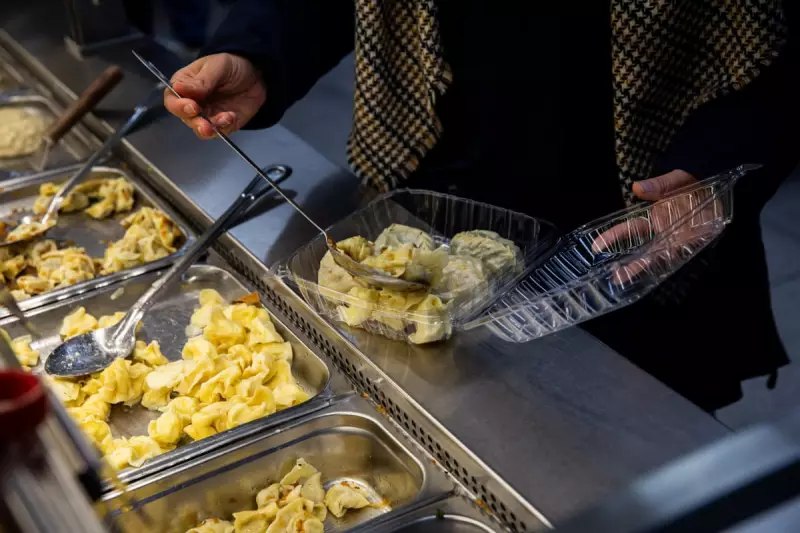
In the heart of Manhattan's trendy West Village, a new culinary destination is drawing crowds not for avocado toast, but for steaming plov and delicate manty dumplings. Tashkent Supermarket, a chain born from the Central Asian diaspora, has opened its newest and most high-profile location, transforming from a beloved immigrant staple into a bona fide New York City phenomenon.
From Coney Island to the West Village: A Diaspora's Dream
The story begins with a family's longing for home. When Odiljon Tursunov and his relatives arrived from Uzbekistan in the early 2000s, they struggled to find the traditional bread and halal sausages central to their cuisine. Their solution was to create a source themselves. In 2012, in the aftermath of Hurricane Sandy, they launched the first Tashkent Supermarket in Coney Island, naming it for Uzbekistan's capital.
The venture tapped into a growing community. By 2019, over 1.2 million people from former Soviet republics were living in the US, with significant populations in Brooklyn and Queens. Tashkent expanded strategically, opening stores in areas like Brighton Beach and Forest Hills to serve Uzbek, Kazakh, Russian, and Ukrainian immigrants. Misa Khayriddinova, head of accounting and HR, notes the Forest Hills location serves a large Uzbek Bukharian community, while the Brighton Beach store caters to those who settled there in the 1990s.

The chain's growth has been remarkable, expanding from one storefront to five across New York, plus a wholesale sausage company and slaughterhouse in New Jersey.
The Hot Bar That Conquered Social Media
The supermarket's breakthrough into the wider New York consciousness can be pinpointed to one feature: its legendary hot food bar. Since the West Village location opened in March 2025, food bloggers and influencers have flocked to its illuminated warming trays.
Accounts like @sistersnacking and @babytamago have showcased the array of dishes, urging followers to try the plov—a fragrant rice dish with lamb, cumin, and carrots—and the samsas, flaky pastries filled with meat or potato. Even New York mayor-elect Zohran Mamdani has publicly praised Tashkent's manty, the intricately shaped dumplings that are a cornerstone of Central Asian cooking.
For many from the region, these foods are deeply nostalgic. "Manty was one of the first dishes my mom taught me to make," shares one Kazakh-born customer, recalling childhood memories of kompot, a drink of simmered fruits, and the honey-soaked dessert chak-chak.
Navigating New Terrain in Manhattan
The move to the West Village represents a strategic shift, catering to an existing customer base while introducing new patrons to Central Asian flavours. However, Manhattan comes with its own challenges. Due to higher real estate costs and the impact of congestion pricing on deliveries, Tashkent raised prices on its hot foods by at least a dollar this year.
Some regulars, like Kazakh immigrant Aziz Muzdybayev, note the Manhattan branch has fewer deals than the Brighton Beach original. Yet, the draw remains powerful. "When [we] miss the food from home and want the food your body is craving, we like driving down to Brighton," Muzdybayev explains, describing a ritual of buying plov and ayran drinks before heading to the beach.
For newcomers like Jesse Badash from Queens, the store is a revelation. "The figs were ridiculously cheap," he remarked during a visit, while appreciating the access to Georgian and Azerbaijani products.
A Fusion of History and Identity on the Shelves
The supermarket's shelves tell a story of geography and history. The chain sources products directly from the former Soviet Union: cheeses from Georgia, bread from Ukraine, and wholesale nuts and raisins from Uzbekistan. This reflects the complex culinary heritage of Central Asia, a region once at the heart of the Silk Road, where nomadic traditions met settled agriculture, and where Soviet rule later reshaped local flavours through collectivisation and shortages.

For Misa Khayriddinova, seeing Tashkent's signature green bags around the city is a point of immense pride. "Central Asia is not well known," she says. "For us to be the first brand to introduce the beautiful taste and authenticity of Uzbeki culture and food is wonderful."
On a Tuesday evening in the West Village, the post-work rush reveals the store's dual identity. Newcomers cautiously inspect herring under a fur coat salad, while long-time patrons fill containers with olivier salad, a New Year's staple. In the crowded aisles, there is a palpable sense of a culture, long folded into the broad narrative of the former USSR, finally asserting its own rich and distinct identity—one delicious dumpling at a time.