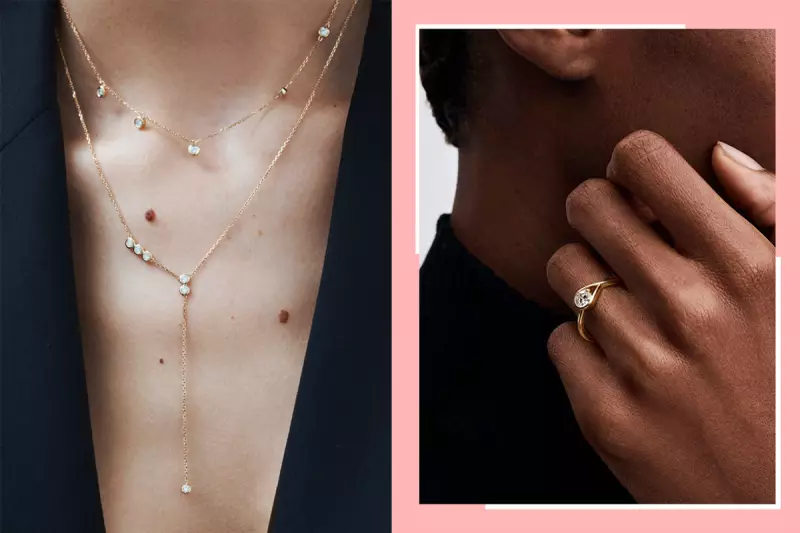
The landscape of luxury jewellery in the UK is undergoing a profound transformation. Driven by a powerful combination of ethical awareness, economic sensibility, and shifting aesthetic desires, lab grown diamonds have surged to the forefront of consumer choice. Once a niche alternative, these scientifically crafted gems are now featured in the majority of engagement rings sold by leading specialists, signalling a permanent change in how Britons view fine jewellery.
The Rise of a Conscious Choice
The shift away from traditionally mined diamonds is rooted in growing public scrutiny of the environmental and human cost of extraction. The industry, which reached an industrial scale in the 19th century, has long been associated with habitat destruction, chemical waste, and concerning labour practices. In response, lab grown alternatives, chemically identical to their mined counterparts, have moved from the fringes to the mainstream, with their popularity peaking dramatically in 2024.
The numbers are striking. Queensmith, a prestigious Hatton Garden jeweller, now reports that 78 per cent of the engagement rings it sells feature lab grown diamonds, a staggering increase from less than 1 per cent in 2019. This isn't merely a fleeting trend but a structural change in consumer values, according to industry leaders.

"The rise of lab grown diamonds has been one of the most transformative shifts our industry has seen in decades," says Brett Ashfar, founder of Queensmith. He links the surge, which began around 2020, to a period of economic uncertainty where clients are intensely value-conscious. Jeremy Kazen, CEO of The Diamond Store, agrees, noting that modern customers demand "transparency, value, and sustainable choices without compromising on visual brilliance."
Bigger, Bolder, and More Accessible
The financial advantage is clear: lab grown diamonds typically cost 25 to 50 per cent less per carat than mined stones. This accessibility has fundamentally reshaped expectations. "Bigger diamonds are now seen as the standard rather than the exception," Ashfar observes. Inspired by celebrity styles, like those worn by Taylor Swift and Dua Lipa, clients now routinely enquire about stones of 2, 3, or even 4 carats—sizes that were once considered exceptional.
The average spend on an engagement ring has remained steady at around £5,750, but buyers are now securing larger, higher-quality stones. Queensmith's data shows the average lab-grown diamond sold is approximately 1.70 carats, compared to 1.13 carats for a mined diamond.
The Best Lab Grown Diamond Brands for 2025
From high-street giants to bespoke artisans, UK retailers have wholeheartedly embraced this new era. Here is a curated guide to the leading brands offering sustainable sparkle.
Pandora leads in affordability and commitment, using 100% renewable energy and recycled metals. Its carbon-neutral pledge results in a footprint for its lab diamonds that is around 95% lower than mined equivalents. Pieces start from just £199.
Queensmith is the premier destination for bespoke engagement rings, offering expert Hatton Garden craftsmanship for both lab grown and natural diamonds. Design every detail of your ring, with prices from £995.
Ernest Jones offers impressive variety with its fully traceable Bloom collection. Diamonds are made using renewable energy and set in premium gold, with pieces starting from £500.
Missoma, favoured by fashion influencers, delivers trend-led designs with excellent value. Its lab-grown edit features fully traceable stones, with stacking rings from £525.
886 by The Royal Mint brings unparalleled heritage, crafting jewellery from precious metals recovered from electronic waste. Its bridal capsule collection with lab grown diamonds ranges from £495 to £5,995.
Other notable brands include H Samuel for budget-friendly entry points, Astrid & Miyu for trend-conscious luxury under £850, Kimai for a fully vertically-integrated process favoured by Meghan Markle, and Lily Arkwright for socially responsible engagement rings.

Are Lab Grown Diamonds Real and Worth It?
This remains the most common question from consumers. The answer from gemologists is unequivocal. "Lab grown diamonds are genuine diamonds, made of pure carbon, with the same hardness, brilliance, and optical characteristics," confirms Jeremy Kazen. They require specialised equipment to be distinguished from mined stones.
The debate on value has evolved. While natural diamonds retain rarity and historical allure, the modern luxury buyer increasingly prioritises ethics and sustainability. The investment is now in a piece that reflects personal values, offers superior size and quality for the budget, and carries a transparent provenance. For the UK shopper in 2025, the lab grown diamond represents not a compromise, but a conscious and brilliant upgrade.